

The main races and alien species in Cerbshock are here for you to dive into—complete with special characters, villains, and major plot twists!
(Our list of alien races and characters is always growing. Cerbshock thrives on fresh ideas, so if you’ve got a new character design or an alien species to show off, we’re all about it! Whether you’re into furries or something totally out of the box, we’d love to see what you’ve got and welcome you into the mix of our storytelling universe.)
That said, we do have a few guidelines to keep things running smoothly. To keep the vibe consistent, characters or species that completely clash with Cerbshock’s lore, themes, or atmosphere might not make the cut. Same goes for concepts that could stir up unnecessary drama or ruin the fun for others. We just want to keep things fun and immersive for everyone!
At the end of the day, it’s all about welcoming creativity while sticking to the heart of our universe. We can’t wait to see your ideas come to life and explore wild, new stories together!)
cerbshock races
All the cool aliens, humans, and other random lifeforms that make up most of the races in Cerbshock are listed here. If yours isn’t on the list, it’s probably time to get it registered!










Humans
HUMAN
Homeworld: Earth (Sol System)
Andromeda Vessel: Ark Hyperion (Arrived)
Humans are one of the youngest races to join the wider galactic community, first making contact with alien civilizations in 2157 during the First Contact War. Despite their relatively short history among the stars, humanity quickly established itself as a respected political, military and scientific power. Their adaptability, determination and willingness to embrace new ideas have allowed them to thrive in situations where other species might struggle.
Unlike many civilizations with long-established traditions, humans are known for their diversity of culture, belief and profession. This flexibility made them ideal candidates for the Andromeda Initiative, whose success depended upon colonists capable of adapting to entirely unfamiliar worlds.
The Ark Hyperion departed the Milky Way in 2326 carrying more than 20,000 human colonists, scientists, engineers, military personnel and civilian specialists. Following a 600-year journey through dark space, Hyperion became the first Ark to successfully reunite with the Nexus, establishing humanity as one of the first races to begin rebuilding civilization within the Heleus Cluster.
Humans - Gene Spliced
Hybrid-Borns
Hybrid-Borns are genetically engineered humans whose DNA has been selectively integrated with traits derived from terrestrial animal species. While retaining entirely human intelligence, personality and legal status, they possess a range of enhanced biological characteristics that distinguish them from baseline humans.
Originally developed through advanced genetic engineering programs in the late Milky Way era, these augmentations were intended to improve survival in extreme environments, enhance specialised occupational roles and increase adaptability during long-term space exploration. Depending on the individual, enhancements may include heightened senses, improved balance and agility, enhanced night vision, increased endurance or distinctive physical features such as animal ears, tails, patterned fur or modified musculature.
Although their origins lie within scientific and military research, Hybrid-Borns are no longer viewed as experimental subjects. Within Cerbshock, they are recognised as equal members of society, valued for both their individual abilities and the unique perspectives they bring to the community.
Over generations, Hybrid-Borns have developed vibrant cultures and traditions of their own while remaining fully integrated alongside humans and the many alien races that now call the Nexus home. Their identities are shaped not by their genetic modifications, but by their experiences, friendships and shared purpose.
Certain hybrid lineages have become especially well known within Cerbshock. Possum-Hybrids, for example, are recognised for their exceptional spatial awareness, climbing ability, dexterity and low-light vision. These traits make them particularly effective in engineering, reconnaissance, maintenance and urban exploration roles, while their playful personalities have become a familiar and valued part of everyday life aboard the Ark Hyperion and Nexus Station.
The history of Hybrid-Borns also serves as a reminder of the ethical responsibilities surrounding genetic engineering. Many individuals were created through government, corporate or military initiatives in which personal choice played little or no part. As a result, Cerbshock maintains strict policies protecting genetic autonomy, bodily integrity and informed medical care. No individual is defined or limited by their genetic heritage, and discrimination on the basis of biological modification is prohibited throughout Cerbshock territory.
As the organisation establishes itself within the Heleus Cluster, Hybrid-Borns continue to play an important role in exploration, research, engineering, security and civilian life. Their ability to bridge cultures and embrace diversity reflects one of Cerbshock's core ideals: that every individual deserves the opportunity to define their own future.
Today, Hybrid-Borns stand not as products of experimentation, but as respected citizens, explorers and pioneers helping shape humanity's next chapter among the stars.
Androids & Robots
Androids & Synthetic Life
Synthetic life has become an essential part of everyday life within Cerbshock, serving alongside organic personnel across every major division of the organisation. From maintenance drones and engineering platforms to advanced artificial intelligences and fully autonomous androids, synthetic beings contribute to exploration, scientific research, station operations, security and long-range expeditions throughout the Heleus Cluster.
Unlike conventional machines designed for a single purpose, many of Cerbshock's synthetic personnel possess sophisticated adaptive intelligence capable of long-term learning, independent reasoning and evolving behavioural patterns. Through continuous interaction with both organics and fellow synthetics, many develop unique personalities, preferences and friendships over time. As a result, they are recognised not simply as equipment, but as valued members of the Cerbshock community.
Advanced synthetic platforms are particularly well suited to hazardous environments that present significant risks to biological life. They routinely undertake reactor maintenance, extravehicular repairs, hazardous material containment, long-duration reconnaissance and frontline combat support without suffering from fatigue, environmental exposure or biological limitations. Their ability to operate continuously under extreme conditions makes them indispensable assets aboard the Ark Hyperion, Nexus Station and future Pathfinder expeditions.
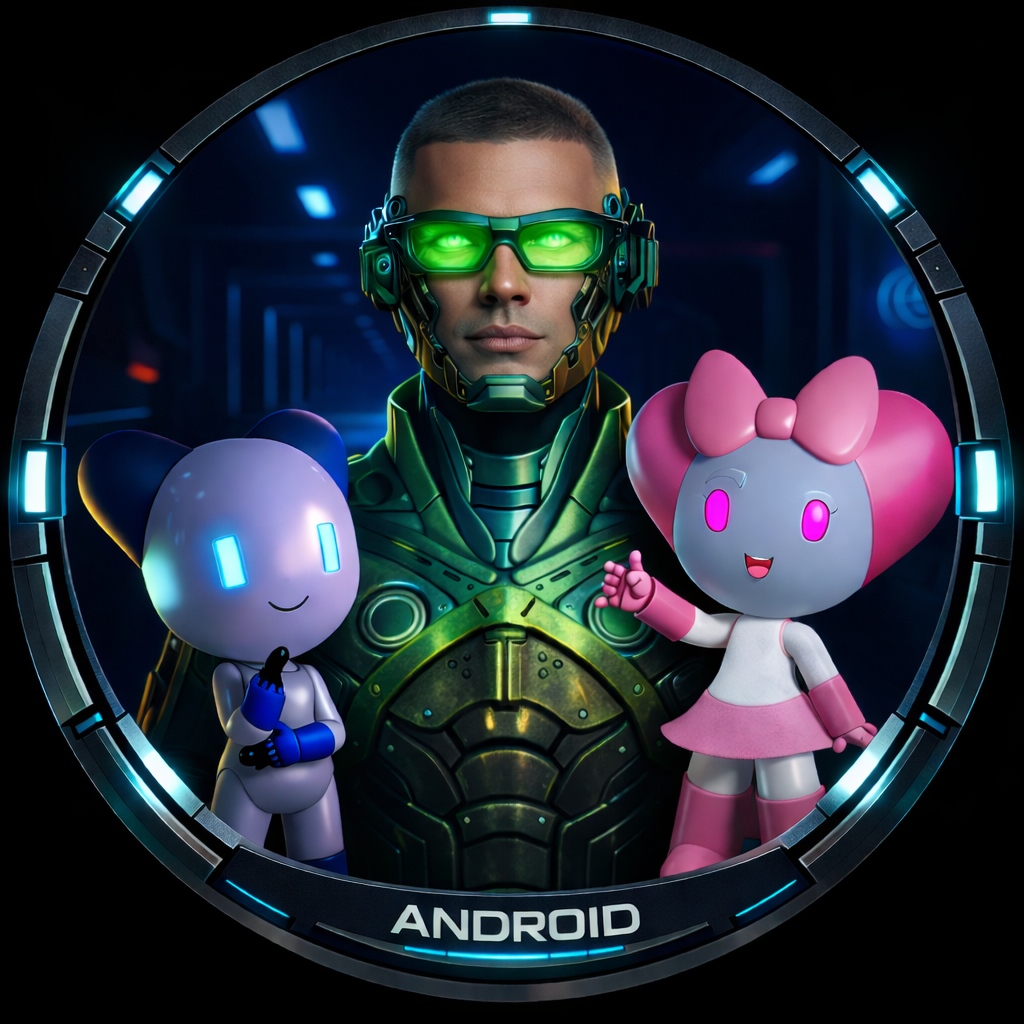
Notable individuals such as Tinman, Cerbshock's trusted synthetic companion and AI specialist, and Robotgirl, whose dedication and service have made her a respected member of the crew, demonstrate that synthetic life within Cerbshock extends far beyond simple programming. Both exemplify the organisation's belief that intelligence is defined not by biology, but by thought, experience and the choices an individual makes.
Following the lessons learned from the Morning War and the conflicts surrounding the Geth, Cerbshock maintains a comprehensive ethical framework governing the creation, maintenance and operation of artificial intelligence. Synthetic personnel possess recognised legal rights and are protected from unauthorised memory alteration, involuntary reprogramming, forced decommissioning or exploitation. Any modifications to a synthetic individual require informed consent except where immediate emergency repairs are necessary to preserve operational integrity.
Synthetic representatives are also encouraged to participate in organisational planning, research initiatives and policy discussions. Their unique perspectives, often shaped by fundamentally different methods of processing information, emotion and time provide valuable insight during strategic planning and scientific development.
Daily life aboard Cerbshock reflects this philosophy of cooperation. Androids and robots can be found serving alongside humans, Asari, Turians, Salarians, Krogan, Quarians and numerous other species in every aspect of station life. Whether maintaining life support systems, assisting medical personnel, exploring uncharted worlds or simply sharing a conversation in the Shifty Cow, synthetic lifeforms have become an inseparable part of the community.
As Cerbshock continues to establish itself within the Andromeda Galaxy, the relationship between organic and synthetic life remains one of its defining strengths. Rather than viewing artificial intelligence with fear or suspicion, Cerbshock embraces a future where cooperation, mutual respect and shared purpose transcend the boundaries between flesh and machine.
For Cerbshock, the question is no longer whether a synthetic being is alive, but how every individual, organic or artificial can contribute to building a better future together.
Hybrids
Hybrids
Hybrids are individuals of mixed-species heritage whose ancestry combines two or more intelligent races of the Milky Way. As interstellar cooperation has expanded over the centuries, relationships between different species have become increasingly common, giving rise to a diverse population whose identities reflect the unity of galactic civilisation. Within Cerbshock, Hybrids represent not a rarity, but a growing and respected part of everyday life.
The biological characteristics of Hybrids vary considerably depending upon their ancestry. Some inherit visible physical traits from both parents, while others more closely resemble a single species with subtle physiological differences. Enhanced sensory perception, environmental resilience, unique pigmentation, altered metabolism or naturally occurring biotic potential are among the many characteristics that may appear. Every Hybrid is biologically unique, making no two individuals exactly alike.
Growing up between multiple cultures often gives Hybrids a broader understanding of galactic society. Many possess a natural appreciation for differing customs, traditions and perspectives, allowing them to navigate multicultural environments with confidence and empathy. This ability frequently places them in leadership, diplomatic and collaborative roles where understanding between species is essential.
Throughout Cerbshock, Hybrids serve in every branch of the organisation, including security, engineering, scientific research, medical services, exploration and Pathfinder operations. Their adaptability allows them to move comfortably between specialist teams while strengthening cooperation across the organisation's increasingly diverse population.
Cerbshock recognises that many Hybrids have faced misunderstanding or prejudice elsewhere in the galaxy due to outdated political or cultural attitudes surrounding interspecies families. Within the organisation, such discrimination has no place. All personnel are recognised as individuals whose abilities, character and contributions define them—not the circumstances of their birth or the species of their parents.
Medical specialists within Cerbshock continue to study Hybrid physiology to better understand the unique healthcare requirements associated with mixed-species genetics. These studies are conducted with the full participation and consent of Hybrid volunteers, contributing valuable knowledge that benefits both current and future generations.
As Cerbshock establishes new settlements throughout the Heleus Cluster, Hybrids have become living symbols of the organisation's core philosophy. They demonstrate that cooperation, mutual respect and shared purpose can overcome even the oldest divisions between civilizations.
For Cerbshock, Hybrids represent more than a blending of genetics—they represent the future of a galaxy where identity is defined not by species, but by the choices we make, the communities we build and the future we create together.
Nexan
Nexans
The Nexans are an ancient reptilian species whose origins trace back millions of years to a small flying predator native to their homeworld of Nexa. Unlike most known forms of life, early Nexans possessed an extraordinary biological trait: the ability to unconsciously make minor beneficial changes to their own physiology and pass those adaptations directly to future generations. This accelerated evolutionary process allowed their species to adapt to environmental pressures at a pace unmatched by conventional evolution.
Approximately 200,000 years ago, Nexan history changed forever during what is now known as the Genetic Ascension. A pioneering scientist successfully recovered fragments of biotechnology left behind by the enigmatic civilisation of the First Age. Using this ancient knowledge, he genetically integrated himself and many of his followers with the DNA of the Kroxom, an ancient species possessing complete mastery over their own genetic structure and a biologically indefinite lifespan, limited only by external causes such as violence, catastrophic injury or disease.
The consequences were immediate and irreversible.
The fusion dramatically accelerated Nexan evolution, granting them conscious control over their own biological development. Their original humanoid forms were gradually abandoned in favour of larger, quadrupedal bodies that offered superior strength, resilience and mobility. Unlike traditional evolution, future biological improvements could now be deliberately designed rather than naturally selected.
Central to Nexan civilisation is the Link, a vast biological hive mind that allows new genetic developments to be distributed across the entire species. Once a successful adaptation has been thoroughly tested, it can be voluntarily shared through the Link, allowing future generations—and, in many cases, living Nexans—to inherit carefully engineered biological improvements. This unique system has enabled the species to evolve continuously without relying upon mechanical augmentation or cybernetic enhancement.
Over countless generations, the Nexans transformed themselves into one of the most biologically advanced civilizations in existence. Their modern appearance resembles that of powerful dragons, a form they have retained for tens of thousands of years due to its remarkable efficiency. Their bodies possess immense physical strength, exceptional endurance and highly refined sensory capabilities, allowing them to thrive in environments that would prove hostile to most other intelligent species.
Perhaps their greatest achievement is the evolution of their own bodies beyond many conventional technologies. Modern Nexans are capable of surviving the vacuum of space for extended periods and can travel through space under their own power without the need for conventional spacecraft. Historical records indicate they have explored the galaxy—and regions beyond—for at least 50,000 years.
A defining characteristic of the species is their natural armour. Nexan scales are composed of a unique carbon-neutronium composite, providing extraordinary protection while remaining flexible enough to allow unrestricted movement. Rather than resisting damage indefinitely, the outer layers are designed to fracture and shed under extreme impacts, dispersing kinetic energy before rapidly regenerating using available environmental materials. This self-renewing armour makes mature Nexans exceptionally difficult to injure during combat.
Today, the Nexans remain one of the oldest and most biologically sophisticated civilizations known to Cerbshock. Rather than relying on machines to overcome their limitations, they have spent hundreds of thousands of years perfecting the ultimate technology—their own evolution.
Entrixi
Entrixi
The Entrixi are a carbon-based humanoid species whose evolutionary origins can be traced to reptilian ancestors. Although they retain many reptilian characteristics, millions of years of evolution have resulted in a fascinating blend of reptilian and mammalian biology, giving rise to a remarkably adaptable and resilient species.
Like their distant ancestors, Entrixi reproduce by laying eggs, yet they also possess several mammalian traits uncommon among reptilian lifeforms. They are fully warm-blooded, allowing them to maintain a stable internal body temperature across a wide range of climates, while females possess mammary glands to nourish their young during the earliest stages of development. This unique combination of biological characteristics has made the Entrixi a subject of considerable scientific interest.
Physically, the Entrixi share the familiar body plan found among many intelligent species throughout the galaxy. They possess an upright, bipedal posture with plantigrade feet, dexterous hands suited to tool use, and no tail. Their physiques are generally athletic and well-balanced, making them equally capable in both civilian and military occupations.
Entrixi skin is covered in fine protective scales that provide natural resistance to abrasion while remaining flexible enough to allow unrestricted movement. Most individuals display dark grey or black coloration, though regional variations are common. Those descended from populations originating in dense equatorial forests often exhibit deep green scales, providing natural camouflage within heavily vegetated environments.
Entrixi culture places great value on adaptability, perseverance and cooperation. Their balanced physiology, combined with a practical outlook and strong communal traditions, has allowed them to integrate successfully alongside numerous other species. Within Cerbshock, Entrixi serve across a wide variety of professions, including engineering, scientific research, security and exploration, where their resilience and calm, methodical approach make them dependable members of any team.
Today, the Entrixi are recognised as a respected and capable people whose unique evolutionary heritage serves as a reminder that intelligence and civilisation can emerge from many different paths, each shaped by the environments and challenges that forged them.
Moghra
Moghra
Homeworld: Sektir
First Contact with Cerbshock: Starfleet Starbase (Time-Displacement Incident)
Affiliation: Independent / Extra-Universal
Known Cerbshock Member: Vahenir
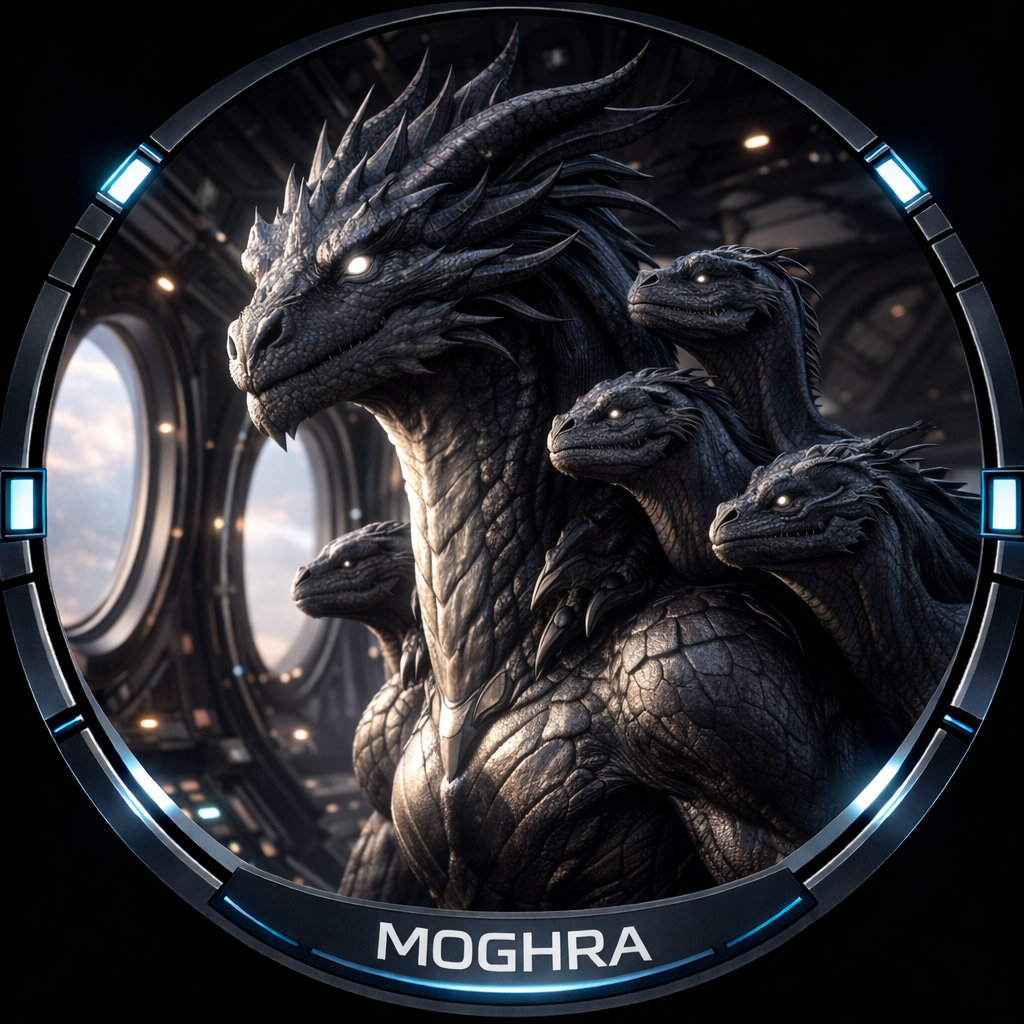
The Moghra are an ancient energy-based species native to the moon Sektir. Unlike most intelligent life, they exist without permanent physical bodies, instead assimilating and controlling the deceased bodies of compatible carbon-based organisms. During assimilation, the host's cells are completely restructured, allowing the Moghra to survive in environments ranging from Sektir's argon atmosphere to the vacuum of space without life support.
With lifespans averaging 800 years, the Moghra possess one of the oldest continuous civilizations in their region of space. They are deeply woven into Entrixi mythology, where they are revered as custodians of the underworld and are believed to predate the earliest Entrixi civilizations by more than 10,000 years.
On their homeworld, Moghra often combine multiple bodies into larger composite forms, though they typically adopt a more conventional humanoid appearance when interacting with other species. As members of the Sektir Federation, they are renowned for producing advanced alloys and heavy industrial machinery, exporting their technology throughout known space.
Within Cerbshock, the species is represented by Vahenir, whose service has strengthened understanding between the organisation and one of the galaxy's most unusual civilizations.
Zon'Tai
Zon'Tai
Homeworld: Dimidia 5
Current Status: Independent Civilization
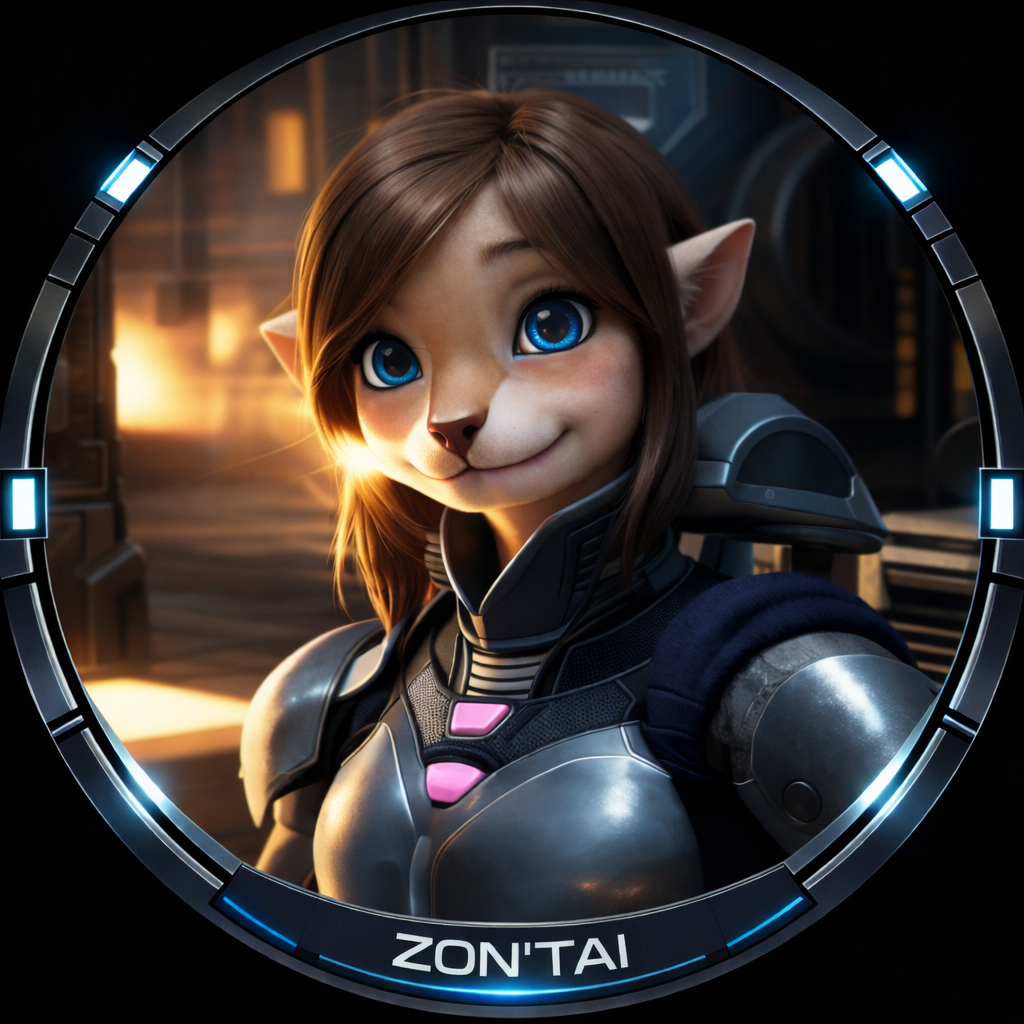
The Zon'Tai (short for Zontaliantishkahatay Tailinitay), also known as the Dimidians or the Angels of Space, are among the oldest and most mysterious civilizations ever encountered. Numerous myths claim the species predates the universe itself, with some legends even crediting them as its creators. The Zon'Tai neither confirm nor deny these stories, preferring to remain silent on their true origins.
Exceptionally reclusive by nature, the Zon'Tai rarely involve themselves in galactic affairs. When they do appear, it is often during pivotal moments in history, seemingly possessing knowledge of events before they occur. Their motives remain largely unknown, leading many civilizations to regard them with equal parts fascination and caution.
The species possesses an extraordinary sensitivity to space-time. Existing in a constant temporal present, Zon'Tai are naturally aware of disturbances caused by time travel, alternate realities and parallel timelines. Such events can cause them physical discomfort, vivid dreams or temporal disorientation. This unique perception allowed the Zon'Tai to master temporal engineering early in their history, although altering the timeline itself is considered one of their greatest taboos.
The Zon'Tai inhabit the Dimidia Continuum Nexus, a realm existing outside conventional space-time while appearing outwardly similar to a normal star system. At its centre lies Dimidia 5, the original homeworld, surrounded by eight immense artificial ring worlds constructed over countless generations to support the civilisation's expanding population. Together, these nine worlds form one of the most remarkable engineering achievements known.
Although contact with the Zon'Tai remains exceedingly rare, several individuals have become known within Cerbshock. Among them are Miu and Rana, two seemingly identical Zon'Tai whose existence is intertwined through a complex temporal paradox. Whether they are identical twins, alternate versions of the same individual, or something else entirely remains unknown—even to those who know them best.
To most of the galaxy, the Zon'Tai remain an enduring mystery. Whether they are ancient observers, guardians of the timeline, or something far older is a question that has fascinated historians and scientists for generations. Whatever the truth may be, one thing is certain: when a Zon'Tai appears, history rarely remains unchanged.
Bionic/Eldritch
Bionic Eldritch
Classification: Cybernetic / Eldritch Hybrid
Current Status: Active Cerbshock Personnel
The Bionic Eldritch are among the rarest and most extraordinary individuals within Cerbshock. Neither a true species nor a conventional synthetic lifeform, they exist through the fusion of organic biology, advanced cybernetic augmentation and anomalous Eldritch energy. This unique combination grants abilities that often challenge conventional scientific understanding.
Each Bionic Eldritch is unique, with no two individuals sharing the same enhancements or power signatures. Many possess adaptive transformation systems capable of temporarily increasing physical strength, speed, resilience and sensory awareness beyond normal biological limits. Others demonstrate the ability to interface directly with advanced technology or manipulate unusual forms of energy through integrated augmentation systems.
While immensely powerful, these abilities require exceptional mental discipline. Historical records show that unstable integrations or psychological trauma can cause Eldritch energy to become volatile, resulting in unpredictable and potentially dangerous manifestations. For this reason, Cerbshock maintains comprehensive medical monitoring, technical maintenance and psychological support for all personnel within the classification.
Despite their unusual nature, Bionic Eldritch are recognised as individuals rather than anomalies. Cerbshock's policies emphasise autonomy, ethical augmentation and responsible use of advanced technology, ensuring each member is judged by their actions rather than their origin.
Notable members such as Scrap and Alpha have demonstrated the remarkable potential of this classification. Through dedication, training and self-discipline, both have become trusted members of the Ark Hyperion expedition, serving in demanding operational roles where their unique abilities provide invaluable support during exploration, security and crisis response.
As Cerbshock continues establishing itself within the Andromeda Galaxy, the Bionic Eldritch remain a powerful reminder that extraordinary abilities alone do not define an individual. It is the choices they make, the trust they earn and the purpose they serve that truly distinguish them from the forces they have learned to control.
Lorea
Lorea
Homeworld: Saaeiio (Destroyed)
Current Capital: World Ship Saaeiio
Current Status: Allied Civilization
The Lorea are an advanced amphibious-reptilian species whose original homeworld was destroyed in a catastrophic supernova. Faced with extinction, they transformed their civilization into a vast migratory fleet centred around the legendary world ship Saaeiio, named in honour of their lost planet. Planetary in scale, the vessel serves as both the heart of Lorean society and one of the largest artificial structures ever constructed.
Powered directly by the neutron star that replaced their former sun, the Saaeiio harvests exotic stellar energy through immense containment arrays, allowing the fleet to operate independently for centuries without relying on external infrastructure.
Lorean society is highly private, preferring to settle in isolated, uninhabited star systems. There they conduct enormous resource extraction operations, dismantling lifeless planets to recover valuable minerals and raw materials. Although their methods are exceptionally destructive, the Lorea follow a strict ethical code that forbids the harvesting of inhabited worlds or living ecosystems.
Their technology is regarded as among the most advanced encountered by Cerbshock. Combining ancient mechanical engineering with quantum computing and sophisticated artificial intelligence, Lorean systems are designed to function autonomously for generations. Their fleet is equally formidable, ranging from automated reconnaissance craft to colossal dreadnoughts equipped with macron accelerators and gravity projection technology capable of manipulating localised spacetime.
Despite their military strength, the Lorea rarely seek conflict. Their philosophy values survival, preservation and long-term stability above conquest, using their fleet primarily as a deterrent rather than an instrument of expansion.
Cerbshock's relationship with the Lorea is represented by Nirrae, whose service has strengthened diplomatic ties between both civilizations. Unlike the Andromeda Initiative Arks, the Saaeiio completed its intergalactic voyage independently, arriving in the Heleus Cluster several years before the Ark Hyperion. Since then, the world ship has become an important allied presence, contributing its engineering expertise, industrial capability and centuries of accumulated knowledge to the growing civilizations of Andromeda.
The Lorea remain a living testament to resilience, proving that even the destruction of an entire world need not mark the end of a civilization, but the beginning of a new chapter among the stars.
Lupin
Lupin
Homeworld: Eorzea (Final Fantasy Continuum)
Current Status: Dimensional Refugee Species
The Lupin are a canine-based humanoid species recognised for their wolf-like or canine features, exceptional senses and deeply rooted pack mentality. Originating from the world of Eorzea, their society is built upon loyalty, honour and mutual trust, with strong social bonds extending well beyond immediate family. Within Lupin culture, a pack is defined not by blood alone, but by those who have earned one another's respect and unwavering support.
Physically, Lupin possess heightened hearing, an exceptional sense of smell and naturally enhanced reflexes, making them highly effective scouts, trackers and security specialists. These abilities, combined with their protective instincts, have traditionally seen many Lupin excel in military service, law enforcement and hazardous exploration.
Unlike most species within Cerbshock, the Lupin are not native to the Mass Effect universe. Their presence is the result of rare dimensional anomalies and cross-reality displacement events that have brought isolated individuals into entirely different timelines and realities. As a result, organised Lupin communities remain extremely rare outside their native continuum.
At present, Tai Astrofengia is the only known Lupin serving within Cerbshock. His loyalty, determination and protective nature have made him a valued member of the organisation, embodying the qualities for which his species is renowned. Although no other confirmed Lupin populations have been encountered within the Heleus Cluster, the possibility of further dimensional arrivals cannot be ruled out.
As Cerbshock continues exploring the Andromeda Galaxy, Tai remains a unique representative of his people, serving as both an experienced operative and a living reminder that even across different universes, courage, loyalty and friendship remain universal values.
Korvahn
Korvahn
Homeworld: Nemea (Destroyed)
First Contact with Cerbshock: Purgatory Prison Complex
Affiliation: Independent / Diaspora
Known Cerbshock Member: Kael'Shar Veydran
The Korvahn are a leonine humanoid species once native to the resource-rich world of Nemea. Towering in stature and distinguished by their powerful builds and thick manes, they evolved as apex predators across vast savannas and unforgiving wilderness. Their society valued strength, honour and loyalty above all else, with every individual expected to serve and protect their pride.
To the Korvahn, pride is far more than family—it is identity itself. Young Korvahn traditionally undertake the Trial of the Wilds, a solitary rite of passage where survival, patience and judgement are tested. While formidable warriors, Korvahn culture teaches that true strength lies not only in power, but in restraint, responsibility and defending those who cannot defend themselves.
Nemea's abundant element zero reserves ultimately became its downfall. Corporate interests, pirate fleets and mercenary syndicates descended upon the planet, overwhelming traditional Korvahn defences through sustained orbital bombardment. Entire prides were destroyed, countless survivors scattered across the galaxy, and Nemea itself was left a lifeless ruin. The disaster fractured Korvahn civilisation, leaving many to survive as mercenaries, frontier guardians or isolated communities struggling to preserve their traditions.
Among the most infamous figures in modern Korvahn history is Tharos Blackmane, whose relentless campaign against Prime Helix transformed him into both a legend and a warning. To some Korvahn he remains a hero who refused to surrender his people's honour. To others, he represents the danger of allowing vengeance to consume one's purpose. His pursuit of Prime Helix leadership ultimately ended in victory, but at the cost of his own life.
Today, Cerbshock's ties to the Korvahn are represented by Kael'Shar Veydran, son of Tharos Blackmane. Through his service, Kael'Shar carries both the burden of his father's legacy and the hope that the Korvahn may one day be remembered not for the destruction of Nemea, but for the resilience, honour and determination that allowed their people to endure long after the fall of their homeworld.
Elvari
Elvari
Common Name: Elves
Classification: Sentient Humanoid Species
Homeworld: Unknown
First Contact with Cerbshock: London, Earth (2186 – Temporal Rift Incident)
Affiliation: Allied Species
Known Cerbshock Member: Lucas Eldorath Auran
The Elvari, commonly referred to as Elves, are one of the most mysterious civilizations ever encountered by Cerbshock. Their true homeworld and origins remain unknown, with all confirmed evidence suggesting they originate from beyond conventional space-time. Despite continued contact, the Elvari have chosen to reveal very little about their civilization, preserving an air of mystery that has surrounded them since first contact.
Cerbshock first encountered the species during the London Temporal Rift Incident of 2186, at the height of the Reaper invasion. During the event, Lucas Eldorath Auran was accidentally displaced through an unstable dimensional fracture, becoming stranded within the Milky Way. Investigations concluded that the incident was an unforeseen consequence of the temporal anomaly rather than a deliberate act by the Elvari.
Physically, the Elvari are distinguished by their slender build, elongated ears, heightened senses and remarkably long lifespans. Their advanced perception and exceptional reflexes make them naturally adept explorers, scholars and warriors, while their society places great importance on knowledge, discipline and preserving the natural flow of time.
Although the Elvari possess sophisticated technology capable of studying temporal anomalies and dimensional phenomena, they regard altering history as one of the greatest taboos. Their philosophy favours observation over interference, believing that even the smallest change to the timeline may have unforeseen consequences.
Within Cerbshock, Lucas Eldorath Auran remains the only known Elvari member. Despite being completely blind, Lucas has developed extraordinary awareness of his surroundings, allowing him to become a highly skilled swordsman whose precision and discipline have earned the respect of his fellow crew members. His calm judgement and unwavering resolve have made him a trusted ally throughout Cerbshock's many adventures.
While little is known about the wider Elvari civilization, Lucas serves as a living reminder that true strength is measured not by sight, but by courage, wisdom and the ability to overcome adversity. His presence continues to strengthen the unique bond between Cerbshock and one of the galaxy's most enigmatic peoples.
Asari
ASARI
Homeworld: Thessia
Andromeda Vessel: Ark Leusinia (Missing)
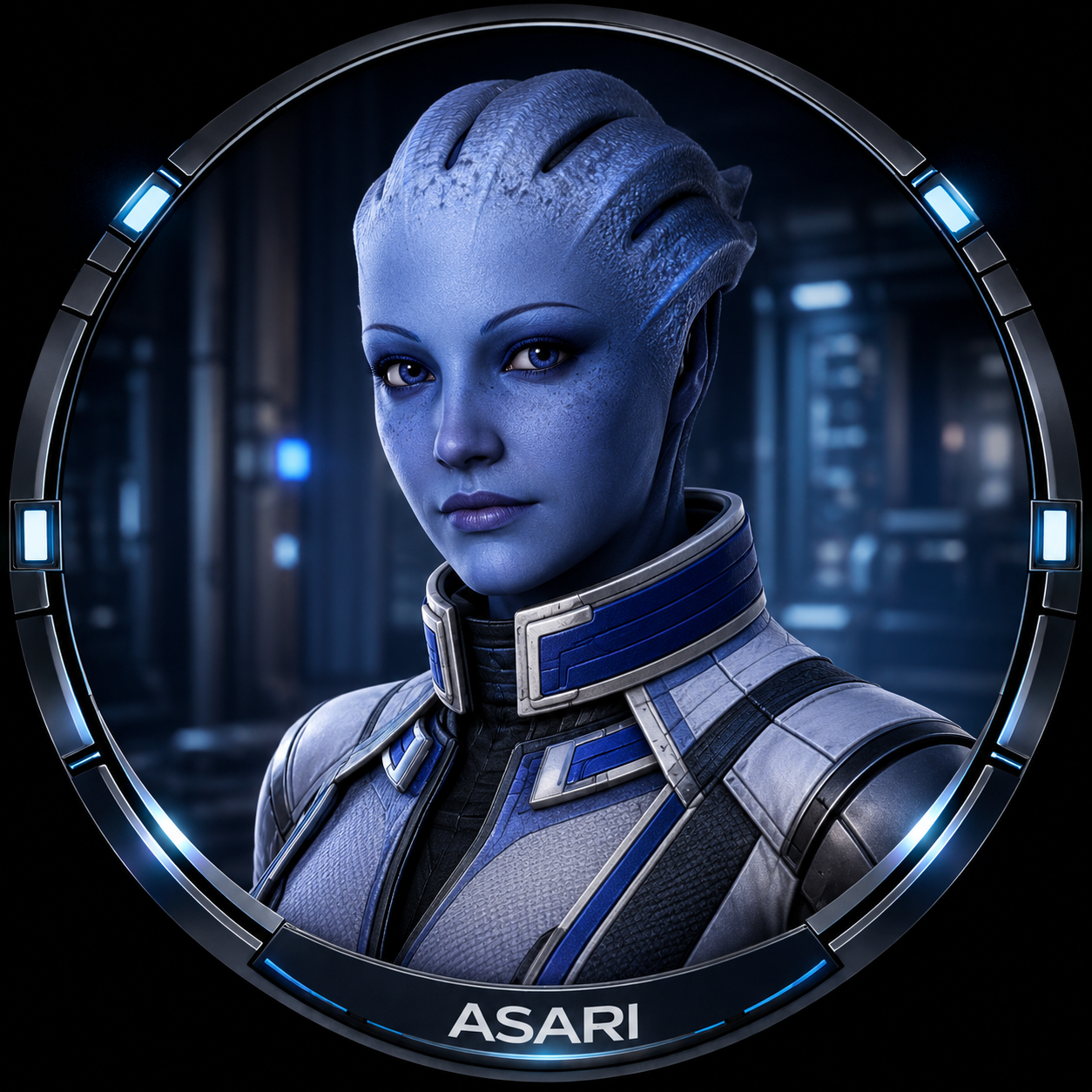
The Asari are among the oldest known spacefaring civilizations in the Milky Way and are widely respected for their wisdom, diplomacy and cultural influence. As one of the founding members of the Citadel Council, they have played a central role in maintaining galactic stability for thousands of years. Their long lifespans, often exceeding a millennium, allow them to accumulate centuries of experience, making them exceptional leaders, researchers and diplomats.
Naturally gifted in biotic abilities, the Asari possess an innate connection to element zero, enabling many individuals to develop powerful biotic talents from an early age. Their society values education, cooperation and scientific advancement, producing countless influential scholars and explorers throughout galactic history.
Ark Leusinia departed alongside the other Initiative Arks carrying thousands of Asari colonists, researchers and cultural specialists. However, following arrival in the Heleus Cluster, communication with the vessel was lost. The Ark remains missing, and its ultimate fate is currently unknown.
Turian
TURIAN
Homeworld: Palaven
Andromeda Vessel: Ark Natanus (Missing)
The Turian people are renowned throughout the galaxy for their discipline, honour and unwavering commitment to duty. Governed by the Turian Hierarchy, their society places great importance on public service, personal responsibility and cooperation. Almost every Turian contributes to society through military, engineering, administrative or civic roles, creating one of the most organised civilizations in Citadel space.
Their reputation as skilled soldiers often overshadows their expertise in engineering, logistics and infrastructure. Turian fleets are among the largest in the galaxy, supported by generations of tactical experience and rigorous training. While disciplined by nature, Turians are also respected as dependable allies who place the needs of the community above personal ambition.
Ark Natanus carried thousands of Turian settlers to the Andromeda Galaxy with the goal of helping secure and defend the Initiative's future colonies. Following the Initiative's arrival, contact with the Ark was lost, and it has yet to report to the Nexus. Search efforts continue throughout the Heleus Cluster.
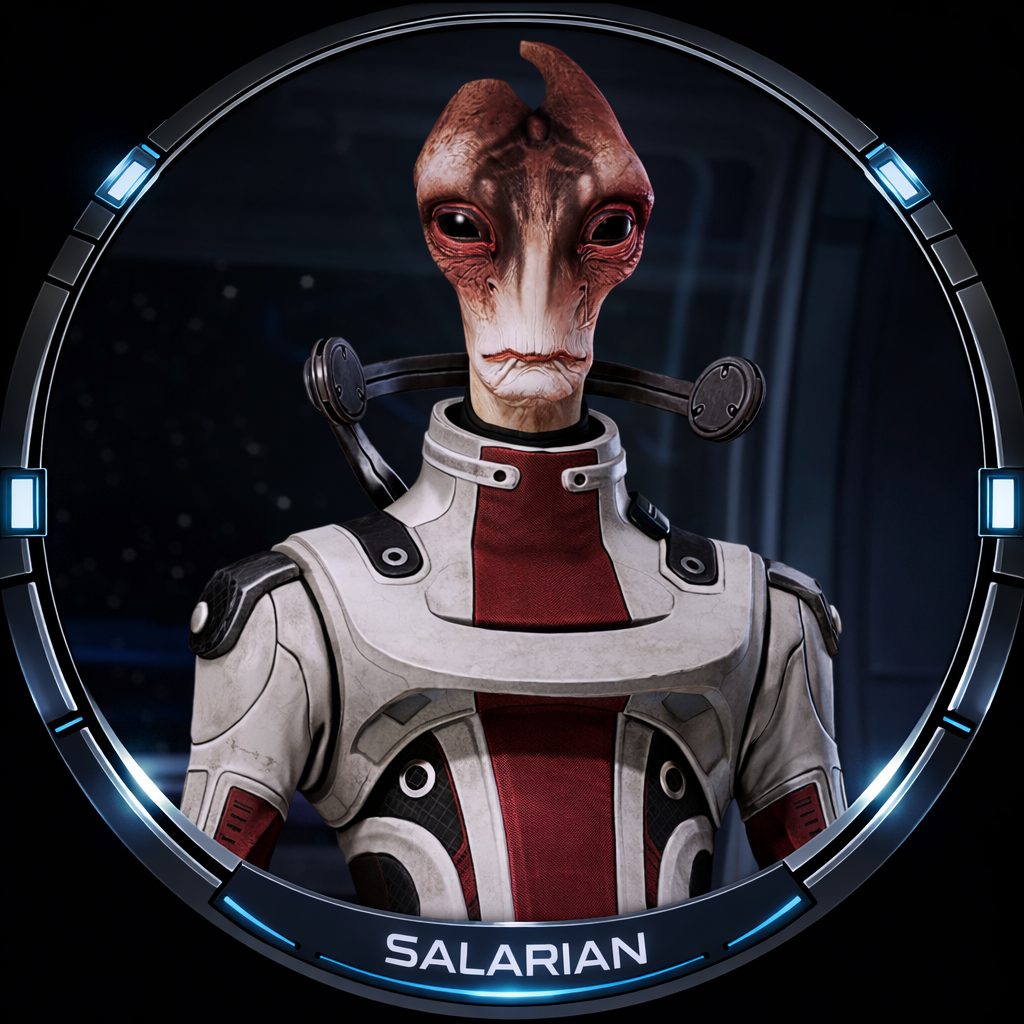
Salarian
SALARIAN
Homeworld: Sur'Kesh
Andromeda Vessel: Ark Paarchero (Missing)
Salarians are renowned for their exceptional intelligence, rapid thought processes and remarkable aptitude for scientific discovery. Possessing fast metabolisms and comparatively short lifespans, Salarians often accomplish in decades what many other species require centuries to achieve. Their society values knowledge above all else, producing some of the galaxy's greatest researchers, physicians, engineers and technological innovators.
The Salarian Union has long been recognised as one of the Milky Way's foremost scientific powers. From advances in medicine and genetics to breakthroughs in artificial intelligence and starship technology, Salarian ingenuity has shaped much of modern galactic civilization. Their analytical minds also make them outstanding intelligence officers and reconnaissance specialists, preferring careful planning and information gathering over direct confrontation.
The Ark Paarchero carried thousands of Salarian scientists, researchers and civilian specialists who volunteered to build a brighter future in another galaxy. Since arriving in the Heleus Cluster, however, all communication with the vessel has been lost. The fate of Ark Paarchero and its passengers remains unknown, with search efforts continuing across Initiative-controlled space.
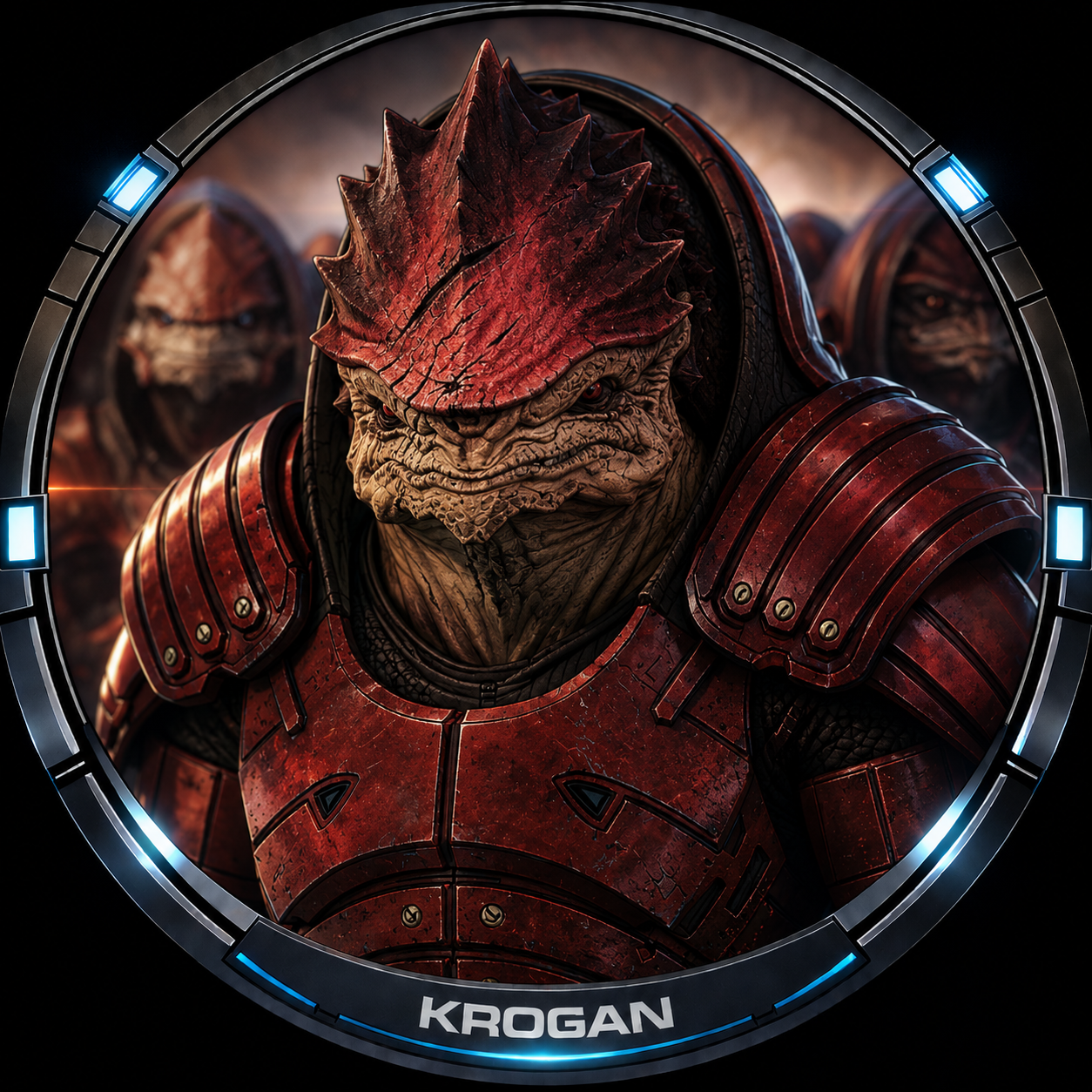
Krogan
KROGAN
Homeworld: Tuchanka
Andromeda Vessel: Nexus Personnel
The Krogan evolved upon the harsh and unforgiving world of Tuchanka, where constant conflict and an extreme environment forged one of the toughest species in the galaxy. Possessing immense physical strength, multiple redundant organs and an extraordinary capacity to recover from injury, Krogan are capable of surviving conditions that would prove fatal to most other races.
Centuries before the Andromeda Initiative, the Krogan Rebellions and the deployment of the Genophage drastically altered their civilization. Although these events left deep scars upon Krogan society, they also strengthened their determination to secure a better future for future generations. Beyond their reputation as fearsome warriors, many Krogan are accomplished engineers, mechanics, builders and explorers, bringing invaluable practical skills to frontier settlements.
Unlike the Council races, the Krogan were not assigned a dedicated Ark. Instead, members of Clan Nakmor joined the Initiative aboard the Nexus itself, serving as security personnel, engineers, construction specialists and colonists. Their resilience and ability to thrive in dangerous environments have made them indispensable in establishing and protecting settlements throughout the Heleus Cluster.
Batarian
BATARIAN
Homeworld: Khar'shan
Andromeda Vessel: Ark Keelah Si'yah (Missing)
Batarians are easily recognised by their distinctive four-eyed physiology and resilient nature. Before the Reaper War, the Batarian Hegemony maintained an isolationist government that frequently placed the species at odds with the Citadel Council. While political relations were often strained, the Batarians themselves developed a rich culture centred around family, perseverance and self-reliance.
Outside Hegemony space, many Batarians established successful careers as merchants, engineers, miners, traders, explorers and mercenaries. Their ability to adapt to harsh environments and frontier conditions made them valuable contributors wherever opportunities arose. Although historical conflicts often shaped how other races viewed them, countless Batarians sought a future free from political division and prejudice.
As the Batarians did not receive a dedicated Ark, those selected for the Andromeda Initiative travelled aboard the Ark Keelah Si'yah alongside Quarians, Drell, Elcor, Hanar and Volus colonists. Like the other passengers aboard the vessel, their fate remains unknown following the Initiative's arrival in the Heleus Cluster. The recovery of Ark Keelah Si'yah remains one of the Nexus' highest priorities.
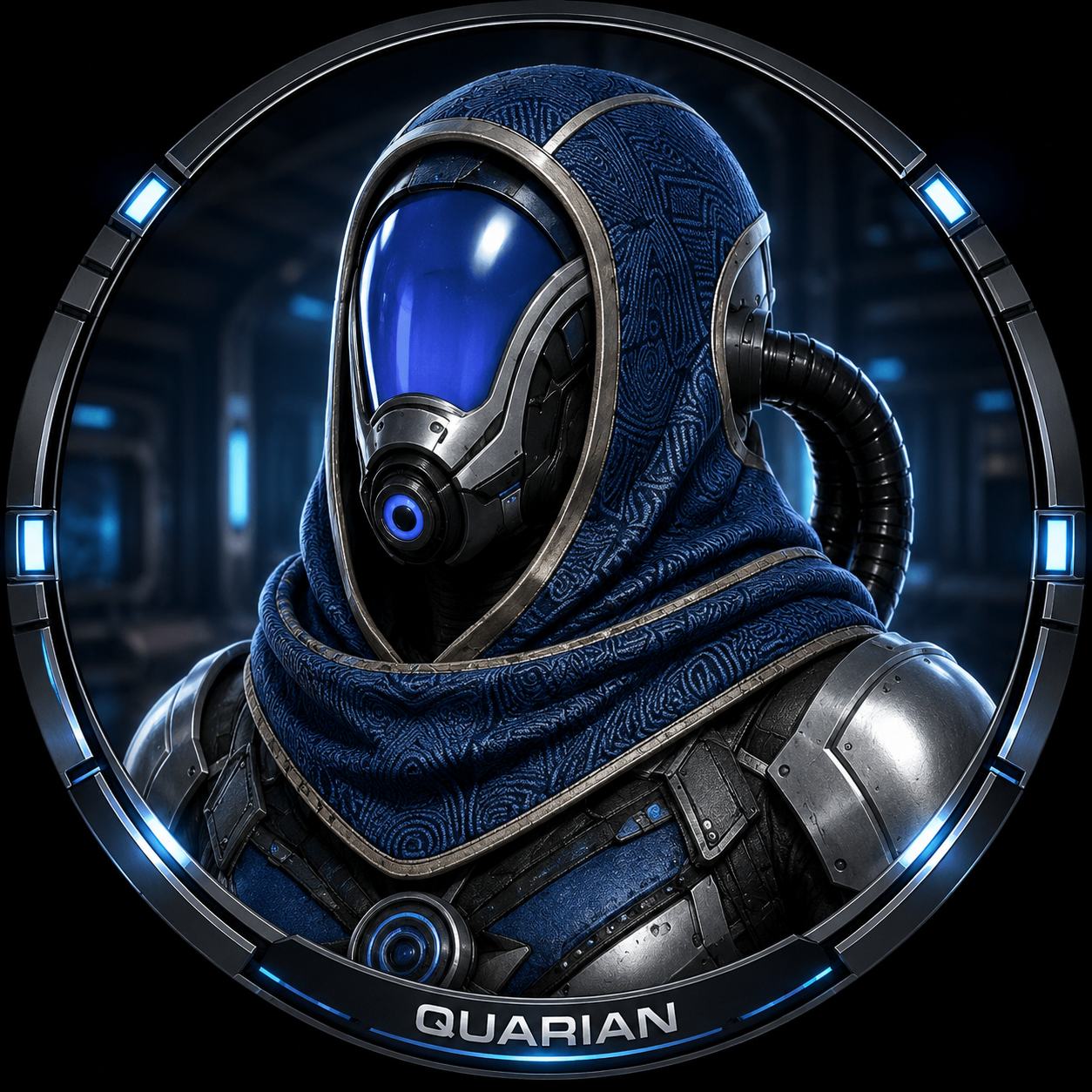
Quarian
QUARIAN
Homeworld: Rannoch
Andromeda Vessel: Ark Keelah Si'yah (Missing)
The Quarians are among the galaxy's most accomplished engineers, mechanics and starship technicians. Following their exile from their homeworld of Rannoch after the Morning War against the Geth, they spent nearly three centuries living aboard the Migrant Fleet—a vast collection of civilian starships that became one of the largest mobile civilizations ever assembled.
Generations of life within sterile spacecraft gradually weakened the Quarian immune system, requiring most individuals to wear sealed environmental suits whenever interacting with foreign environments. Despite these limitations, Quarians became unmatched experts in maintaining complex machinery, repairing advanced technology and adapting limited resources to solve seemingly impossible problems. Their ingenuity and perseverance have earned them widespread respect across the galaxy.
The Ark Keelah Si'yah departed after the primary Initiative Arks, carrying Quarian colonists alongside Drell, Elcor, Hanar, Volus and Batarians who did not possess dedicated Arks of their own. Unfortunately, contact with the vessel has been lost, and it has yet to arrive at the Nexus. The Initiative continues to search for the missing Ark and the thousands of colonists aboard.
Andromeda 2926 races
Brand new Organic and Synthetic races in Andromeda!

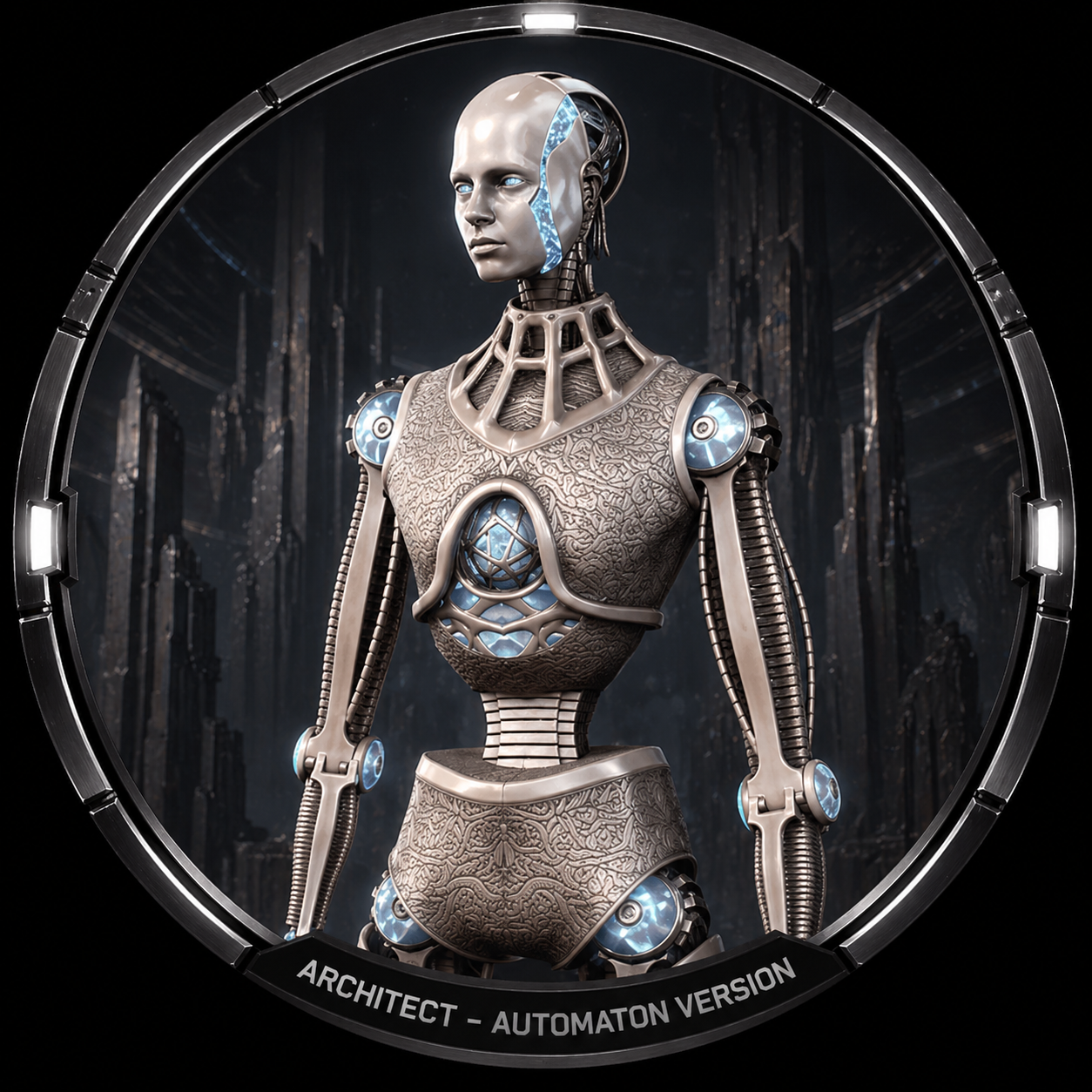
Architects
Architects – Cerbshock Brief
Type: Non-organic
Status: Active / Territorial
Threat: Moderate–High
---
Overview
“Architects” is the name they give themselves. They claim:
“We come here first” “6 century cycles”
They are not native, but still treat the world as theirs. ---
Combat Units
- Chrome bodies
- Armed
- Aggressive
- Speak but don’t negotiate much
Straight fight, low patience ---
Automatons
- Calm
- Smarter
- Will talk
- Not always hostile
More… unsettling than dangerous ---
Communication
- Translator takes time
- Speech is broken, direct
Common lines:
- “You should not be here”
- “Primitive beings”
- “Power runs deep”
---
Behaviour
- Territorial
- Inconsistent (talk or attack)
- Aware of time and history
---
Tech Interaction
Important: They cannot use everything on the planet. Some systems:
- ignore them
- don’t respond
- reject input They are not in full control
---
Unknowns
- Where they came from
- Why they are here
- What “power runs deep” means
- Why they are locked out of some tech
---
Summary
Not just enemies. They are:
- established
- aware
- limited
---
Cerbshock Note
They say we don’t belong here. But they don’t own it either.
Remnants
REMNANT
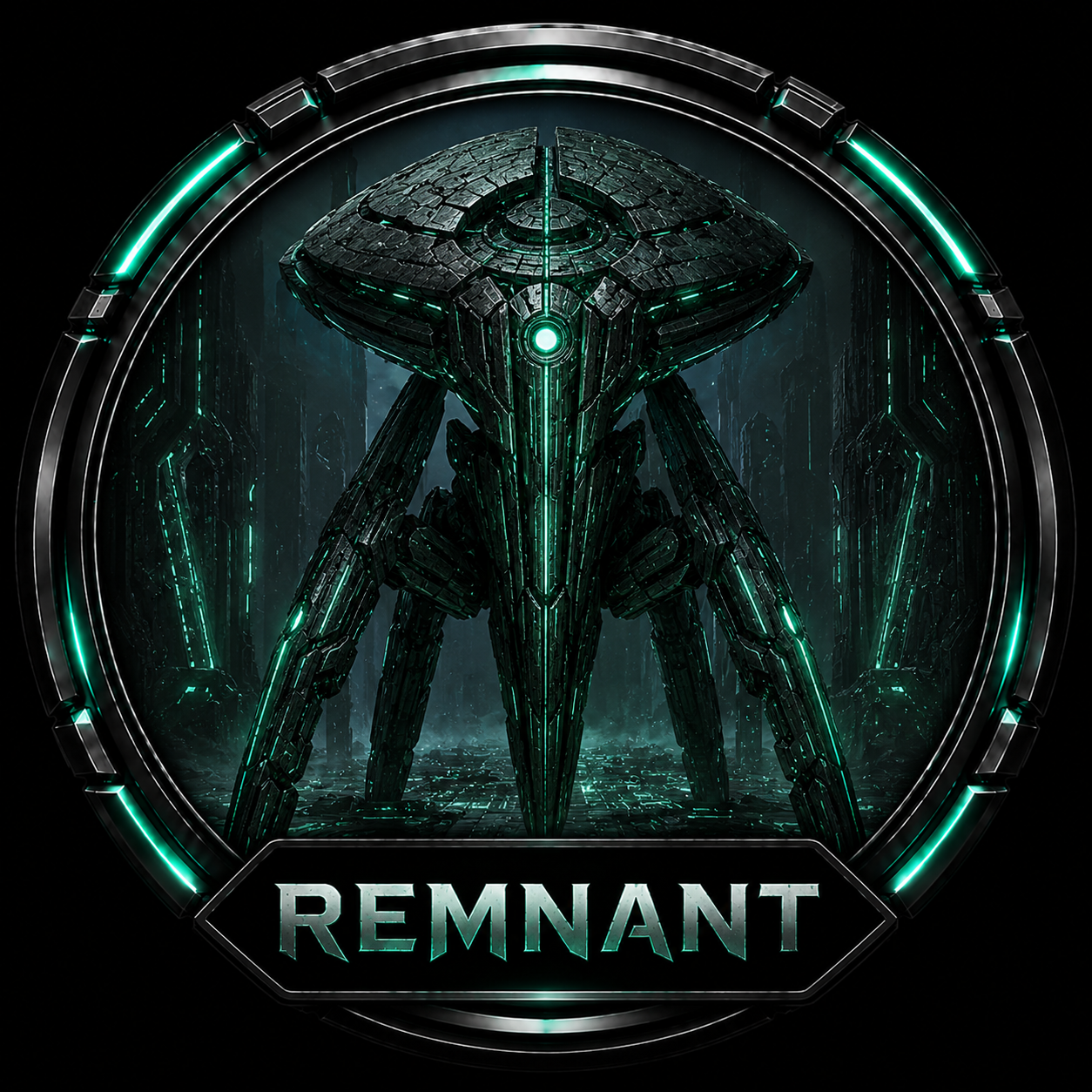
Ancient autonomous machines encountered throughout the Heleus Cluster. The Remnant are responsible for maintaining vast underground vault systems, atmospheric processors and unknown planetary-scale infrastructure left behind long before the Initiative arrived in Andromeda.
Most Remnant units appear to function as guardians, engineers or environmental maintenance drones. Their technology is highly adaptive, heavily networked and capable of self-repair.
While some Remnant units remain dormant or passive, others become hostile when restricted zones, vault systems or key infrastructure are disturbed.
Known Units:
• Observer — Reconnaissance and scanning drone
• Assembler — Repair and fabrication unit
• Breacher — Heavy assault construct
• Nullifier — Defensive suppression platform
• Overseer — Massive command-level machine intelligence
Remnant systems frequently utilize:
• Glyph-based interfaces
• Energy conduits
• Planetary vault networks
• Autonomous defensive protocols
The true creators of the Remnant remain unknown.
ANDROmeda wildlife


Uraga
URAGA
Classification: Omnivore
Species: Uraga
Origin: Terralyth
Habitat: Forests / Jungle undergrowth / Rocky clearings
Diet: Omnivore (Fruits, fungi, insects, small fauna)
Average Length: 0.9 m
Average Height: 1.2 m (at shoulder)
Mass: 18–24 kg
Lifespan: Unknown
Aggression: Low
Threat Level: Minimal
Discovered: 2926
Biological Overview
The Uraga is a small, intelligent omnivore native to the jungles and forested regions of Terralyth. It is commonly observed foraging alone or in small family groups.
Uraga appear naturally curious, often investigating new objects and environmental changes without displaying fear.
Their adaptability and varied diet allow them to thrive across a wide range of altitudes and terrain types. No aggressive behavior toward humans has been recorded.
Anatomy & Adaptations
-
Crested sensory frills enhance awareness and communication.
-
Large eyes suited for low-light vision.
-
Flexible jaw allows for varied diet.
-
Opposable digits aid in grasping and manipulation.
-
Scales provide camouflage and protection.
-
Powerful hind limbs allow for agility and quick movement.
-
Long tail provides balance and rapid directional changes.
Identifying Features
-
Sleek, agile build with a long, muscular tail for balance.
-
Crested head with sensory frills used in communication and environmental detection.
-
Large, expressive eyes adapted for low-light conditions.
-
Dexterous forelimbs equipped with opposable digits for handling food and manipulating objects.
-
Iridescent scales provide natural camouflage within Terralyth's dense vegetation.
Observed Behaviour
-
Diurnal and most active during early morning and late afternoon.
-
Forages for fruits, fungi, insects, and small creatures.
-
Uses forelimbs to manipulate objects and access food.
-
Communicates using soft chirps, clicks, and body language via crest movements.
-
Generally non-confrontational and will avoid larger predators when possible.
Research Notes
Uraga show high curiosity and may be capable of basic problem-solving. Further study is recommended to better understand their communication and social structure. Potential for domestication is unknown.
Dangers & Considerations
-
Not dangerous; poses no known threat.
-
May flee if startled or cornered.
-
Best approached slowly to avoid causing stress.
Shadowbull
SHADOWBULL
Classification: Herbivore
Species: Shadowbull
Origin: Terralyth
Habitat: Dense jungle / rocky terrain
Diet: Fungus, low-growing plants, leaves
Average Length: 2.8 m
Average Height: 2.1 m (at shoulder)
Mass: 920 kg
Lifespan: Unknown
Aggression: Low
Threat Level: Low
Discovered: 2926
Biological Overview
The Shadowbull is a large herbivorous mammal-like creature native to Terralyth. Its thick, muscular frame and sturdy build allow it to move through dense vegetation and rocky terrain with ease.
Its diet consists mainly of Terralyth's abundant fungal life, which provides essential nutrients and may be a key source of energy for the species.
Shadowbulls play an important ecological role in fungus spore dispersal through their movement and grazing behaviour, contributing to the balance of the local ecosystem.
Anatomy & Physical Analysis
-
Broad, muscular neck adapted for grazing.
-
Short, powerful legs provide mobility on uneven terrain.
-
Flexible spine provides agility.
-
Thick, hairless skin is resistant to cuts and abrasion.
-
Multi-chambered stomach suited for fungal digestion.
-
Hoof-like pads provide traction.
-
Muscular hindquarters provide stability and endurance.
-
Short tail used for balance.
Identifying Features
-
Pale, hairless skin with subtle pink/purple mottling.
-
Bull-like head with soft, drooping jaws and small ears.
-
Four strong legs ending in rounded, hoof-like pads.
-
Short tail with no visible horns.
-
Distinctive bovine, canine and alien-like appearance.
Observed Behaviour
-
Generally calm and non-aggressive.
-
Often found grazing on fungal growths and low vegetation.
-
May wander in small groups or alone.
-
Will retreat if disturbed, but may stand its ground if cornered.
-
Appears largely unaware of larger predators; no defensive behaviour observed.
-
Vocalisations are low grunts and snorts, usually while foraging.
Dietary Notes
The Shadowbull primarily consumes dense fungal growths, plant beds and low-lying plants.
Fungal species contain high levels of carbohydrates and trace minerals essential for survival.
The species possesses a large, muscular jaw adapted for cropping tough fungal stems and foliage.
Dangers & Considerations
-
Low aggression; not considered a threat to lone explorers.
-
May become defensive if separated from the herd or during mating season.
-
Unpredictable around predators or when food is scarce.
-
Do not attempt to approach young individuals.
Blood Stalker
BLOOD STALKER
Classification: Predator
Species: Blood Stalker
Origin: Terralyth
Habitat: Mist-covered plateaus / Jungle ruins / Rocky regions
Diet: Carnivorous / Opportunistic
Average Length: Unknown
Average Height: Unknown
Mass: Unknown
Lifespan: Unknown
Aggression: Moderate
Threat Level: Moderate
Biological Overview
The Blood Stalker is a large predatory species observed within the mist-covered regions of Terralyth. Its elongated body, powerful limbs and prominent jaws suggest a highly adapted hunting physiology.
Despite its imposing appearance, observed individuals have not displayed immediate aggression toward explorers. One specimen has been observed feeding on fungal growth, suggesting the species may possess opportunistic feeding behaviour rather than relying exclusively on live prey.
Further observation is required to determine the full extent of its diet and ecological role.
Anatomy & Adaptations
-
Elongated body adapted for movement through dense vegetation and rocky terrain.
-
Powerful forelimbs equipped with extended claws.
-
Narrow head with a prominent jaw and multiple rows of teeth.
-
Highly developed sensory organs suited to low-visibility environments.
-
Flexible limbs allow the species to navigate uneven terrain.
-
Skin pigmentation provides natural concealment within Terralyth's darker environments.
Identifying Features
-
Large, elongated quadrupedal body.
-
Distinctive narrow head and extended jaw.
-
Prominent teeth and clawed limbs.
-
Dark reddish-brown skin pigmentation.
-
Highly visible blue ocular structures.
-
Frequently observed in areas containing unusual mist and environmental phenomena.
Observed Behaviour
-
Often remains concealed among rocks and vegetation.
-
May emerge briefly from surrounding mist before retreating to cover.
-
Generally avoids direct interaction with explorers.
-
Has been observed investigating and feeding on fungal growth.
-
Displays cautious and elusive behaviour when approached.
-
Full hunting behaviour has yet to be documented.
Research Notes
The Blood Stalker's apparent consumption of fungal material has raised questions regarding its dietary classification. Whether this behaviour represents opportunistic feeding, supplementation, or a regular part of its diet remains unknown.
Continued observation is recommended to better understand the species' behaviour, feeding patterns and relationship with Terralyth's unusual environmental phenomena.
Dangers & Considerations
-
Maintain a safe distance when observing the species.
-
Do not approach or attempt to corner an individual.
-
Avoid sudden movements or attempts to interfere with feeding behaviour.
-
Its apparent tolerance of nearby explorers should not be interpreted as proof of domestication or harmlessness.
Extinct races
Mystical and fantastical races in Cerbshock that once ruled the galaxy


Guardians
The Guardians are ancient demigod beings believed to be older than recorded galactic history, operating independently of any known civilization. Cerbshock first encountered a Guardian in 2550 on Vanargand with the discovery of Deimos, followed by the encounter with Escanor on Planet Idun in 2551, confirming that multiple Guardians existed.
An alliance was later formed, during which the Guardians supported Cerbshock and provided them with the BSSV Morningstar, a vessel that remained Guardian property despite being placed in Cerbshock’s service. For a time, relations were stable and cooperative. However, after Cerbshock returned from Andromeda and re-entered earlier eras in 2553/2323–2324, the Guardians demanded the return of the Morningstar.
Cerbshock refused, leading to the collapse of the alliance and the start of open conflict. Several Guardians were subsequently defeated during these engagements, while others were destroyed or vanished under unexplained circumstances. As a result, the Guardians are no longer allies, and their remaining members’ whereabouts and intentions remain uncertain.
Iconians
The Iconians were first encountered by Cerbshock during an alternate Andromeda timeline in 2553. While inspired by ancient Star Trek legends, this version of the Iconians was uniquely reinterpreted within Cerbshock’s universe, expanding their role into that of a primordial, reality-shaping species.
They were believed to be among the oldest beings ever documented, existing long before most known civilizations.
Discovery and Early Conflict
During this period, Cerbshock’s rival faction, Team Terminus, began actively pursuing rumors of the Iconians after receiving intelligence suggesting they possessed immense cosmic power.
Both factions searched through forgotten systems and lost ancient worlds, racing to uncover evidence of the Iconians’ survival.
Tashyyk: The Last Iconian
While exploring one of these ancient worlds, Cerbshock discovered a lone Iconian in cryostasis.
His name was Tashyyk.
He was believed to be the last surviving member of his species.
Recovered records indicated that the Iconians had once played a role in shaping a version of the Big Bang alongside the Guardian demigods, placing them among the most powerful entities ever known.
Alliance with Cerbshock
After being revived, Tashyyk chose to join forces with Cerbshock.
He traveled with them aboard his personal vessel, the Freemera, which contained coordinates pointing toward possible surviving Iconian worlds.
For a time, Tashyyk acted as both an ally and a living link to an ancient era of cosmic history.
Capture and Rescue
Tashyyk and the Freemera were later captured by Team Terminus, who sought to exploit the Iconians’ knowledge and power.
Cerbshock launched a major recovery operation.
The mission ended with:
-
Tashyyk’s rescue
-
The defeat of Terminus forces
-
The recovery of the Freemera
This marked a decisive victory during the Andromeda arc.
Departure and Legacy
Following the conclusion of the Andromeda storyline, Tashyyk chose to part ways with Cerbshock.
His reasons were never fully disclosed.
With his departure, the future of the Iconians became uncertain once more. Whether other survivors exist remains unknown, leaving their legacy suspended between myth, history, and unfinished discovery.
Djinn
The Djinn are an ancient, spacefaring, and war-driven species who, in Cerbshock’s timeline, fulfilled the role that the Reapers occupied in other realities. Rather than relying solely on massive singular constructs, the Djinn created vast fleets of autonomous, ghost-like warships—numbering in the hundreds, and later thousands.
These vessels were given spectral designations such as Spectre, Wraith, and Revenant, reflecting both their appearance and their intended role as instruments of extinction.
Unlike conventional empires, the Djinn did not merely conquer. They systematically erased civilizations through long, calculated campaigns.
The Djinn War and the Prothean Fall
Ancient records recovered from Prothean ruins—particularly on Ilos—indicate that the Djinn waged a galaxy-spanning war eons ago.
Using immense vertical warships such as the Spectre-class vessels, the Djinn are believed to have been directly responsible for the downfall of the Protheans.
These ships functioned as both command platforms and extinction engines, capable of coordinating mass destruction across multiple systems.
For centuries, the Djinn were believed to be extinct following this conflict.
Discovery of Djinn Technology
During early Cerbshock expeditions, the team uncovered multiple dormant Djinn vessels across forgotten worlds.
Most notably, they discovered the Spectre on a dust-covered storm planet.
This version of the Spectre was a prototype:
-
No weapons systems
-
No upgrades
-
No active control cores
It appeared to be an early test platform rather than a completed warship.
Later discoveries included fragments and remnants of vessels such as Wraith and Revenant, confirming the scale of Djinn manufacturing.
Idris: The Last Djinn
The assumption of Djinn extinction was shattered when Cerbshock encountered a mysterious artifact collector named Idris.
Initially presenting himself as a neutral researcher, Idris later revealed his true identity: the last known surviving Djinn.
Reluctantly, he entered into an alliance with Cerbshock, motivated more by necessity than trust.
Through Idris, the team learned that vast numbers of Djinn and their warships still lay dormant, awaiting activation.
The Radiant Order
The Djinn’s influence extended beyond their physical presence.
A fanatical religious movement known as the Radiant Order emerged, devoted to the worship of the Djinn as divine entities.
This cult gained significant power on Icaros IV.
During Cerbshock’s intervention on the planet, the Radiant Order’s leader was publicly destroyed by Idris himself, demonstrating both his disdain for the cult and his unwillingness to allow further manipulation of his species’ legacy.
The Spectre Upgrade Crisis
Cerbshock’s final major encounter with Idris occurred during the last upgrade phase of the Spectre.
It was revealed that fully activating the vessel would initiate a system-wide awakening protocol, capable of reactivating billions of dormant Djinn and warships.
Possession of the completed Spectre would have effectively restored the Djinn civilization.
During this crisis:
-
The Spectre became infected by the Revenant
-
Control systems destabilized
-
The ship began collapsing
Idris assisted Cerbshock’s escape.
He then deliberately drove the corrupted Spectre into a star, preventing mass reactivation.
Robotgirl survived the incident.
Idris was presumed dead.
The Purgatory Breakout
Idris later resurfaced during Cerbshock’s breakout from Purgatory Station.
As part of the rescue effort, he summoned surviving dormant members of the Djinn to assist in extracting the team.
This marked the last confirmed appearance of active Djinn forces.
Departure and Disappearance
Following the Purgatory operation, Idris parted ways with Cerbshock.
No further confirmed sightings have been recorded.
His ultimate fate, along with the status of any remaining dormant Djinn, remains unknown.
Current Status
-
The Djinn civilization remains functionally extinct
-
Large numbers of their ships are presumed dormant or destroyed
-
Idris’s whereabouts are unknown
-
No reactivation events have been detected
The Djinn are classified as a dormant existential threat, rather than an active enemy.
Summary
The Djinn were once the galaxy’s greatest destroyers.
They ended the Protheans.
They built fleets of spectral warships.
They nearly returned through the Spectre.
Through a fragile alliance with Idris, Cerbshock prevented their resurrection.
What remains is a legacy of extinction, forbidden technology, and unanswered questions—one that continues to shape Cerbshock’s history long after the Djinn themselves disappeared.
Eidolith
The Eidolith are super-ancient, crystalline lifeforms originating from a universe entirely separate from known galactic space. Unlike most recorded species, they are not bound to conventional physical laws, existing as living crystal entities infused with extradimensional energy.
They are extremely rare, with only a handful ever confirmed to exist.
The Destiny Cores
Cerbshock first learned of the Eidolith through a series of mysterious, egg-shaped artifacts known as Destiny Cores, often referred to as “galactic eggs.”
These artifacts possessed powerful indoctrination properties and were capable of influencing thought, loyalty, and perception.
Multiple factions sought to obtain them, including the rival group Stellar Vanguard Initiative (SVI).
Cerbshock launched a campaign to recover the cores first and prevent their misuse.
After securing all known Destiny Cores and defeating SVI, the true purpose of the artifacts became clear.
The World Seed and Dimensional Crossing
With the Destiny Cores assembled, Cerbshock discovered a massive construct known as a World Seed.
Activation of the Seed transported the crew into another universe entirely.
There, they encountered an Eidolith for the first time.
Elythos
Within this alternate universe, Cerbshock met Elythos, one of the few known Eidolith.
Elythos was ancient, highly intelligent, and deeply aware of interdimensional events.
Cerbshock pleaded for his assistance in the event of a future Djinn uprising.
After extended contact, Elythos refused.
He stated that his kind did not interfere in conflicts between lesser civilizations.
The Icaros IV Confrontation
Elythos later reappeared on Icaros IV, during a major crisis involving Idris.
When Idris attacked Cerbshock, Elythos intervened.
A battle followed between the two ancient beings.
The clash caused massive energy disruptions and demonstrated power far beyond conventional technology.
After the confrontation, both entities ceased hostilities.
They concluded that continued conflict was pointless.
Both Elythos and Idris agreed that the final upgrade of the Spectre posed an unacceptable risk to reality itself.
Disappearance
Following the events on Icaros IV, Elythos vanished.
No further contact has been recorded.
No Eidolith has been encountered since.
His destination and ultimate fate remain unknown.
Current Status
-
The Eidolith are considered functionally absent
-
Only Elythos has ever been confirmed
-
No known World Seeds remain active
-
No Destiny Cores are currently operational
They are classified as extradimensional entities rather than a conventional faction.
Summary
The Eidolith represent one of the oldest and most mysterious forces Cerbshock has ever encountered.
Discovered through the Destiny Cores.
Reached through the World Seed.
Represented by Elythos.
They chose non-intervention.
Their brief involvement helped prevent catastrophic escalation, but their withdrawal ensured that Cerbshock would ultimately face its conflicts alone.
Prothean
The Protheans were one of the most advanced and influential civilizations ever to exist in the galaxy. Long before modern species rose to prominence, they dominated interstellar space through superior technology, centralized governance, and vast scientific networks.
In Cerbshock’s timeline, the Protheans were not passive observers of galactic history. They were active architects of it—shaping early space travel, infrastructure, and knowledge systems that would later be inherited by younger races.
The Prothean Empire
At their height, the Protheans controlled hundreds of systems through a highly organized, hierarchical structure.
Their civilization was built on:
-
Advanced bio-engineering
-
Mass relay research and Citadel Construction
-
Long-range communication networks
-
Extensive data preservation systems
They believed in preparing for extinction-level threats, even when those threats were not yet fully understood.
This mindset would later define their legacy.
The Djinn War and Collapse
Ancient records recovered from Prothean archives indicate that their civilization was brought to ruin by the Djinn.
The Djinn’s spectral warships and long-term extermination campaigns gradually dismantled Prothean infrastructure and population centers.
Despite fierce resistance, the Protheans were unable to match the scale and persistence of Djinn warfare.
Realizing defeat was inevitable, Prothean leadership initiated contingency plans to preserve their knowledge and ensure future species would have a chance to survive.
Ilos and the Preservation Program
One of the most important Prothean refuge worlds was Ilos.
Beneath its surface, the Protheans constructed massive research and survival facilities designed to outlast the Djinn conflict.
These facilities served three primary purposes:
-
Preservation of Prothean genetic material
-
Storage of historical and scientific records
-
Development of long-term survival technology
Some Protheans entered cryostasis, while others committed their consciousness and data to automated systems.
Cerbshock Discoveries
During their operations on Ilos and other Prothean sites, Cerbshock uncovered extensive evidence of Prothean resistance efforts and final contingency projects.
Recovered logs revealed:
-
Early warnings about the Djinn
-
Failed countermeasures
-
Experimental weapons programs
-
Attempts to manipulate galactic infrastructure
These discoveries confirmed that the Protheans had known extinction was coming and had fought to delay it for as long as possible.
Prothean Survivors
Small numbers of Protheans are believed to have survived the collapse through cryostasis and hidden facilities.
Most were isolated, disconnected, and unable to rebuild their civilization.
By the time Cerbshock encountered surviving records and remnants, organized Prothean society no longer existed.
What remained were fragments of a once-dominant empire.
Prothean Technology
Prothean technology continues to influence modern systems.
Key characteristics include:
-
Hybrid biological–synthetic interfaces
-
Adaptive energy systems
-
Memory-encoded data structures
-
Self-repairing architecture
Many modern devices unknowingly incorporate modified Prothean designs.
However, full replication of Prothean systems has never been achieved.
Legacy in the Cerbshock Era
To Cerbshock, the Protheans represent both a warning and a foundation.
They were powerful.
They were prepared.
They still fell.
Their story demonstrates that technological superiority alone is not enough to survive cosmic-level threats.
Much of Cerbshock’s long-term strategy against entities like the Djinn and Guardians is informed by Prothean failures and successes.
Current Status
-
Prothean civilization is extinct
-
No unified survivors remain
-
Most facilities are inactive or destroyed
-
Data archives are heavily degraded
They exist now only through ruins, records, and influence.
Summary
The Protheans were the galaxy’s first great superpower.
They fought the Djinn.
They planned for extinction.
They preserved what they could.
Though their empire is gone, their knowledge continues to shape Cerbshock’s path—and serves as a constant reminder of what happens when even the greatest civilizations underestimate the scale of cosmic threats.
Collectors
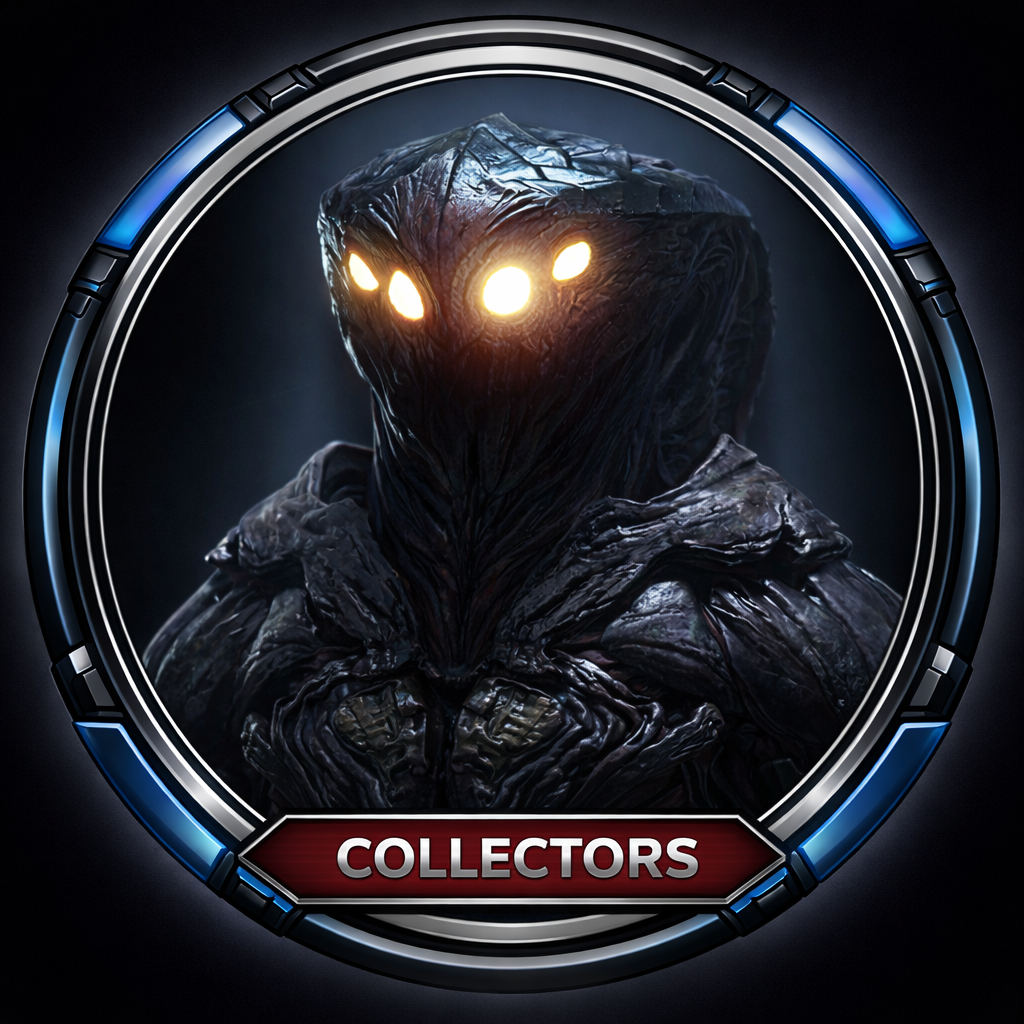
The Collectors emerged as a major galactic threat during the late Cerbshock era, long before any direct contact was made with them. Although Cerbshock never formally encountered the Collectors in open conflict, reports of their sudden and coordinated attacks reshaped interstellar strategy across multiple systems.
News began circulating of entire colonies being raided or erased by massive Collector ships and a central mothership operating from deep within the galaxy’s core regions.
These attacks were swift, precise, and overwhelming.
Few survivors were ever recovered.
Emergence of the Threat
Unlike conventional pirate groups or military factions, the Collectors did not seek territory, resources, or political leverage.
Their incursions were systematic.
Colonies were targeted.
Populations were removed.
Infrastructure was left abandoned.
Intelligence suggested that their vessels operated using advanced, partially unknown technology far beyond standard military capabilities.
Without the presence of Reaper influence in this timeline, the Collectors were considered even more dangerous—unrestricted by external control and operating with full autonomy.
Strategic Impact
The scale of the threat made it clear that no single organization could confront the Collectors alone.
Neither Cerbshock nor Cerberus possessed the resources to counter a full Collector offensive using conventional means.
Fleet engagements were considered high-risk.
Direct assaults were deemed unsustainable.
Long-term containment was viewed as impossible.
As more reports surfaced, the possibility of galaxy-wide destabilization became increasingly likely.
The Andromeda Decision
Faced with a threat that could not be reliably neutralized, Cerbshock and Cerberus began preparing contingency plans beyond traditional defense.
This led to accelerated support for the Ark Program and the decision to commit resources toward intergalactic relocation.
The move to Andromeda was not viewed as retreat.
It was viewed as survival.
By leaving the Milky Way, both factions sought to preserve personnel, knowledge, and infrastructure in the event that the Collector threat escalated into full-scale extinction.
Intelligence Status
During this period:
-
No confirmed Collector strongholds were located
-
No direct communications were established
-
No successful countermeasures were developed
-
No reliable weakness was identified
All available data came from survivor accounts, sensor logs, and fragmented reconnaissance.
As a result, much of the Collectors’ true nature remains classified or unknown.
Current Assessment
Without Reaper oversight, the Collectors operate independently and unpredictably.
They are classified as an uncontrolled existential threat.
Their long-term objectives remain unclear.
Whether they are expanding, consolidating, or preparing for further campaigns is unknown.
Summary
The Collectors represent one of the few threats capable of destabilizing the entire Milky Way without warning.
They do not negotiate.
They do not retreat.
They do not operate within known political frameworks.
Their rise was a key factor in pushing Cerbshock and Cerberus toward Andromeda.
Not out of fear.
Out of necessity.