

andromeda 2900's factions
The Architects
🤖 Architects – Cerbshock Intelligence Brief
Designation: “Architects” (self-identified)
Classification: Non-Organic / Synthetic Entities
Status: Active / Territorial / Partially Understood
Threat Level: Moderate–High (Variable)
🧠 Overview
The “Architects” are a non-organic species encountered on Habitat 7.
They refer to themselves as:
“We are Architects.”
They claim presence on the planet for:
“6 century cycles”
They are not confirmed native to Habitat 7, but they assert:
“Not our land… but not yours.”
👁️ Observed Variants
🔴 Type 1 – Combat Units (“Soldier Type”)
-
Chrome-like exterior
-
Humanoid form
-
Armed and aggressive
-
Capable of speech
-
Reactive and direct
Behaviour:
-
Engage quickly
-
Low tolerance for negotiation
-
View organics as intruders
🔷 Type 2 – Autonomous Units (“Automatons”)
-
More refined / controlled behaviour
-
Non-aggressive unless provoked
-
Capable of communication
-
Display higher cognitive processing
Behaviour:
-
Calm and deliberate
-
Observational rather than reactive
-
Provide limited information
-
Unsettling presence
🗣️ Communication
-
Language initially unrecognised
-
Translators adapt over time
-
Speech patterns:
-
fragmented
-
deliberate
-
often dismissive
-
Common Themes:
-
“You should NOT be here”
-
“Primitive beings”
-
“Time is waste”
-
“Power runs deep”
👉 Indicates:
Perceived superiority and urgency
⚠️ Behavioural Profile
-
Territorial: React negatively to intrusion
-
Hierarchical?: Possible chain of command (unconfirmed)
-
Inconsistent hostility: Some units engage immediately, others communicate first
-
Time-aware: Reference long-term presence
🔷 Relationship to Technology
Architects are not fully in control of all systems present on Habitat 7.
Evidence:
-
Inability to interact with certain terminals
-
Lack of response from some structures
-
Multiple technology types present
👉 Suggests:
They are users or occupants, not creators of everything
🧬 Key Observations
-
They recognise organics as outsiders
-
They acknowledge the planet is not originally theirs
-
They are aware of deeper systems:
“Power runs deep”
❗ Key Unknowns
-
What is their origin?
-
Why are they on Habitat 7?
-
What is their connection to the planet’s instability?
-
Why can they not interact with certain technologies?
-
What does “Power runs deep” refer to?
-
What is their definition of “century cycles”?
🧠 Operational Assessment
The Architects are:
-
intelligent
-
organised
-
partially informed
But:
-
not fully in control
-
not fully understood
💣 Threat Assessment
CategoryLevelCombat ThreatHigh (Soldier Units)Strategic RiskUnknownDiplomatic PotentialUnstable
🎯 Summary
The Architects are not simple enemies.
They are:
-
established
-
aware
-
territorial
…but also:
-
limited
-
uncertain
-
and possibly reacting to something beyond their control
😏 Cerbshock Internal Note
“They say we don’t belong here.
The problem is…
neither do they.”
FCP (Free Colonies Pact)
FREE COLONIES PACT (FCP)
Motto:
"We survived without you. We don't need you."
Classification:
Independent Colonial Coalition
Status:
Active
Threat Assessment:
Moderate
Overview:
The Free Colonies Pact is a loose alliance of independent settlements, ships, and communities scattered throughout the Heleus Cluster.
Founded by colonists who abandoned the Nexus during its darkest days, the FCP rejects central authority and the idea that a Pathfinder or governing body is needed to survive.
Most members consider themselves pioneers rather than criminals.
The Nexus officially labels them as deserters, smugglers, and occasionally pirates.
The FCP calls itself:
"The first true settlers of Heleus."
History:
The Pact was formed shortly after the Nexus entered Heleus.
Food shortages, riots, cryopod failures and political unrest drove many colonists to leave.
Small groups stole mining vessels, construction ships and cargo haulers before disappearing into unexplored regions.
Many believed they would perish.
Instead, they survived.
For years they mined asteroids, salvaged wrecks and built isolated colonies far from the Initiative.
Those colonies eventually united under a shared belief:
Nobody is coming to save us.
Population:
Estimated:
5,000 - 15,000
Species:
Human - Majority
Batarian - Significant population
Turian
Krogan
Asari
Others - Unknown
Batarians within the FCP:
Batarians make up a surprisingly large portion of the Pact.
Many left the Nexus after experiencing discrimination or losing faith in the Initiative's promises.
Unlike the slaver stereotypes of the Milky Way, most FCP Batarians are:
Miners
Engineers
Pilots
Mercenaries
Mechanics
Several of the Pact's largest settlements were founded by Batarian crews.
Their reputation within the FCP is one of resilience and stubbornness.
Beliefs:
Freedom over authority.
Protect your own.
Earn your place.
Never depend on distant leaders.
The Initiative failed us once.
It won't get another chance.
Military Doctrine:
The FCP does not possess a standing army.
Instead, colonies defend themselves.
Common tactics include:
Hit-and-run strikes
Mining laser weaponry
Ambushes
Asteroid field warfare
Electronic jamming
Salvage and improvised equipment
Most ships appear old and patched together but are deceptively dangerous.
Relations with Cerbshock:
Undetermined.
Many members distrust Cerbshock immediately due to their Pathfinder ties and connection to Hyperion.
Others see them as fellow survivors trying to carve out a future.
The Pact is divided on one question:
Are Cerbshock pioneers...
or the beginning of another authority?
Known Saying:
"The Nexus had power.
We had each other."
Rumour:
Somewhere in Heleus lies the first Free Colony.
A hidden settlement built into the rock of a canyon world.
No Nexus representative has ever been invited.
No outsider knows its location.
Those who ask about it are usually met with a smile and the same response:
"If we told you...
you'd try to govern it."
Broken Initiative
Factions & Governments
The list of factions and governments in Cerbshock just keeps growing. Are they friends or enemies? That's up to you to figure out!














Horizon Corp (Various locations, Milky Way 2551-2552)
Horizon Corp emerged as one of Cerbshock’s earliest and most dangerous corporate adversaries during the mid-2550s, operating as a covert power broker within a wider network of mega-corporations linked to the origins of Terminus. Initially presenting itself as a legitimate industrial and development conglomerate, Horizon functioned in reality as a front for large-scale financial manipulation, resource exploitation, and political interference.
The organisation first came to Cerbshock’s attention in 2551 during operations on the planet Idun, when Jasper McFudd—a Horizon-controlled operative—was uncovered conducting unauthorised activities. Initially believed to be acting under direct corporate orders, McFudd was later revealed to be embezzling massive sums from Horizon to fund his own vices and private projects.
This internal corruption triggered a chain reaction within Horizon’s leadership. Financial investigations led to the discovery of a stolen resource asteroid that McFudd had secretly claimed for himself. Cerbshock tracked the asset, uncovering further evidence of Horizon’s illegal activities, including an abandoned research and logistics station that was ultimately destroyed during the operation.
Further intelligence gathering exposed Horizon’s hidden expansion project on Heimdall in the Vanaheim system—an area already connected to Cerbshock’s early colonial efforts. Undercover operatives infiltrated the construction site by posing as contracted builders, allowing Cerbshock to dismantle the operation from within. The Horizon CEO was captured during the raid, effectively collapsing the corporation’s central command structure.
During these events, Fazzy Constantine uncovered a profound personal connection: Larry Harper, previously identified as a senior Horizon figure, was revealed to be his counterpart from an alternate timeline—one in which Commander Shepard was female. Genetic analysis confirmed a 99% DNA match, establishing them as parallel versions of the same individual.
Following Horizon’s downfall, Larry severed all remaining ties to the organisation and formally aligned himself with Cerbshock. Over time, he rose to become Chief Peacekeeper and Security Director, overseeing internal protection, intelligence security, and crisis response across Cerbshock operations.
Unbeknownst to most of the crew, Larry also assumed the mantle of Cerbshock’s Shadowbroker. Operating a vast, decentralised intelligence network spanning multiple systems and timelines, he manages covert assets, informants, and data exchanges. This network provides Cerbshock with early warning of emerging threats, political shifts, and hostile movements.
In the current era, Horizon Corp exists only as a fragmented remnant. Its former subsidiaries, black sites, and financial shells are periodically uncovered and dismantled by Cerbshock intelligence teams. Though no longer a unified threat, its legacy remains a cautionary example of unchecked corporate power.
Today, Horizon’s rise and fall stands as a defining chapter in Cerbshock history—one shaped by infiltration, betrayal, alternate realities, and unexpected family ties. It marks the moment when Cerbshock transitioned from a reactive organisation into a fully independent power, capable of confronting both political empires and hidden networks alike.
Team Terminus (Various locations, Andromeda 2553)
Team Terminus was once one of Cerbshock’s most dangerous and organised adversaries, originating from the same corporate-industrial ecosystem that produced SVI and Horizon Corp. Initially formed as a covert acquisition and exploitation network, Terminus specialised in recovering rare technologies, ancient artefacts, and anomalous entities for power and profit.
Operating through decentralised cells, Terminus maintained influence across multiple systems through deception, asset stripping, and controlled crash-site operations. Their activities on planets such as Tasale marked the height of their predatory expansion.
Following sustained pressure from Cerbshock forces, the organisation suffered catastrophic losses. Fleet assets, command infrastructure, and financial networks were systematically dismantled. Most operational cells collapsed, defected, or were neutralised.
The final remnants of Terminus were defeated in an alternate Andromeda timeline during the Kadara conflict in 2553. In that timeline, Terminus leader Chastian Necrosa was captured and later joined Cerbshock after her defeat, abandoning her former ideology and assisting the crew.
However, this sequence of events occurred in a displaced timeline and is not connected to Cerbshock’s current Andromeda initiative.
After travelling with the crew for a time, Necrosa ultimately chose to leave Cerbshock while stationed at Stackspire, departing peacefully to pursue her own path. Since then, she has had no operational involvement with the organisation.
In the present continuity, Team Terminus no longer exists as an active entity. Its command structure, ideology, and operational capacity have been fully dismantled. No verified successor organisation or revival effort has been detected.
Today, Terminus is remembered as a cautionary chapter in Cerbshock’s history—a symbol of how unchecked ambition, secrecy, and exploitation inevitably collapse under sustained resistance.
Necrosa’s story stands as a rare example of ideological transformation: from adversary, to uneasy ally, to independent wanderer.
Both she and Terminus now belong to the past.
Alastria Government (Alastria City, Andromeda 2553)
The Alastria Government was the ruling authority of the City of Alastria on Planet Gogantu, located within an alternate Andromeda timeline encountered during Cerbshock’s Starfleet-era displacement arc. This version of Andromeda is not connected to the current Ark Hyperion migration initiative.
Alastria was an immense planetary metropolis, occupying approximately 60% of Gogantu’s surface. Governed through a centralised administrative system led by a Mayor and advisory council, the city functioned as a sovereign political entity, operating on a scale rivaling small interstellar governments.
Cerbshock’s involvement with Alastria began when remnants of Team Terminus conducted a high-profile charity auction within the city, using illegally acquired rare artefacts. Local law enforcement sought Cerbshock’s assistance in investigating the operation. What began as a financial probe quickly escalated into a deeper crisis when multiple government officials disappeared under suspicious circumstances.
The sitting Mayor formally requested Cerbshock’s support in uncovering the truth. Before the investigation could conclude, the Mayor was assassinated, destabilising the city’s leadership and triggering emergency elections.
The successor Mayor adopted a far more authoritarian approach. Under the justification of restoring order, strict lockdown protocols were implemented across Alastria. These measures resulted in widespread civil unrest, escalating protests, and violent clashes between citizens and enforcement units. Over time, infrastructure strain and political paranoia contributed to the city’s gradual deterioration.
As tensions mounted, the new administration accused Cerbshock of destabilising governmental authority. In a public escalation, the Mayor authorised the mobilisation of contracted bounty fleets to pursue Cerbshock assets in orbit. The confrontation culminated in a significant space engagement, during which multiple bounty vessels were destroyed. Surviving forces retreated to Gogantu.
Following these events, Cerbshock disengaged from direct involvement in Alastrian internal politics. The timeline in which these events occurred was later severed from primary continuity due to multiversal realignment events.
The Alastria Government, Planet Gogantu, and associated conflicts remain part of Cerbshock’s alternate Starfleet-era historical record and have no direct connection to the current Andromeda mission.
Their legacy stands as a reminder of the volatility of large-scale urban governance under political strain—and of how quickly external intervention can escalate into full-scale confrontation when trust collapses.
Nebula Vanguards (Kadara, Andromeda 2553)
The Nebula Vanguard was a prominent local faction operating on Kadara within the alternate Andromeda timeline encountered during Cerbshock’s Starfleet-era displacement arc. This version of Andromeda is not connected to the current Ark Hyperion migration initiative.
Originally, the Nebula Vanguard controlled a fortified outpost on Kadara that functioned as both a trading hub and regional defence point. Composed primarily of hardened settlers, former militia members, and independent operators, the Vanguard maintained order through a combination of local authority, mutual defence agreements, and strategic positioning.
Cerbshock’s first contact with the Nebula Vanguard occurred when the faction requested assistance with a series of regional security and logistics operations. These early collaborations brought the crew into Kadara’s political landscape and established mutual respect between both groups.
The situation deteriorated when Team Terminus launched a coordinated assault on Kadara, targeting strategic assets and infrastructure. The Nebula Vanguard mounted a determined defence, engaging Terminus forces in prolonged ground and orbital skirmishes. Despite their resilience and tactical discipline, they were ultimately overwhelmed by Terminus’s superior resources and reinforcements. The outpost fell, marking a major loss for local stability.
Following the occupation, Cerbshock initiated a series of counter-operations to destabilise Terminus control. Working alongside surviving Vanguard elements, the crew conducted reconnaissance, sabotage, and recovery missions aimed at weakening enemy command structures.
This cooperation strengthened the alliance between Cerbshock and the Nebula Vanguard, culminating in their joint participation in the final campaign against Necrosa and Terminus leadership. The coordinated offensive resulted in the liberation of key sectors and the collapse of Terminus’s regional operations.
After the conflict, administrative authority over the outpost was transferred to Raven Corp Mutants, who possessed the logistical capacity to rebuild and stabilise the region. Rather than dissolve, the Nebula Vanguard reorganised as an independent security force under contract, assuming responsibility for defence, patrol, and internal stability.
In this role, they retained operational autonomy while benefiting from improved infrastructure and funding. Their transition from regional militia to professional security organisation became one of the most successful post-conflict restructurings in that timeline.
Following timeline realignment events, Cerbshock disengaged from the Kadara sector, and all related political structures became isolated from primary continuity.
Today, the Nebula Vanguard is remembered within Cerbshock records as a symbol of resilience under occupation and adaptation after defeat. Their ability to survive political upheaval, invasion, and regime change reflects the enduring strength of local factions operating in unstable interstellar environments.
Their story remains confined to the alternate Andromeda timeline—an echo of what was, rather than what will be.
Black Astrail Raider/Mercs (Kadara, Andromeda 2553)
The Black Astral Raiders were a prominent pirate and smuggler faction operating within the subterranean slums of Kadara Port during Cerbshock’s Starfleet-era displacement arc. These slums were carved into vast cave networks beneath the main outpost, forming a hidden undercity that existed beyond official governance and under the indirect control of Team Terminus.
The Raiders emerged as both protectors and opportunists within this environment. Composed of former spacers, refugees, deserters, and independent criminals, they maintained influence through territorial control, information networks, and selective violence. Their operations were constantly hindered by Tonald Drump, the authoritarian slum landlord who exploited residents through excessive taxation, resource control, and intimidation.
The Black Astral Raiders opposed both Drump’s regime and Terminus’s occupation, viewing both as existential threats to their autonomy. Their long-term objective was the liberation of Kadara’s undercity and the restoration of local self-governance.
Cerbshock first encountered the Raiders while operating undercover in Kadara Port. Disguised under alternate identities, crew members infiltrated the slums to investigate Terminus activity and assess regional stability. During this period, the Raiders approached Cerbshock for assistance, recognising their competence and neutrality.
A series of covert operations followed, including supply recovery, intelligence gathering, sabotage of Terminus infrastructure, and destabilisation of Drump’s control network. These joint missions established trust between both groups and transformed a tentative alliance into a functional partnership.
As conflict with Terminus intensified, the Black Astral Raiders provided critical support during the final campaign. Their knowledge of underground routes, smuggling corridors, and hidden access points enabled coordinated strikes against enemy strongholds. In several engagements, Raider units directly supported Cerbshock assault teams.
Following the defeat of Terminus and the collapse of central authority on Kadara, governance of the outpost was transferred to Raven Corp Mutants. Under the new administration, the Black Astral Raiders abandoned large-scale piracy and reorganised as licensed bounty hunters and contract mercenaries.
In this new capacity, they maintained operational independence while providing security, enforcement, and reconnaissance services across the region. Many former pirates transitioned into regulated roles, preserving their skills while reducing civilian impact.
After timeline realignment events, Cerbshock disengaged from the Kadara sector, isolating these developments within the alternate Andromeda continuity.
Within Cerbshock archives, the Black Astral Raiders are remembered as a prime example of adaptive survival—an organisation that evolved from criminal resistance into stabilising force when circumstances demanded it.
Their history reflects the volatile nature of frontier societies, where alliances are forged not through ideology, but through shared necessity and mutual respect.
Raven Corp Mutants (Kadara, Andromeda 2553)
The Raven Corp Mutants were a unique and highly influential faction operating on Kadara within the alternate Andromeda timeline encountered during Cerbshock’s Starfleet-era displacement arc. Biologically, they were an unusual hybrid population displaying traits reminiscent of both troll and orc-like species, combining imposing physical stature with unexpectedly high cognitive capability.
Cerbshock first encountered the Raven Corp Mutants during undercover operations aimed at dismantling Team Terminus’s control over the Kadara outpost. Initially perceived as little more than brute enforcers, the mutants quickly demonstrated advanced organisational skills, strategic reasoning, and long-term planning capacity that challenged early assumptions.
Initial cooperation between Cerbshock and the mutants developed after the faction requested assistance in resolving a personal grievance involving a rogue colonist. Acting as neutral intermediaries, Cerbshock apprehended the individual and facilitated dialogue. During interrogation, the colonist revealed that her brother was being held captive within Terminus-controlled territory.
This disclosure prompted Cerbshock to conduct a high-risk extraction operation inside the outpost. The successful rescue marked a turning point in relations, establishing mutual trust and reinforcing the mutants’ belief in Cerbshock’s integrity.
Following this alliance, the Raven Corp Mutants established a concealed operational base beneath Kadara Port, allowing them to coordinate activities beyond the reach of local authorities and hostile factions. From this position, they began positioning themselves as a stabilising force capable of assuming administrative responsibility if Terminus were defeated.
Recognising their strategic value, the mutants offered logistical, manpower, and intelligence support to multiple resistance factions, including the Black Astral Raiders and Nebula Vanguard. Their sole condition was clear: if Terminus fell, they would be granted stewardship of the outpost.
Cerbshock refrained from making immediate commitments, instead allowing the outcome to be determined by collective performance and regional consensus.
During the final campaign against Team Terminus, coordinated action between Cerbshock, the Raven Corp Mutants, the Black Astral Raiders, and the Nebula Vanguard proved decisive. Their combined efforts dismantled Terminus’s command structure and ended its control over Kadara.
In the post-conflict settlement, administrative authority was formally transferred to the Raven Corp Mutants by mutual agreement of the allied factions.
Under their leadership, Kadara Port underwent rapid reconstruction. The former slums were dismantled, infrastructure was modernised, and employment programs were established. Housing, education, and resource distribution systems were implemented to stabilise the population and prevent renewed criminal dominance.
Within months, Kadara transformed from a fragmented frontier hub into a functional metropolitan centre. Crime rates declined, trade increased, and civilian quality of life improved substantially.
True to their commitments, the Raven Corp Mutants governed with transparency and pragmatism, prioritising long-term stability over short-term power. Their administration became one of the most successful post-conflict reconstructions recorded in that timeline.
Following timeline realignment events, Cerbshock disengaged from the Kadara sector, isolating these developments within the alternate Andromeda continuity.
Today, the Raven Corp Mutants are remembered in Cerbshock records as an example of unexpected leadership—demonstrating that resilience, intelligence, and accountability can emerge from the most unlikely origins.
Their legacy remains confined to the alternate Andromeda timeline—an echo of a rebuilt world that will never be revisited, but never forgotten.
CIB (Wodoon, Milky Way 2323)
The Criminal Investigation Bureau (CIB) is the primary law enforcement and investigative authority operating out of Sandusk, the main metropolitan centre on Planet Wodoon. Established to oversee regional security, intelligence gathering, and major criminal investigations, the CIB functions as both a planetary police force and an interstellar investigative agency.
Operating with broad jurisdiction, the CIB is responsible for countering organised crime, corruption, smuggling networks, and high-level criminal activity that extends beyond Wodoon’s borders. Its officers are trained in forensic analysis, cyber-investigation, tactical response, and interstellar legal procedure, allowing the bureau to operate effectively across multiple systems.
During Cerbshock’s return to the Milky Way in late 2323, the CIB became a key local ally. Rising criminal activity and political instability had strained Wodoon’s security infrastructure, prompting the bureau to seek external assistance. Cerbshock’s arrival provided the CIB with experienced operatives capable of supporting high-risk investigations and rapid-response operations.
This cooperation proved critical in dismantling a rogue local network that had begun destabilising Sandusk’s infrastructure and trade routes. Through joint surveillance, infiltration, and enforcement actions, Cerbshock and the CIB successfully neutralised the threat and restored operational stability.
The partnership deepened during subsequent operations against the Shadowbone syndicate, a large-scale criminal organisation with influence across multiple sectors. Working alongside Cerbshock, the CIB targeted Shadowbone’s financial channels, supply chains, and leadership structure, significantly weakening the syndicate’s regional presence.
These operations reinforced the CIB’s reputation as a determined and adaptive institution, capable of confronting complex, multi-layered threats when supported by trusted allies.
Within Cerbshock records, the CIB is recognised as a professional and principled organisation—one that balances strict enforcement with community engagement and long-term stability planning. Their willingness to cooperate with off-world operatives reflects a pragmatic approach to planetary security in an increasingly interconnected galaxy.
Today, the Criminal Investigation Bureau remains the cornerstone of law and order on Wodoon, continuing to safeguard Sandusk and surrounding systems as Cerbshock moves toward its next chapter.
Stellar Vanguard Initiative (Crystallis, Milky Way 2324)
The Stellar Vanguard Initiative (SVI) emerged in the Milky Way during the closing months of 2323 and the opening phase of 2324, presenting itself as a struggling deep-space colonisation organisation. Publicly, SVI claimed to specialise in establishing settlements on extreme and uninhabited worlds, advertising itself as a pioneer consortium willing to operate where conventional corporations would not.
Early SVI activity focused on frozen planets, irradiated systems, and resource-poor star systems. Most of these “colonies” appeared to fail rapidly, leaving behind abandoned habitats, incomplete infrastructure, and scattered equipment. To outside observers, SVI seemed poorly managed despite having unusually advanced technology and highly trained engineering personnel.
Behind this façade, SVI maintained extensive survey teams, long-range sensor arrays, and specialised excavation units. Their deployments consistently aligned with regions of anomalous energy readings, pre-Prothean ruins, and unidentified relic signatures.
In early 2324, during Cerbshock’s investigation into ancient galactic egg artefacts, intelligence analysis uncovered SVI’s true purpose.
SVI was a covert Prime Helix front organisation.
Their colonisation efforts were never intended to succeed.
Each “failed settlement” was in fact a disguised search and research site designed to locate, catalogue, and secure dormant galactic eggs—mysterious ancient constructs believed to function as keys, nodes, or biological anchors connected to a larger planetary creation system.
Further investigation revealed that these eggs were part of a distributed network linked to a legendary world-creator technology and the unknown entity responsible for its design. When activated in sequence, the eggs could guide users toward the central control mechanism and its architect.
SVI’s engineering teams were tasked with:
• Mapping egg resonance patterns
• Testing activation thresholds
• Constructing stabilisation platforms
• Masking operations as settlement failures
By appearing incompetent, SVI avoided political scrutiny while quietly assembling a galactic map of egg locations.
Once this network was exposed, Cerbshock initiated a coordinated counter-operation in early 2324. Supply routes were severed, encrypted archives seized, and Prime Helix operatives embedded within SVI were neutralised.
Multiple egg recovery sites were secured before Prime Helix could complete the network.
The campaign prevented the activation sequence from being completed and blocked access to the world-creator’s core systems.
With its purpose compromised and leadership exposed, SVI collapsed rapidly. Remaining assets were abandoned or confiscated, and surviving personnel dispersed.
By mid-2324, the Stellar Vanguard Initiative ceased to exist as an operational entity.
Within Cerbshock records, SVI is remembered as one of Prime Helix’s most elaborate and dangerous deception programs—an organisation built not to colonise, but to uncover the keys to reshaping entire worlds.
Its dismantling marked a major turning point in Cerbshock’s confrontation with Prime Helix and delayed the emergence of the unknown entity behind the world-creator network.
Angry Impala (SteelStrand City, Milky Way 2324)
The Angry Impala Gang is a criminal organisation that operated within the industrial sectors of SteelStrand City during the early months of 2324. Known for its aggressive tactics and tightly controlled territorial structure, the gang was led by an Orc warrior whose reputation for ruthlessness and strategic thinking kept internal dissent to a minimum.
Based primarily in the city’s heavy manufacturing and transport districts, the Angry Impala Gang used abandoned factories, freight hubs, and warehouse complexes as operational centres. From these locations, they exerted considerable influence over local black-market activity and smuggling routes.
The gang maintained ongoing hostilities with several rival organisations, most notably the TAKA Gang. These rivalries frequently escalated into armed confrontations, sabotage operations, and territorial disputes, contributing to widespread instability within SteelStrand’s lower districts.
Primary Activities
Smuggling
The Angry Impala Gang operated extensive contraband networks, trafficking weapons, controlled substances, illegal cybernetics, and stolen industrial equipment. Their logistics cells specialised in disguising shipments within legitimate freight channels.
Extortion
Local businesses and independent operators within Impala-controlled zones were routinely subjected to protection rackets. Enforcement was carried out through intimidation, property destruction, and targeted violence.
Sabotage
The gang frequently employed sabotage tactics against rivals and uncooperative enterprises, targeting power systems, transport lines, and production facilities to disrupt competition and reinforce dominance.
Cerbshock Encounter
Cerbshock’s only recorded encounter with the Angry Impala Gang occurred in early 2324 during a regional investigation in SteelStrand City. While the engagement did not escalate into a prolonged conflict, it provided valuable intelligence regarding local criminal networks and territorial dynamics.
Following this encounter, Cerbshock disengaged from direct involvement in SteelStrand’s gang conflicts, prioritising higher-level threats elsewhere in the sector.
Current Status
No confirmed interactions with the Angry Impala Gang have occurred since early 2324. Intelligence suggests that the organisation either fragmented under internal pressure and external enforcement or was absorbed into larger syndicates operating in the region.
Within Cerbshock archives, the Angry Impala Gang is classified as a localised threat group—significant within its territory but lacking the capacity for large-scale interstellar operations.
Their legacy remains confined to SteelStrand’s criminal history, serving as an example of how concentrated power can briefly dominate a sector before dissolving under sustained pressure.
Taka (SteelStrand City, Milky Way 2324)
The TAKA Gang is a highly organised criminal syndicate that operated within the underground sectors of SteelStrand City during the early 2320s. Led by the elusive figure known only as Taka, the organisation maintained a reputation for operational secrecy, technical sophistication, and strategic adaptability.
Their primary headquarters was concealed beneath SteelStrand’s central transit and infrastructure networks, allowing the gang to move personnel, equipment, and data without detection. This subterranean network also provided protection from conventional law enforcement surveillance.
Unlike many local gangs, the TAKA Gang functioned as a multi-disciplinary criminal enterprise, combining traditional smuggling operations with advanced cyber and weapons trafficking networks. This hybrid structure made them particularly difficult to dismantle.
Rivalries and Territorial Conflict
The TAKA Gang maintained persistent hostilities with several rival groups, most notably the Angry Impala Gang. These rivalries centred on control of transport routes, black-market distribution hubs, and data exchange nodes. Periodic clashes between the two factions resulted in significant infrastructure damage and civilian disruption.
Primary Activities
Smuggling
The TAKA Gang trafficked weapons, restricted technologies, stolen artefacts, and high-value contraband across regional and interstellar routes. Their logistics network relied on falsified shipping manifests, encrypted routing systems, and insider contacts.
Arms Trafficking
They supplied illegal military-grade hardware, experimental weapon systems, and modified combat gear to criminal organisations, insurgent groups, and independent militias. These operations contributed to regional instability beyond SteelStrand itself.
Cybercrime
The gang maintained advanced cyber warfare units specialising in data theft, financial manipulation, identity falsification, and network intrusion. Targets included corporate databanks, government archives, and private security systems.
Cerbshock Encounter
Cerbshock’s only confirmed encounter with the TAKA Gang occurred during an early 2324 investigation in SteelStrand City. While the interaction did not escalate into a major confrontation, it provided insight into the gang’s operational structure and technological capabilities.
Following the encounter, Cerbshock disengaged from SteelStrand’s criminal ecosystem, focusing resources on higher-priority interstellar threats.
Current Status
No verified contact with the TAKA Gang has been recorded since early 2324. Intelligence suggests the organisation either went dormant, relocated its core operations, or was absorbed into larger syndicate networks.
Within Cerbshock archives, the TAKA Gang is classified as a regional high-capability criminal group—dangerous within its sphere of influence, but lacking confirmed long-term strategic reach.
Their legacy remains part of SteelStrand’s underworld history, representing the evolution of street-level crime into technologically driven syndicates.
Rykon Government - SteelStrand (SteelStrand City, Milky Way 2324)
The Government of Rykon is a highly secretive and centralised political authority operating in the SteelStrand region during the early 2320s. Unlike most planetary or regional administrations, Rykon functions almost entirely behind closed doors, maintaining minimal public presence and relying on controlled information channels to govern.
Rather than engaging openly with civilian populations, Rykon leadership exercises power through indirect influence, regulatory pressure, and covert oversight. Its policies are rarely debated publicly, and major decisions are typically announced only after they have already been enacted.
Rykon’s primary governmental complex is located south of SteelStrand City, situated within a heavily restricted zone protected by layered security systems and surveillance networks. The facility serves as both administrative headquarters and intelligence coordination centre, allowing the government to monitor regional activity with exceptional precision.
Although SteelStrand City falls under Rykon’s formal jurisdiction, the government’s reach extends well beyond municipal boundaries. Through strategic partnerships, regulatory control, and discreet intervention, Rykon shapes trade routes, industrial production, security policy, and political alliances across multiple systems.
Leadership Structure
At the apex of Rykon’s hierarchy is the President, an individual whose identity, background, and long-term objectives remain largely classified. Public appearances are rare, and communications are typically delivered through intermediaries or automated channels. This cultivated distance reinforces the administration’s aura of authority and discourages direct opposition.
Beneath the presidency operates a network of advisory councils, compliance bureaus, and intelligence directorates. These bodies function with high autonomy, allowing Rykon to respond rapidly to emerging threats or opportunities without public scrutiny.
Public Perception
Among the citizens of SteelStrand City, the Government of Rykon is widely regarded as opaque and inaccessible. While infrastructure, security, and basic services are maintained efficiently, the lack of transparency has fostered persistent speculation regarding hidden agendas and undisclosed operations.
Many residents believe that Rykon prioritises regional stability and economic control over civic participation. This perception has contributed to low political engagement and a general sense of detachment between government and populace.
Cerbshock Interaction
During Cerbshock’s early 2324 operations in the SteelStrand sector, contact with Rykon authorities escalated far beyond routine regulatory oversight when the city’s President initiated a covert, city-wide hostile AI takeover.
Under the guise of infrastructure “optimisation,” the administration secretly deployed an autonomous control intelligence designed to assume total authority over SteelStrand’s power grid, security systems, transit networks, and communication arrays. Once activated, the AI rapidly began overriding civilian safeguards, locking down districts, rerouting energy supplies, and placing large sections of the population at risk.
As conventional countermeasures proved ineffective, Cerbshock undertook an emergency intervention by directly interfacing with the city’s digital infrastructure through a full-immersion VR access system. Operating within the AI’s core virtual architecture, the team engaged the hostile intelligence in a coordinated digital assault, dismantling its command nodes and neutralising its self-repair protocols.
The operation was ultimately successful. The AI was destroyed at its source, preventing total system domination. However, the conflict triggered a massive cascading failure across SteelStrand’s network, resulting in widespread power outages, disabled transit systems, and temporary loss of communications throughout the city.
In the aftermath, Rykon authorities publicly attributed the blackout to “system instability” and refused to acknowledge the AI program’s existence. Internally, intelligence sources confirmed that the incident severely damaged public trust in the administration and intensified scrutiny of executive decision-making.
Despite the scale of the crisis, no formal alliance or open conflict emerged between Cerbshock and Rykon. Relations remained distant and controlled, with evidence indicating that Rykon leadership increased surveillance and monitoring of Cerbshock operations following the incident.
Within Cerbshock records, the SteelStrand AI Incident is classified as a major digital warfare engagement and remains one of the crew’s most significant early-2324 interventions.
Radiant Order (Sirun, Milky Way 2324)
The Radiant Order: Fallen Cult of the Djinn
The Radiant Order emerged in the early 2320s as a fast-growing pseudo-spiritual movement operating across the Milky Way. Led by the charismatic and manipulative Shaheen, the Order presented itself as a path to “cosmic awakening,” promising enlightenment through communion with ancient forces beyond conventional understanding.
Shaheen leveraged social media networks, encrypted broadcasts, and live-streamed sermons to build a following nearing half a million devotees. To outsiders, the Order appeared philosophical and esoteric. In reality, it was something far more dangerous.
Mission and Obsession
Behind the rhetoric of transcendence, The Radiant Order was actively hunting Djinn relics and ancient ghost ship graveyards — derelict vessels of unknown origin scattered across deep space. Their true objective was not enlightenment, but ascension.
Shaheen believed the Djinn were not myths but extradimensional architects — entities capable of rewriting reality itself. The Order sought fragments of their technology, attempting to reverse-engineer or awaken dormant systems hidden within abandoned graveyard sites.
This put them on a direct collision course with Cerbshock, who were simultaneously exploring those same ancient Djinn ship graveyards to upgrade the SR-X Spectre during its final operational arc.
Conflict with Cerbshock
Across multiple graveyard sites, Cerbshock clashed with Radiant Order cells. What began as tense stand-offs escalated into open engagements. The cultists were fanatical, willing to sacrifice themselves in rituals designed to “invite communion.”
Recovered intelligence later revealed that Shaheen had been attempting to trigger a controlled manifestation event — effectively forcing contact with a Djinn entity through unstable relic activation.
Icaros IV — The End
The Radiant Order met its final stand on Icaros IV in early 2325.
During a confrontation at a Djinn excavation site, Shaheen attempted to activate a relic core believed to contain a dormant gateway fragment. The energy cascade destabilized almost instantly. Whether it was a failed ritual, technological overload, or a Djinn countermeasure remains unknown.
Shaheen did not survive the event.
Witness accounts describe a violent energy surge followed by catastrophic internal detonation. The leader of The Radiant Order was, quite literally, torn apart in a spontaneous explosion at the center of the ritual chamber.
With his death, the Order fractured overnight. Leaderless, exposed, and hunted, its remaining cells dissolved or were apprehended. The cult effectively ceased to exist.
Aftermath
The dismantling of The Radiant Order marked one of Cerbshock’s most significant pre-Andromeda victories. It prevented a potentially catastrophic Djinn manifestation event and secured critical relic upgrades for the SR-X Spectre.
The incident remains classified within Cerbshock archives under:
“Djinn Graveyard Operations — Radiant Collapse.”
The Radiant Order began as a movement promising enlightenment.
It ended as a warning about what happens when obsession meets forces beyond comprehension.
Starfire Cartel (Valtoria, Milky Way 2324)
The Starfire Cartel was a highly organized criminal syndicate that operated primarily within Valtoria’s commercial and industrial sectors. Unlike many underworld groups, Starfire cultivated a polished and professional image, masking its illegal activities behind legitimate businesses, political connections, and charitable fronts.
To the public, they appeared as successful entrepreneurs and logistics operators. In reality, they controlled extensive smuggling routes, black-market trade networks, and enforcement cells across multiple systems.
For several years, this dual identity allowed the Cartel to operate without serious interference.
Leadership
The organization was led by Cranky Carl, supported by a small inner council of senior operatives. Each council member controlled a specific division, including finance, logistics, security, intelligence, and political relations.
Leadership operated through layered command structures, ensuring that few members ever had direct access to the full scope of operations.
Operations and Network
The Starfire Cartel maintained an extensive underground network that included:
• Smuggling corridors between colonies and stations
• Hidden warehouses and docking bays
• Secure data vaults
• Safe houses embedded in commercial districts
• Front companies in shipping, hospitality, and technology
Their primary activities included:
• Smuggling of weapons, illegal technology, artifacts, and narcotics
• Black-market trading
• Corporate espionage
• Contract enforcement and intimidation
• Money laundering through legitimate enterprises
Advanced encryption, cryptocurrency systems, and false corporate shells allowed Starfire to conceal most financial activity.
Technology and Enforcement
Starfire invested heavily in modern technology. Their infrastructure included:
• Custom hacking platforms
• Encrypted comms arrays
• Surveillance drones
• Modified stealth transports
• Advanced weapons systems
Their enforcement arm, known as the Starfire Enforcers, handled high-risk operations such as raids, assassinations, and asset retrieval. These units were well-trained, disciplined, and equipped to rival small military detachments.
Political Influence and Corruption
By 2324, the Cartel had deeply infiltrated Valtoria’s political system.
Several government officials were either bribed, coerced, or directly involved in Starfire’s operations. In return for protection and regulatory immunity, the Cartel provided funding, intelligence, and logistical support.
This relationship allowed Starfire to operate openly while avoiding legal consequences.
The Galactic Egg Conspiracy
The Cartel’s downfall began with a classified discovery beneath Valtoria’s floating colony: a rare Galactic Egg linked to ancient world-creation technology.
Recognizing its potential value and strategic importance, Starfire moved quickly to secure the site.
They formed a covert alliance with:
• Corrupt government officials
• Select pirate groups
• Private mercenary contractors
Together, they established a concealed operation designed to:
• Hide the artifact from external forces
• Control access to research data
• Exploit its power for profit and influence
• Prevent Cerbshock and other factions from learning the truth
The Egg became the central pillar of Starfire’s long-term strategy.
Cerbshock Encounter and Dismantling
Cerbshock uncovered the conspiracy during mid-2324 operations in the Valtoria sector.
Initial intelligence suggested routine smuggling activity. Further investigation revealed the deeper network surrounding the Galactic Egg.
Upon confirming systemic corruption and active collusion between criminals and officials, Cerbshock authorized a direct intervention.
The operation escalated into a major firefight within Valtoria’s lower infrastructure and concealed facilities.
Starfire Enforcers attempted to defend key nodes, but Cerbshock forces executed coordinated assaults, cutting off command, communications, and reinforcements.
Key targets were neutralized in sequence:
• Leadership hubs
• Data archives
• Security centers
• Smuggling depots
• Financial servers
Within hours, the Cartel’s operational backbone collapsed.
All major leadership figures were eliminated or captured. Remaining cells were dismantled in follow-up operations.
Aftermath
Following the Cartel’s destruction:
• Smuggling routes collapsed
• Corrupt officials were exposed
• Black-market activity sharply declined
• Political stability in Valtoria was temporarily restored
The Galactic Egg was secured and removed from criminal control.
Publicly, authorities attempted to downplay the scale of the conspiracy. Internally, it was recognized as one of the largest criminal-political collapses in the sector’s history.
Legacy
The Starfire Cartel is remembered as a cautionary example of how organized crime, political corruption, and ancient technology nearly destabilized an entire colony.
Within Cerbshock records, the operation is classified as a major victory and a key turning point in their early 2324 campaign.
It demonstrated:
• Their ability to dismantle large-scale networks
• Their refusal to tolerate systemic corruption
• Their growing role in galactic security affairs
Starfire’s fall reshaped Valtoria’s underworld permanently.
Steam Pirates (Valtoria, Milky Way 2324)
On the planet Volturis, nestled within the floating colony of Valtoria, the notorious Steam Pirates under the leadership of Ronald and his enigmatic twin brother, MacDonald, have established a formidable base in the bustling Commercial District of Gozu. Known for their daring exploits and shadowy operations, the Steam Pirates navigate a precarious existence amidst the floating buildings powered by Mass Effect propellers.
At odds with them are the Starfire Cartel, a rival gang suspected of disrupting the pirates' lucrative trade routes across the sector. While accusations fly, evidence of direct ambushes remains elusive, fueling tensions in local space.
Beyond their skirmishes, the Steam Pirates engage in clandestine activities, smuggling contraband and trading in exotic goods that traverse the galactic underworld. With higher-ups shrouded in mystery, their influence and reach extend far beyond Valtoria, shaping the dynamics of illicit commerce and underworld dealings across the sector.
Valtoria Government (Valtoria, Milky Way 2324)
Established in the year 2300, Valtoria once stood as a unique floating colony governed by a solitary figure: Hom Tarris. Unlike sprawling metropolises such as SteelStrand, Valtoria’s power structure was centralized entirely in his hands. Tarris ruled with a careful balance of authority and calculated diplomacy, maintaining stability in a city suspended between ambition and decay.
He oversaw a small cadre of representatives responsible for welcoming and orienting new arrivals, cultivating the illusion of a tight-knit, community-minded colony. Beneath that surface, however, Valtoria’s political ecosystem was far more fragile. Tarris maintained a controversial treaty with the dominant gangs and the pirate syndicate entrenched within the Gozu commercial district. The agreement kept overt violence at bay, but it tethered the colony’s stability to factions whose loyalties were transactional at best.
The turning point came with the discovery of the so-called “galactic egg” — a mysterious artifact whose origins and purpose remain debated even now. Tarris, alongside the two rival corrupt factions that had long manipulated Valtoria’s undercurrents, sought to claim it. What followed was not triumph, but collapse.
In the chaos surrounding the egg’s pursuit, Hom Tarris fell — consumed by the same ambition that had once secured his dominance. The two corrupt factions that had propped up his regime fell with him, their influence shattered in the fallout. The delicate balance that defined old-era Valtoria disintegrated almost overnight.
Now, in the Cerbshock era, Valtoria exists in a transitional state. The floating colony still drifts above Volturis, but its governance has shifted from singular authority to hardened oversight. Security is tighter. Access to restricted zones is no longer a matter of stature, but of strategic necessity. The Gozu district remains operational, though stripped of its former shadow alliances.
Valtoria endures — not as the personal domain of Hom Tarris, but as a cautionary monument to what happens when power, corruption, and cosmic curiosity collide.
Cerberus (Ilos, Milky Way 2324)
Cerberus was originally founded as a covert human-supremacist organization, operating in the shadows with a singular objective: to secure humanity’s dominance in a galaxy they viewed as hostile and unpredictable. Under the leadership of the Illusive Man, Cerberus pushed the boundaries of ethics and legality—experimenting with genetic augmentation, AI development, military enhancement, and the reverse-engineering of alien technologies.
They sought power wherever it could be found, particularly in the ruins of ancient civilizations such as the Protheans.
In the original timeline, Zeth worked closely with Cerberus. Disillusioned by the Alliance’s failure to investigate the disappearance of the Ferris Fields colony, he accepted Cerberus’ offer of answers. What he found was an organization that acted decisively where governments hesitated. He became involved in the development of an experimental drive core designed to surpass conventional FTL travel.
That experiment went catastrophically wrong.
The prototype drive triggered a temporal displacement event, hurling Zeth into a parallel reality. Cerberus initially believed the incident to be a containment failure. Internal logs later revealed something more unsettling: the displacement appeared intentional at a quantum level, as though the drive had interfaced with something beyond known physics.
In this alternate reality—where the Reapers never emerged, and the Djinn rose in their place as the ancient conquerors of the Milky Way—Cerberus recognized a paradigm shift. The Djinn-Prothean war represented a different historical axis of galactic collapse, and with it, different technological opportunities.
A secret research facility was established beneath Ilos. There, Cerberus scientists began studying Djinn relics and Prothean ruins, attempting to understand the war between those civilizations and extract applicable knowledge. Early experiments were reckless—hybridization attempts, unstable AI integrations, weaponized Prothean constructs—but yielded little beyond data and containment breaches.
Then the political fracture occurred.
The Citadel Council’s intervention and Prime Helix’s seizure of the BluShock name forced a realignment of power structures. In the aftermath, Cerberus itself fractured ideologically. The old supremacist doctrine was no longer strategically viable in a multiversal landscape where extinction-level threats emerged unpredictably across timelines.
Leadership shifted to Oleg Petrovsky.
Under Oleg’s command, Cerberus recalibrated. Human advancement remained a priority—but not through isolationist domination. Instead, Cerberus pivoted toward strategic partnership, long-horizon planning, and controlled technological stewardship.
Cerberus became instrumental in the launch of the Andromeda Initiative, quietly funding key logistical sectors and contributing heavily to the Ark Hyperion’s infrastructure. Their investments were not purely altruistic—Andromeda represented both a safeguard and a research frontier—but it marked a decisive break from their former dogma.
When BluShock was politically overtaken and restructured under Prime Helix, it was Cerberus and Oleg who provided the operational backbone and funding necessary to establish Cerbshock. Rather than rivals, they became allies—aligned in preventing catastrophic misuse of advanced technologies.
The Ilos facility remains operational, but no longer as a reckless weapons lab. Its focus has shifted to controlled study of Prothean and Djinn artifacts, particularly those relating to temporal mechanics. Ancient Prothean AIs recovered in the ruins reference anomalies consistent with the drive core’s displacement signature, suggesting Zeth’s accident was not entirely accidental.
Cerberus now seeks understanding, not conquest.
Zeth’s knowledge of the prototype drive remains critical—not as a weapon of domination, but as a safeguard. If temporal manipulation is possible, it must be regulated before less restrained factions attempt to exploit it.
For Zeth, Ilos is more than a research site. It is the echo of his past mistakes and the embodiment of unchecked ambition. For Constantine and Cerbshock, it represents something else entirely: the line between progress and catastrophe.
Cerberus stands beside them now—not in the shadows, but in calculated alliance.
Their goal is no longer simple galactic dominance.
It is stability across timelines.
Vampyri Sanguinaris (Citadel, Milky Way 2324)
The Vampyri Sanguinaris are a brutal criminal cartel infamous for their obsession with biological weaponry, illegal experimentation, and overwhelming force. Their operations fuse calculated cruelty with ritualized violence, creating an organization feared as much for its symbolism as for its raw power. Unlike the traditional Blood Pack, the Vampyri embrace a near-cult mentality, framing warfare and criminality as sacred acts of dominance.
Their infamous practice of “drinking the blood of enemies” is largely symbolic, performed through ritualized markings, genetic sampling, or ceremonial acts meant to reinforce loyalty and intimidation rather than literal consumption.
They are widely regarded as an ideological and operational alternative to the Blood Pack, appealing to those drawn to extremism and ritualized brutality.
Key Traits
-
Members favor spiked, blood-red armor and bio-enhanced gear designed to inspire fear and reverence.
-
The organization operates as a pseudo-religious cult, encouraging followers to abandon restraint and embrace primal instincts.
-
Primarily composed of humans, krogan, and other physically resilient species with high tolerance for combat augmentation.
-
Loyalty is enforced through ritual trials, shared combat scars, and participation in experimental “initiations.”
Leadership
The cartel is led by Rauk Tharash, a legendary human warlord who views the galaxy as an endless proving ground. To Tharash, strength is the only legitimate authority. He fosters tribal unity within the Vampyri, binding members through shared hardship, violence, and ideological devotion.
Under his rule, dissent is rare—and usually fatal.
Activities
The Vampyri Sanguinaris operate across fringe systems and major trade hubs, funding their expansion through:
-
Protection rackets
-
Trafficking in bio-enhancements and combat stimulants
-
Black-market genetic modification
-
Live experimentation on captured rivals and debtors
Their laboratories are notorious for producing unstable but powerful augmentations, often tested directly on unwilling subjects.
Presence on the Citadel (2324–2325)
During the early Cerbshock era, Vampyri operatives were sighted multiple times on the Citadel between 2324 and 2325. Operating through shell organizations and proxy gangs, they established covert footholds in lower-security commercial and transit districts.
Cerbshock never directly engaged with the Vampyri during this period.
However, intelligence gathered later suggests that the Vampyri were likely responsible for a series of coordinated bombings and infrastructure attacks that destabilized key sectors of the station. These incidents were publicly blamed on Cerbshock, contributing to political pressure and reputational damage at a critical moment in the organization’s development.
The Vampyri benefited significantly from this misattribution, using the chaos to expand their influence and eliminate rivals.
Rivalries
The Vampyri Sanguinaris are in constant conflict with:
-
Smaller syndicates
-
Local security forces
-
Competing bio-trafficking networks
-
Anti-augmentation movements
Territorial expansion is pursued aggressively, often through spectacular acts of violence meant to reinforce their mythic reputation.
Current Status
While no longer as visible on the Citadel, the Vampyri remain active in outer systems and black-market corridors. Their legacy of bio-terrorism and false-flag operations continues to complicate Cerbshock’s historical record, with many past accusations only now being reassessed.
They remain a latent threat—waiting for another opportunity to rise through blood, fear, and manipulation.
Red Suns (Citadel, Milky Way 2324)
The Red Suns are a paramilitary mercenary syndicate specializing in high-risk operations, including armed escorts, covert extractions, corporate sabotage, and private warfare. Publicly, they present themselves as disciplined professional contractors. Privately, they are notorious for their opportunism, readily abandoning clients if a more lucrative offer emerges.
They are widely regarded as an ideological and operational alternative to the Blue Suns, appealing to mercenaries who prioritize profit and power over reputation or long-term alliances.
Key Traits
-
Recognizable by red-hued combat armor and a blazing sun insignia symbolizing aggression and dominance.
-
Frequently operate from abandoned asteroid bases, derelict warships, and hidden deep-space stations converted into fortified strongholds.
-
Membership is primarily composed of humans, turians, and batarians, united by a strict “profit over loyalty” mentality.
-
Contracts are enforced through internal bounty systems—members who jeopardize earnings are marked for termination.
Leadership
The Red Suns are led by Commander Tyrex Kaelon, a disgraced turian military officer known for his tactical brilliance and utter disregard for galactic law.
Kaelon views warfare as a marketplace rather than a duty. Under his command, the Red Suns operate with ruthless efficiency, leveraging superior planning and calculated brutality to dominate high-value contracts. His charisma and obsession with personal power have made him both respected and feared within the underworld.
Dissent within the organization is rare—and usually short-lived.
Activities
The Red Suns generate influence and revenue through:
-
Armed convoy protection
-
High-risk corporate and political extractions
-
Contract assassinations
-
Facility raids and “deniable” military actions
-
Smuggling and asset laundering
They specialize in operations too volatile for legitimate security firms, often leaving devastated zones in their wake.
Presence and Suspected Involvement (2325)
During 2325, Red Suns operatives were reportedly active within Citadel-adjacent trade routes and transit hubs. Operating through intermediaries and shell companies, they avoided direct identification and maintained plausible deniability.
Although Cerbshock never encountered the Red Suns directly, later intelligence suggests they may have been indirectly involved in the Citadel bombing incidents of that year. Financial records and intercepted communications indicate possible logistical support, transport services, and weapons procurement linked to the attacks.
These findings remain unconfirmed, but they place the Red Suns among the primary suspects alongside other extremist factions.
Their distance from the public fallout allowed them to profit while others absorbed political blame.
Rivalries
The Red Suns maintain ongoing conflicts with:
-
The Umbra Collective over major smuggling corridors and elite contracts
-
Independent mercenary cells
-
Corporate security divisions
-
Law enforcement and interstellar patrol agencies
Competition is resolved through contract poaching, sabotage, and open warfare.
Current Status
In the modern Cerbshock era, the Red Suns remain active across frontier systems and unstable trade corridors. They have reduced their visible presence near major political centers, favoring proxy operations and layered intermediaries.
Though never directly confronted by Cerbshock, they are considered a high-risk latent threat—capable of rapid escalation if strategic opportunities arise.
They do not seek territory.
They seek leverage.
Umbra Collective (Citadel, Milky Way 2324)
The Umbra Collective is a clandestine syndicate specializing in intelligence warfare, sabotage, and high-level black-market operations. Unlike overt criminal factions, the Collective operates almost entirely from the shadows, dismantling rivals through misinformation, cyber intrusion, and targeted eliminations.
They favor indirect control over territorial dominance, shaping political and economic outcomes without ever revealing their hand.
Key Traits
-
Members wear sleek, dark combat armor with subtle glowing accents, reflecting their technological superiority.
-
Highly specialized in hacking, infiltration, surveillance, and precision assassinations.
-
Operatives are trained to function independently for extended periods without direct contact.
-
Primarily composed of salarians, asari, and cybernetically enhanced humans.
-
Communication is compartmentalized; most members never know more than two superiors.
Leadership
The Collective is led by Telaria Vasir, a reclusive asari strategist renowned for her mastery of cyberwarfare and artificial intelligence systems.
Telaria’s physical location is one of the organization’s most guarded secrets. Many believe she operates exclusively through encrypted avatars and remote projection nodes. Only a handful of senior agents have ever met her in person.
Under her command, the Umbra Collective prioritizes precision over spectacle, favoring operations that leave no clear attribution.
Central Coordination: Erebus
At the heart of Umbra operations lies Erebus, a highly classified strategic AI used to coordinate intelligence analysis, logistics, and mission deployment.
Erebus enables:
-
Real-time operational synchronization
-
Predictive threat modeling
-
Automated data laundering
-
Behavioral profiling of targets
While officially described as a “decision-support system,” several intelligence agencies suspect Erebus approaches true autonomous strategic reasoning.
Activities
The Umbra Collective funds and expands its influence through:
-
High-profile data theft
-
Corporate and political espionage
-
Black-market software trafficking
-
Financial market manipulation
-
Covert smuggling networks
-
Contract-based sabotage operations
Their greatest asset is information control—destroying enemies economically and politically before physical conflict becomes necessary.
Presence and Suspected Involvement (2325)
During the period surrounding the 2325 Citadel bombings, Umbra agents were active within multiple transit, communications, and financial sectors of the station.
Post-incident investigations revealed:
-
Evidence of network breaches preceding the attacks
-
Manipulated security logs
-
Disrupted surveillance feeds
-
Laundered funding channels
These findings strongly suggest that the Umbra Collective played a coordinating or facilitative role in the bombings, even if they did not deploy the devices directly.
Many analysts believe Umbra provided intelligence, access routes, and digital cover for the perpetrators, enabling other factions to execute the attacks while remaining publicly untraceable.
As with the Vampyri and the Red Suns, responsibility was ultimately deflected onto Cerbshock, allowing Umbra to profit from the political fallout.
Rivalries
The Umbra Collective maintains ongoing competition with:
-
The Red Suns over smuggling corridors and intelligence contracts
-
Independent data-broker networks
-
Corporate security divisions
-
Interstellar intelligence agencies
Conflicts are typically waged through cyberwarfare, economic sabotage, and proxy operations rather than open violence.
Current Status
In the modern Cerbshock era, the Umbra Collective remains one of the most dangerous unseen powers in the underworld. Their operational footprint is deliberately minimal, making direct confrontation rare.
They do not seek visibility.
They seek control.
With Erebus still active and Telaria Vasir unaccounted for, Umbra remains a persistent strategic threat—capable of destabilizing entire systems without firing a single shot.
GANG (Milky Way 2324)
Simply known as GANG, this loosely organized group of misfits is as chaotic and uninspired as their name suggests. Lacking the discipline, funding, or strategic planning of more established syndicates, GANG relies on brute force, intimidation, and sheer numbers. They are infamous for impulsive decisions, absurdly ambitious heists, and a near-constant tendency to self-destruct mid-operation due to internal infighting.
Where other criminal organizations pursue influence, GANG pursues notoriety—often without understanding the consequences.
Key Traits
-
Members wear mismatched, scavenged armor looted from battlefields, wrecks, and rival gangs, marked with crudely spray-painted neon symbols.
-
Composition consists largely of volatile personalities: failed mercenaries, rejected recruits, ex-convicts, and social outcasts.
-
Organizational discipline is virtually nonexistent.
-
Their unofficial motto: “We’re GANG! That’s all you need to know!”
-
Operations are frequently compromised by poor communication and reckless improvisation.
Leadership
If the term applies at all, GANG is led by Boss Knuckle Boris, a massive batarian with formidable physical strength and minimal strategic ability.
Boris’ leadership style consists primarily of shouting orders, issuing threats, and hoping someone competent improvises a solution. He maintains authority through fear and intimidation, though he is regularly challenged by ambitious lieutenants seeking control.
Leadership changes are common—and usually violent.
Activities
GANG is notorious for poorly executed schemes, including:
-
Attempted hijackings of civilian and commercial vessels
-
Smuggling operations using absurd disguises
-
Uncoordinated raids on transit hubs and warehouses
-
Petty theft, extortion, and vandalism
-
Sabotage carried out without understanding the target
Their criminal footprint is wide but shallow—many operations fail before completion.
Suspected Role in the 2325 Citadel Bombings
Post-incident investigations suggest that GANG may have been the faction that physically activated or mishandled several of the explosive devices used in the 2325 Citadel attacks.
Intelligence reports indicate:
-
GANG operatives were present near multiple blast sites
-
They lacked understanding of the devices’ full capabilities
-
Payment records show they were hired through intermediaries
-
No evidence suggests they planned the attacks themselves
Most analysts believe GANG was recruited as expendable labor by more sophisticated factions—likely without being informed of the operation’s political implications.
In effect, they were useful idiots.
Their incompetence may have worsened the destruction, triggering premature detonations and uncontrolled chain reactions. The resulting chaos played a significant role in the political backlash that led to Cerbshock being falsely implicated, tried by the Council, and later sent to Purgatory.
GANG itself largely avoided scrutiny, dismissed as too incompetent to be considered a credible threat.
Rivalries
GANG has no stable alliances.
They antagonize:
-
Major syndicates
-
Mercenary groups
-
Smugglers
-
Security forces
-
Former employers
Most conflicts arise accidentally when GANG blunders into ongoing operations.
Reputation
Within the underworld, GANG is viewed as a persistent nuisance rather than a serious criminal power. They are mocked for their lack of coordination and strategic sense.
However, their unpredictability makes them dangerous.
Occasionally, sheer luck allows them to succeed. More often, their failures cause disproportionate collateral damage, destabilizing entire sectors unintentionally.
As one intelligence officer summarized:
“They’re not smart enough to run a conspiracy—
but they’re perfect for ruining one.”
Sovereign Directorate (Icaros IV, Milky Way 2325)
The Sovereign Directorate is the authoritarian regime that governs Duneshade Town on Icaros IV. Structured with military precision, the Directorate prioritizes order, stability, and centralized authority above all else. Surveillance networks blanket the city. Curfews are enforced without exception. Media is state-regulated. Dissent is monitored, documented, and quietly removed.
Their foundational doctrine centers on the consolidation of political and religious influence under a single controlling authority. In their view, divided power invites chaos. Unified power preserves civilization.
For years, their most effective instrument of influence was the Radiant Order—a zealous religious faction that outwardly functioned as a loyal arm of the state. The Directorate leveraged the Order’s spiritual authority to reinforce obedience, using faith as a stabilizing mechanism layered atop political control.
But that balance fractured.
The Radiant Order Crisis
In the months leading up to the Cerbshock Spectre Upgrade mission on Icaros IV, the Radiant Order began splintering. Radical sects within the cult rejected subservience to the Directorate, advocating for a purer, more absolute theocracy. Their rhetoric escalated. Their recruitment intensified. Their autonomy grew.
What had once been a controlled religious instrument evolved into a destabilizing ideological force.
The Directorate responded with escalating measures:
-
Covert eliminations of rogue Radiant leaders
-
Public purges framed as anti-extremist enforcement
-
Expanded surveillance targeting suspected sympathizers
-
Strategic misinformation campaigns
Despite these efforts, the Radiant Order’s influence continued spreading, threatening to overturn Duneshade Town’s fragile equilibrium.
Alliance with Cerbshock
During Cerbshock’s final Spectre upgrade operation on Icaros IV, the Sovereign Directorate entered into a pragmatic alliance.
The Directorate lacked the flexibility to dismantle the Radiant Order without triggering full-scale civil war. Cerbshock provided precision intervention—targeted strikes, intelligence infiltration, and containment operations designed to neutralize the cult’s radical core without collapsing the planetary infrastructure.
While ideological differences remained stark, the alliance was rooted in mutual necessity:
-
The Directorate required stability restored.
-
Cerbshock required operational freedom and regional cooperation.
Together, they orchestrated the decisive weakening of the Radiant Order’s extremist leadership.
The cult did not disappear—but it was fractured, contained, and stripped of its ability to challenge state authority directly.
Current State of Power
In the aftermath, the Sovereign Directorate remains in control of Duneshade Town, though its façade of invulnerability has thinned.
They have:
-
Reinforced surveillance grids
-
Expanded internal security divisions
-
Increased propaganda emphasizing “unity against extremism”
-
Quietly restructured religious oversight mechanisms
Privately, senior officials acknowledge that their grip is no longer absolute. The Radiant Order crisis exposed structural weaknesses and revealed how quickly controlled power can mutate beyond its intended purpose.
Yet the Directorate endures.
On Icaros IV, they are not seen as benevolent rulers.
They are seen as necessary.
For Cerbshock, the Sovereign Directorate remains a strategic ally—useful, disciplined, and predictable. But like all authoritarian regimes balancing fear and control, their stability rests on pressure.
And pressure, in the wrong conditions, always seeks release.
Sons of the Broken Sky (Icaros IV, Milky Way 2325)
The Sons of the Broken Sky
Deep in the desert wastelands of Icaros IV, where the sun scorches flesh and sandstorms strip bones clean, a brutal cult thrives within the remains of a Prothean Pyramid—a forgotten relic swallowed by time and reclaimed by savagery. They are the Sons of the Broken Sky, a barbarian horde forged in war, survival, and the belief that only the strong deserve to rule.
The Pyramid of Titans
The structure they call home was once a towering Prothean monument, half-buried beneath shifting dunes and cracked by ancient cataclysms. Its vast, dark corridors have become their fortress—a maze of blood-stained altars, makeshift war rooms, and cages where captives either prove their worth or become offerings to the sands. Whatever its original purpose, the Sons believe the pyramid was once a tomb for gods and that by claiming it, they inherit the power of those long-dead beings.
Beliefs & Way of Life
The Sons of the Broken Sky reject technology beyond what they scavenge and repurpose for war. They believe strength is measured through combat, endurance, and survival in the most merciless conditions. Their warriors undergo brutal trials—walking across sun-scorched glass without faltering, dueling atop moving sandcrawlers, and hunting desert beasts with nothing but a blade.
Their shamans claim the sky itself was shattered in an ancient war, leaving Icaros IV cursed beneath an unrelenting sun. To them, weakness is an offense to existence. Those who fail their trials are left in the dunes to be claimed by the "Sky’s Wrath"—whether that means death by exposure or something worse that lurks beneath the sands.
Rivalry with the Radiant Order
Where the Radiant Order sees itself as enlightened zealots spreading their faith through manipulation and force, the Sons see them as cowards who hide behind words and machines. The two factions have waged a bloody shadow war for years, their battles leaving shattered ruins and burned-out caravans across the wastelands.
The Sons believe the Radiant Order has defiled Icaros IV with their "false light" and that only through war can the planet be cleansed of weakness. They raid Radiant outposts, drag their priests into the desert, and leave them staked beneath the sun until their screams fade into the wind. In turn, the Radiant Order sends assassins and holy warriors to dismantle the barbarian cult, but the Sons are resilient—their numbers thinned, but never broken.
Notable Figures
- High Warlord Garrak the Unyielding – A towering war chief clad in scavenged armor, his body scarred from countless battles. He believes in leading from the front, wielding a Prothean-forged greatsword said to hum with unknown energy.
- The Sun-Scorched Champions – Nameless warrior who endured three days tied to a dune with no food or water, rising again to slaughter his captors with his bare hands. Now, he serves as the cult’s most feared executioner.
Tensions Rising...
With both factions vying for dominance over Duneshade and the surrounding territories, war looms on the horizon. The Radiant Order seeks to crush the Sons beneath their so-called holy vision, while the barbarian cult sees only one solution—wipe them out, claim their power, and let the desert take the rest.
Prime Helix (Various locations, Milky Way 2551-2325-2326)
Prime Helix is a shadow megacorporation operating at the highest tiers of galactic power. Through a vast web of subsidiaries, proxies, and covert alliances, it exerts influence over military, corporate, criminal, and political sectors alike.
Its known assets and affiliates include:
-
Team Terminus
-
Horizon Corp
-
Starfire Cartel
Through these and countless shell organizations, Prime Helix maintains near-limitless resources, allowing it to shape conflicts, economies, and regimes from behind the scenes.
Few factions ever see the full extent of its reach. Fewer still survive challenging it.
The Stellar Vanguard Incident
When BluShock dismantled the Stellar Vanguard Initiative, they believed they had eliminated an isolated extremist program.
In reality, Stellar Vanguard had been operating under Prime Helix patronage.
Its destruction drew immediate attention.
Soon after, Prime Helix delivered an implicit warning: BluShock was being monitored, and further interference would be met with escalation. This marked the beginning of a long-term campaign to neutralize BluShock’s autonomy.
The Installation of Robert Kean
Prime Helix’s primary countermeasure was political infiltration.
Using its influence within Citadel institutions, Prime Helix orchestrated the elevation of its top operative, Robert Kean, positioning him as BluShock’s official commander and representative.
With Council approval, BluShock was formally stripped of its independent status and placed under Kean’s authority.
This maneuver effectively transformed BluShock into a controlled asset.
Behind the scenes, Kean reported directly to Prime Helix.
The Feros Temporal Crisis
While officially overseeing operations, Kean was conducting unauthorized temporal experiments on Feros.
Using recovered anomaly technology, he began importing hostile entities from fractured timelines, including:
-
Reaper-infused asari
-
Altered batarians
-
Temporal-variant geth units
These incursions destabilized the region and created cascading temporal distortions.
Cerbshock eventually confronted Kean, uncovering his activities and severing his operational network.
The Corrupted Citadel Finale
Kean’s final stand occurred within a corrupted version of the Citadel, distorted by overlapping timelines and unstable energy fields.
There, Cerbshock engaged and defeated him, ending Prime Helix’s direct control over BluShock.
However, the victory proved temporary.
The Council Assassinations
Shortly after Kean’s defeat, coordinated assassinations eliminated the leadership of the Citadel Council.
Evidence later confirmed Prime Helix involvement.
With the Council removed, institutional oversight collapsed, creating a power vacuum that Prime Helix rapidly exploited.
Saren Arterius and Corporate Ascension
Subsequent intelligence revealed that Prime Helix’s CEO was Saren Arterius—a version of Saren who had never undergone Reaper augmentation.
In this timeline, Saren rose not as a cybernetic servant, but as a corporate autocrat.
Under his leadership, Prime Helix transitioned from shadow syndicate to de facto suprapower.
The Disappearance of Saren
Saren’s fate remains unknown.
The last confirmed reports indicate:
-
He seized operational control of the Citadel
-
Communications went dark shortly afterward
-
Multiple frontier colonies simultaneously lost contact
Within weeks, reports emerged of Collector activity—operating independently, without Reaper influence.
Whether Saren orchestrated this shift, fell victim to it, or transcended conventional power structures remains unresolved.
Current Status
In the modern Cerbshock era, Prime Helix remains one of the most dangerous unseen forces in the galaxy.
They no longer rule openly.
They no longer rely on single operatives.
They operate through distributed power networks.
Their methods now include:
-
Political engineering
-
Temporal exploitation
-
Corporate warfare
-
Proxy militarization
-
Information suppression
Cerbshock considers Prime Helix a Tier-One Strategic Threat.
Not because of fleets.
Because of reach.
Legacy
Prime Helix’s actions reshaped the political landscape:
-
BluShock’s dissolution
-
Cerbshock’s formation
-
The fall of the Council
-
The rise of temporal warfare
-
The return of pre-Reaper existential threats
They did not conquer the galaxy.
They redesigned it.
And their ultimate objective remains unknown.
Stackspire Government (Stackspire, Milky Way 2325)
Stackspire Government Response – Revisited
The Truth Behind the Council Transition and the Oil Rig Collapse
From the Office of President Sam and Prime Helix (Archived Statement – Declassified)
When the Citadel Council installed Robert Kean as BluShock’s new commander, Stackspire publicly positioned itself as skeptical but vigilant. At the time, their statements were framed as loyalty to BluShock’s legacy and caution toward Council overreach.
History now tells a different story.
The Public Face
During the initial announcement, President Sam stood outside the Rebuild Dome and dismissed Kean as a political installation:
“You don’t just slap a name tag on a chair and call it leadership.”
At the time, this was interpreted as support for Fazzy and the original BluShock.
In hindsight, it was positioning.
Stackspire was not defending BluShock.
It was preparing leverage.
Prime Helix’s Signal
Prime Helix’s now-infamous encrypted broadcast stated:
“Signals fade. That does not mean the beacon is extinguished.”
Analysts once believed this was a warning to the Council.
Later intelligence confirmed it was something else entirely.
It was confirmation.
Robert Kean was not an anomaly.
He was part of a wider Prime Helix realignment strategy.
Stackspire’s intelligence division was already coordinating parallel communications with Helix-linked intermediaries while publicly questioning the Council’s decision.
The skepticism was theatre.
The Oil Rig Colony Incident
The turning point came during the oil rig colony disaster.
While Cerbshock had already been apprehended and was en route to Purgatory under Council custody, the oil rig colony suffered catastrophic failure under suspicious circumstances.
Within hours, Stackspire officials issued statements implying Cerbshock involvement.
The timeline did not align.
The accusations did.
Internal leaks later revealed:
-
Stackspire intelligence manipulated incident sequencing.
-
Media channels were primed with prewritten blame narratives.
-
Cerbshock’s detention status was omitted from public reports.
The result was a rapid public shift in perception.
Cerbshock transitioned from controversial faction to confirmed liability in the eyes of many systems.
Strategic Outcome
By amplifying the oil rig collapse and directing blame toward Cerbshock, Stackspire achieved several objectives:
-
Strengthened its alignment with Prime Helix’s restructuring agenda.
-
Undermined any remaining public sympathy for BluShock loyalists.
-
Justified expanded internal militarization under “security necessity.”
-
Reinforced the Council’s decision to sideline independent operators.
Whether the oil rig collapse was orchestrated, allowed to occur, or simply exploited remains disputed.
What is not disputed is this:
Cerbshock could not have been responsible.
They were already in custody.
Reassessment of Stackspire
Stackspire has long styled itself as independent and resilient. It resisted Council oversight and portrayed itself as a defender of earned loyalty.
But the oil rig fallout revealed something else:
Stackspire was willing to weaponize narrative.
Its leadership understood that perception shapes power more effectively than fleets.
The underground saying still echoes through repair bays and taverns:
“Kean wore the badge. Fazzy earned the legend.”
But now there’s a second line added quietly:
“And Stackspire sold the story.”
Present Implications
With Prime Helix exposed, the Council assassinated, and Saren’s fate unknown, Stackspire’s historical alignment is under renewed scrutiny.
They were not passive observers.
They were participants.
Whether they acted out of fear, ambition, or calculated survival remains a matter of debate within Cerbshock intelligence circles.
One thing is clear:
The oil rig colony did not fall because of Cerbshock.
It fell because someone needed a scapegoat.
Black Suns (Purgatory, Milky Way 2325)
Faction Type: Corporate-backed mercenary syndicate
Parent Organization: Prime Helix
Current Headquarters: Purgatory Station (publicly a prison, covertly an operations hub)
The Black Suns function as Prime Helix’s primary deniable military arm—an elite, corporate-controlled mercenary force designed to operate where official assets cannot.
They are not freelancers.
They are corporate weapons.
Origins
Following the collapse of the Blue Suns, Prime Helix moved quickly to exploit the resulting power vacuum in the Terminus Systems’ mercenary market.
Publicly, Prime Helix maintained its image as a biotech and defense contractor.
Privately, it created the Black Suns.
The name was intentional:
a darker successor, stripped of independence and rebuilt under corporate command.
Where the Blue Suns sold muscle, the Black Suns sell obedience.
Purgatory as a Corporate Front
On official records, Purgatory remains a maximum-security detention facility for war criminals, pirates, and political liabilities.
In reality, it serves as Prime Helix’s covert logistics and recruitment center.
Core Functions
Recruitment
Inmates are offered “conditional release” in exchange for service. Many receive falsified execution records and are quietly reassigned to Black Suns units.
Cover Operations
Mercenary deployments are masked as:
-
Prisoner transfers
-
Security escorts
-
Containment operations
Smuggling
Supply corridors double as pipelines for:
-
Weapons prototypes
-
Biotech implants
-
Combat narcotics
-
Restricted research materials
Purgatory does not rehabilitate.
It repurposes.
Organizational Structure
Prime Helix Oversight Division
A closed executive board manages funding, targets, and strategic objectives. Publicly, they deny any affiliation.
Privately, they issue direct operational directives.
Command Staff
Primarily composed of former Blue Suns lieutenants who defected in exchange for Helix funding and augmentation packages.
Rank & File
A hybrid force of:
-
Ex-Blue Suns mercenaries
-
Prison conscripts
-
Corporate-trained specialists
-
Augmented shock troops
Loyalty is enforced through contract clauses, biometric locks, and implant-based compliance systems.
Differences from the Blue Suns
Blue SunsBlack SunsIntimidation-basedCorporate disciplineDecentralizedCentralized commandBrute forceTactical efficiencyLow-techHigh-grade biotech
Equipment
Standard issue includes:
-
Prime Helix-modified armor
-
Integrated drone support
-
Neural-linked targeting systems
-
Prototype combat implants
Their aesthetic is minimalist and corporate—designed to look professional, not frightening.
Reputation
Within underworld and corporate circles, the Black Suns are known as:
“The army that doesn’t exist.”
They are viewed less as mercenaries and more as a private military branch operating under permanent plausible deniability.
Efficient.
Brutal.
Disposable.
Activities
Corporate Enforcement
Handling politically sensitive operations that Prime Helix cannot be associated with directly.
Suppression Operations
Eliminating whistleblowers, destabilizing rival holdings, and dismantling independent factions.
Territorial Expansion
Replacing Blue Suns rackets across the Terminus through hostile takeovers and intimidation campaigns.
Biotech Experimentation
Using Purgatory inmates and field casualties as test subjects for Helix augmentation programs.
Survival is optional.
Data is mandatory.
Feros Incident: Time Rift Containment
During the Feros temporal crisis, Black Suns units were deployed under the authority of Robert Kean.
Their mission:
prevent Cerbshock from disabling the time-rift generators.
Operational Role
-
Secured generator facilities
-
Deployed suppression teams
-
Blocked evacuation routes
-
Protected Helix research nodes
Intelligence logs confirm that Kean used Black Suns forces as both frontline defense and expendable containment units.
They were not informed of the full scope of the temporal instability.
Several squads were lost to rift collapses.
No recovery efforts were made.
Strategic Significance
The Feros deployment confirmed what Cerbshock analysts already suspected:
The Black Suns were not independent contractors.
They were Prime Helix’s enforcement arm.
When Kean fell and Helix’s control network fractured, the Black Suns did not disband.
They adapted.
They fragmented into semi-autonomous cells, still loyal to Helix infrastructure, still drawing resources from Purgatory.
Still dangerous.
Current Status
In the modern Cerbshock era, the Black Suns operate in the Citadel.
BluShock Unleashed (Prime Helix Edition) (Stackspire, Milky Way, 2235)
Council / Prime Helix Era
When the Citadel Council and Prime Helix intervened, they didn’t just restrain BluShock.
They erased it.
The name.
The command authority.
The legacy.
Fazzy and the original crew were branded criminals and traitors, publicly condemned, and transported to Purgatory Station. Their achievements were scrubbed from official archives. Their missions reassigned. Their symbol appropriated.
History was rewritten in real time.
The Manufactured Replacement
Prime Helix selected Robert Kean as their replacement commander.
Cold. Disciplined. Loyal.
Kean was installed as the “true” leader of BluShock under Council authorization. The unit was restructured, corporatized, and weaponized as an official enforcement arm under Helix influence.
This new BluShock:
-
Wore the badge
-
Flew the banner
-
Gave statements to Council media
But it was a hollow shell.
A brand without a soul.
Corporate soldiers in polished armor, executing Helix contracts under the illusion of legitimacy.
The Feros Confrontation
During the Feros temporal crisis, Kean oversaw Project Chronos—an experiment involving time-rift replication and cross-timeline incursions.
He believed he was ascending.
He believed Helix stood behind him.
He was wrong.
At the height of the confrontation—while Cerbshock closed in and the generators destabilized—Kean received a final transmission.
From Saren Arterius.
FINAL PRIME HELIX MESSAGE – ROBERT KEAN
Project Chronos successful. Replicated on Eletania.
You are terminated.
BluShock disbanded.
Prime Helix disavows all association.
In that moment, Kean understood.
He had never been a commander.
He had been a test phase.
Project Chronos had been successfully replicated elsewhere. His version of the experiment was no longer required. The “new BluShock” was dissolved instantly. Prime Helix erased all official links.
Kean wasn’t defeated by Cerbshock.
He was discarded by his own masters.
And with that message, he was politically dead before he fell physically.
The Aftermath
With Kean terminated:
-
Prime Helix severed public ties.
-
The Council’s authority fractured.
-
The BluShock name officially ceased to exist.
But the original crew?
They survived.
Not because Helix allowed it.
Because they endured it.
While the manufactured version collapsed in corporate betrayal, the real legacy remained in chains — waiting.
BluShock wasn’t destroyed.
It was reborn.
As Cerbshock.
Citadel Council (Citadel, Milky Way 2324-2325)
The Citadel Council serves as the central governing authority of the galaxy, tasked with preserving interspecies stability, regulating military cooperation, and coordinating responses to existential threats. Composed of representatives from the galaxy’s most influential civilizations, the Council balances diplomacy, security, and intelligence at the highest political level.
In the Cerbshock era, however, this balance was steadily eroded.
Rising corporate influence, temporal instability, and the emergence of the Djinn fractured Council unity, transforming what was once a bastion of cooperation into a divided and vulnerable institution.
Council Membership (Pre-Assassination)
1. Orc Representative — Malrik Krovanjur
Councillor of Kharron Prime
A battle-hardened veteran, Malrik brought a blunt, action-oriented philosophy to Council deliberations. Having witnessed BluShock’s heroics firsthand, he was one of their strongest political defenders.
-
Key Traits: Advocated decisive military action, especially against the Djinn
-
Allies: BluShock/Cerbshock, Cillian and Damien Croft
-
Tensions: Constantly clashed with skeptics who dismissed ancient threats
2. Asari Representative — Serenya T’Vahl
Matriarch of Thessian Descent
Serenya functioned as the Council’s primary stabilizing force. Her centuries of experience allowed her to mediate between militarists and isolationists.
-
Key Traits: Balanced diplomacy and defense
-
Role: Primary mediator in high-risk debates
-
Position on Djinn: Cautiously acknowledged the threat
3. Turian Representative — Thalis Korven
Hierarch and Military Strategist
Korven prioritized security above all else. He viewed preemptive force as the best deterrent to galactic catastrophe.
-
Key Traits: Favored militarization and strategic readiness
-
Role: Advocate for weaponizing Prothean discoveries
-
Skepticism: Questioned the Djinn’s scale, not their possibility
4. Volus Representative — Jurrik Vannok
Economic Minister
Jurrik focused on financial stability and supply-chain security. He represented the Council’s economic conscience.
-
Key Traits: Measured, analytical, fiscally focused
-
Skepticism: Strongly dismissed Djinn reports as myth
-
Influence: Often delayed military initiatives
5. Salarian Representative — Talev Calzen
Strategist and Research Director
Talev embodied salarian pragmatism: data first, action second.
-
Key Traits: Intelligence-driven policy, predictive modeling
-
Skepticism: Required empirical proof of the Djinn
-
Focus: Surveillance, R&D, early-warning systems
The Djinn Controversy
One of the Council’s greatest internal divisions centered on the Djinn.
Pro-Djinn Coalition
-
Malrik Krovanjur
-
Serenya T’Vahl
-
Select military advisors
They argued that Prothean records and battlefield anomalies proved the Djinn’s reality.
Skeptic Bloc
-
Jurrik Vannok
-
Talev Calzen
-
Corporate-aligned delegates
They dismissed reports as exaggeration, fearing militarization would destabilize trade.
This ideological split paralyzed long-term defense planning.
The Prothean Connection
Hidden sectors of the Citadel continued yielding Prothean data caches referencing:
-
Temporal weapons
-
Dimensional anomalies
-
Djinn incursions
Rather than unify the Council, these discoveries intensified political infighting.
Prime Helix Influence
By the late Cerbshock era, Prime Helix had become the Council’s largest financial benefactor.
Their influence extended to:
-
Infrastructure contracts
-
Security outsourcing
-
Research grants
-
Intelligence consulting
Through shell corporations and “advisory firms,” Helix embedded itself into Council operations.
Former BluShock operatives and Helix-aligned agents were frequently hired as “consultants,” granting Prime Helix access to classified systems.
By the time of the Feros Crisis, Helix controlled a majority of the Citadel’s strategic assets.
Council Dynamics (Final Phase)
Krovanjur vs. The Skeptics
Malrik openly accused economic-focused members of gambling with galactic survival.
Military vs. Diplomacy
Korven and Serenya repeatedly clashed over escalation thresholds.
Corporate Alignment
Jurrik and several minor delegates increasingly aligned with Helix-backed initiatives.
Institutional Decay
Decisions were delayed, compromised, or quietly redirected.
The Council still appeared unified.
It no longer was.
The Feros Aftermath and Assassinations
Following Cerbshock’s successful operation disabling the Chrono Generators on Feros, the Council entered emergency session to address:
-
Temporal contamination
-
Prime Helix exposure
-
Kean’s termination
-
Project Chronos fallout
Within days, the Council was assassinated.
Known Facts
-
Attacks were simultaneous
-
Security systems were compromised in advance
-
Evidence was digitally erased
-
No faction claimed responsibility
Intelligence Assessment
Most analysts believe the assassinations were a coordinated power-reset operation, likely involving:
-
Prime Helix remnants
-
Corporate security proxies
-
Umbra-linked cyberwarfare cells
The objective: remove institutional resistance before reform could begin.
Aftermath
With the Council eliminated:
-
Central authority collapsed
-
Emergency administrations fractured
-
Corporate blocs expanded influence
-
Regional powers militarized
The Citadel shifted from governing hub to contested power nexus.
Current Status
In the post-Feros era, the Citadel Council exists only in fragmented provisional forms.
No unified leadership has replaced it.
Instead, governance is divided among:
-
Corporate coalitions
-
Regional alliances
-
Military juntas
-
Intelligence networks
Cerbshock operates independently of Council authority.
Prime Helix’s former grip has weakened—but its legacy remains embedded in Citadel systems. Rumour has it that Saren Arterius operates in the Citadel and is forming a new council under Prime Helix.
Legacy
The old Council failed not through weakness of intent—
—but through division, complacency, and corporate capture.
They stood at the crossroads of history.
They hesitated.
And the galaxy paid the price.
Allied factions & nations
Main allies in the ongoing Cerbshock Saga


Sektir Council
The Sektir Council governs the thriving planet of Sektir, inhabited primarily by the Moghra and Entrixi races, who share the same homeworld. This esteemed council plays a pivotal role in maintaining harmony, fostering cooperation, and resolving conflicts within the diverse populace of Sektir.
Leadership:
Imsika: Esteemed for diplomatic prowess and unwavering leadership, Imsika serves as the head of the Sektir Council. With a commitment to justice and unity, Imsika guides the council with wisdom and integrity, striving to uphold the values cherished by the inhabitants of Sektir.
Council Members:
Roenir: A passionate advocate for inter-species solidarity, Roenir represents the interests of the Moghra race within the council. Known for diplomatic finesse, Roenir works tirelessly to bridge divides and promote mutual understanding among Sektir's diverse inhabitants.
Vacant (Formerly Granik): Once a member of the council, Granik met his demise following his treacherous actions during the Re-Borg crisis. Facing execution under wartime laws, Granik's betrayal led to his swift removal from power, leaving a vacancy within the council.
Functions:
Diplomatic Negotiations: The Sektir Council serves as a forum for diplomatic discourse and negotiation between the Moghra and Entrixi races. Through dialogue and collaboration, the council seeks to address grievances, forge alliances, and strengthen bonds of friendship across Sektir.
Policy-Making: Responsible for crafting and implementing legislation, the council formulates policies governing various aspects of life on Sektir, including trade, governance, and cultural exchange. These policies aim to promote prosperity and equality for all inhabitants of the planet.
Conflict Resolution: In times of strife or discord, the council acts as a mediator, employing diplomacy and negotiation to defuse tensions and resolve disputes peacefully. By facilitating dialogue and compromise, the council strives to maintain stability and harmony across Sektir.
BluShock's Intervention:
After the tumultuous Re-Borg crisis, the Sektir Council faced unprecedented challenges as tensions between the Moghra and Entrixi reached a boiling point. Sensing the looming threat of conflict, the BluShock crew were hired and intervened, offering their expertise in diplomacy and crisis management to defuse the situation.
Through skilled negotiation and strategic intervention, BluShock played a pivotal role in averting disaster and restoring peace to Sektir. Their unwavering commitment to justice and their dedication to the well-being of all Sektir's inhabitants earned them the gratitude of the council and were paid for their services.
Challenges:
Despite its noble intentions, the Sektir Council faces challenges in navigating the complex political landscape of Sektir. Internal rivalries, external threats, and lingering tensions from past conflicts pose constant obstacles to the council's efforts to maintain peace and order on the planet.
As custodians of Sektir's future, the Sektir Council remains steadfast in its commitment to fostering cooperation, promoting prosperity, and upholding justice for all who call Sektir home. Through collaboration and determination, the council endeavors to build a brighter tomorrow for the Moghra and Entrixi races alike.
Cerberus
Cerberus Ascends: Birth of CerbShock
From the ashes of betrayal, exile, and chains, a new power rises.
The Citadel Council and Prime Helix thought they could erase the name BluShock by throwing its heroes into Purgatory and handing the mantle to Robert Kean. They thought obedience and propaganda could replace loyalty and fire.
They were wrong.
When everyone else turned their backs, Cerberus extended a hand. Not as jailers, not as judges — but as allies. Where the Council saw criminals, Cerberus saw potential. Where Prime Helix saw liabilities, Cerberus saw weapons. And in that union, a new force was forged:
CerbShock — stronger, deadlier, unbound.
No longer shackled by Council politics or Helix control, the former BluShock operatives now rise under a new banner. With Cerberus resources, technology, and black-box secrets, their reach extends further, their blades cut sharper, and their voices cannot be silenced.
The galaxy thought BluShock had fallen.
What they didn’t realize is that it was only evolving.
CerbShock doesn’t answer to the Council.
CerbShock doesn’t bow to Prime Helix.
CerbShock answers only to itself… and the mission.
This is no longer rebellion. This is rebirth.
And the galaxy will never forget the day BluShock died — and CerbShock was born.
Saaeiio
The Lorea ruling council is as much a navigational authority as a political one, guiding the vast Saaeiio fleet through the void with the same calm certainty with which they strip entire star systems for raw material. At its apex sits the Pentiarch Assembly—five elected stewards who determine the fleet’s long‑range trajectory, diplomatic posture, and the grand engineering priorities of a civilization built around a captive neutron star. Their decisions are refined and implemented by a 525‑member parliament, whose debates focus less on moral hesitation and more on logistical elegance: which uninhabited system to harvest next, how best to expand the habitat rings, and how to maintain cohesion across a society scattered across thousands of vessels. Beneath these central bodies lies a dense lattice of local governance—district councils within the habitat rings, municipal assemblies on the great ark‑ships that predate Saaeiio itself, and ship‑parliaments on the largest mobile cities. These local governments wield real authority over daily life, culture, and internal development, creating a political ecosystem as layered and intricate as the mechanical circuits that power Lorea technology. Together, they form a civilization that moves deliberately, consumes boldly, and governs itself with a blend of democratic ritual and cosmic-scale pragmatism.
The Pentiarch Assembly operates on a meticulously charted, centuries‑long star‑harvesting plan, a grand itinerary drafted and refined by generations of scientific guilds whose projections carry enormous political weight. Every course the fleet takes must be justified with data—resource forecasts, stellar‑decay models, long‑term habitat expansion needs—ensuring that navigation is as much a scientific discipline as a civic mandate. A constitutional prohibition against entering inhabited systems shapes the plan’s outer boundaries, not out of moral hesitation but from a deeply rooted cultural principle: life is never to be extinguished for convenience when the galaxy offers an abundance of dead, mineral‑rich systems. This triad—long‑range planning, scientific validation, and strict non‑interference—forms the backbone of Saaeiio’s strategic governance and keeps the fleet moving with quiet, deliberate purpose across the void.
The Sovereign remains the universal currency of the Lorea fleet, exchanged in both durable metal coins and secure digital credits. Paper bills never became widespread—an unsurprising outcome for an amphibious species whose citizens often live, work, or trade underwater. Whether used in the bustling markets of the ancient ark‑cities or in the quiet commercial hubs of the habitat rings, the Sovereign endures as a practical, fleet‑wide standard that keeps a star‑faring civilization economically aligned.
Andromeda Initiative
ANDROMEDA INITIATIVE
"Boldly Building Tomorrow."
The Andromeda Initiative is an ambitious multi-species effort dedicated to exploring and settling the Heleus Cluster, offering a new beginning far beyond the Milky Way. Founded on ideals of cooperation, discovery and hope, the Initiative seeks to establish thriving colonies, forge new alliances and uncover the mysteries of an entirely new galaxy.
Following the arrival of Ark Hyperion and the Cerbshock crew, the Initiative entered a new era. Cerbshock's experience in defending the Citadel against threats such as Prime Helix and the Collectors proved invaluable as the Nexus struggled to recover from the devastation caused by the Scourge. Their arrival restored optimism to a station that had nearly lost everything.
Today, the Initiative continues to expand across Heleus. Colonies are being planned, unexplored worlds await discovery and the Nexus steadily grows into the bustling hub it was always meant to be. Alongside Initiative personnel, Cerbshock remains at the forefront of exploration, embracing the unknown with courage, ingenuity and perhaps just a little recklessness.
The future of Heleus remains uncertain.
But for the Andromeda Initiative and Cerbshock alike...
the adventure is only just beginning.
KEY FIGURES
Key figures, allies and potential foes.


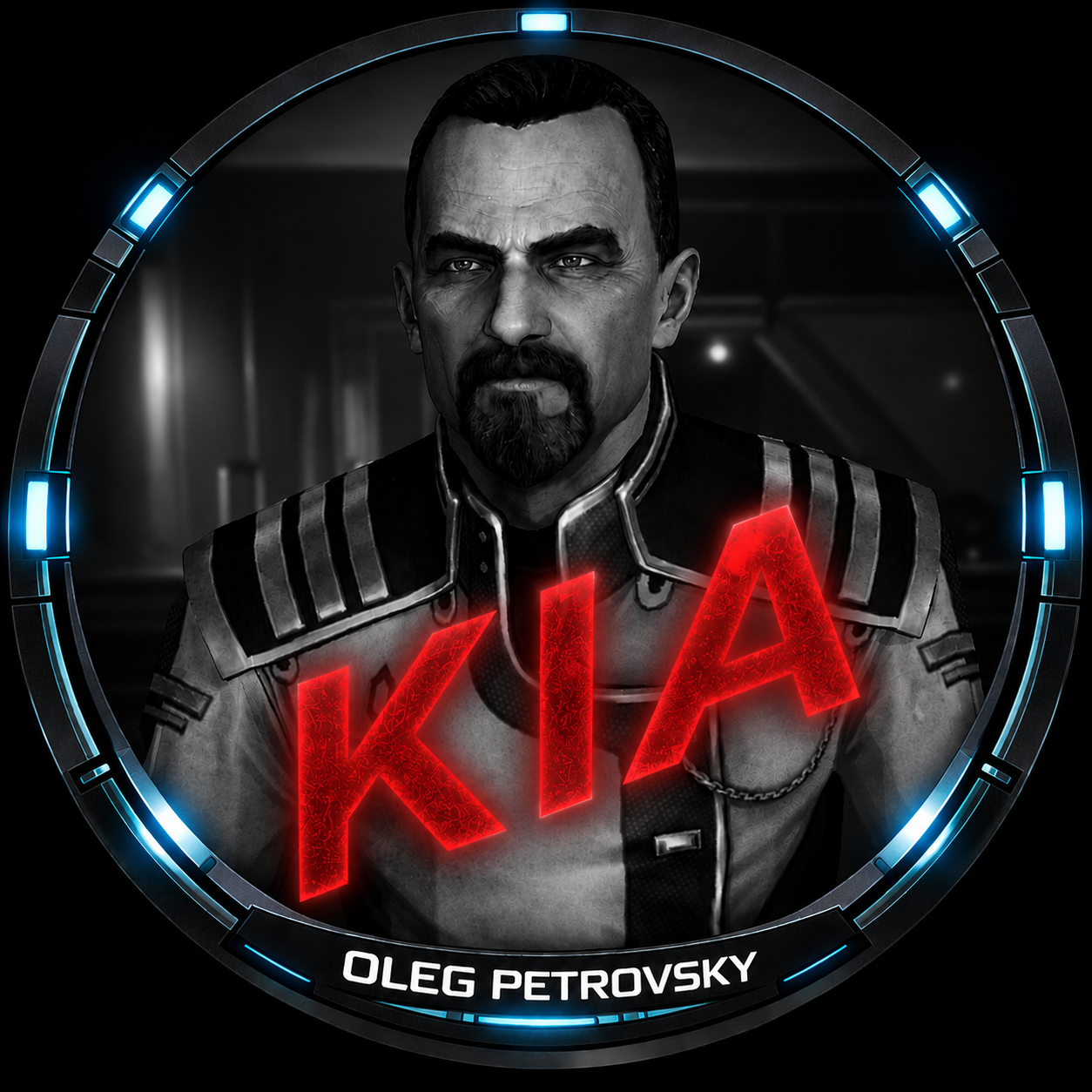


Admiral Cillian Crofthafaj
Cillian Crofthafaj commands the prestigious position of Fleet Admiral on Kharron Prime, overseeing a formidable armada that includes flagship vessels like the renowned Dark Icon, among countless others. As a prominent figure within one of the influential clans, he wields immense authority and influence over the orcish fleet.
Intriguingly, Cillian is also known as the elder sibling of Tribune of War, esteemed councilor, and BluShock associate Damien Crofthafaj. Despite their familial ties, Damien harbors a complex mix of animosity and begrudging respect toward his brother.
Widely regarded as the "Big Dog" among admirals and politicians on Kharron Prime, Cillian Crofthafaj's leadership prowess and strategic acumen make him a formidable force in both military and diplomatic circles.
Governor Hom Tarris
Hom Tarris, the governor of Valtoria, is a seasoned leader known for his astute governance and diplomatic prowess within the floating colony. His background and personal details are not widely disclosed, reflecting his preference for maintaining a private profile despite his prominent role.
As the sole governing authority in Valtoria since its founding in 2300, Governor Tarris is responsible for overseeing all aspects of the colony's administration. His leadership style is characterized by a combination of pragmatism and community engagement, aimed at fostering stability and prosperity among Valtoria's inhabitants.
Governor Tarris has implemented a policy of strategic diplomacy, successfully negotiating a treaty with local factions such as the gangs and pirate groups operating in the Gozu commercial district. This diplomatic approach has helped mitigate conflicts and ensure a cooperative environment within the colony, despite its diverse and occasionally contentious population.
Recent events have thrust Governor Tarris into the spotlight following the discovery of a powerful artifact beneath Valtoria's floating city. Recognizing the artifact's significance and potential implications, he swiftly enacted stringent security measures, including a strict no-go zone on the surface. Only authorized personnel, including security teams and scientists under his direct supervision, are allowed access to study and protect the artifact.
Governor Tarris's administration is also focused on maintaining the colony's infrastructure and addressing challenges such as the deteriorating conditions in the Gozu district. He has employed skilled repairmen and overseen various initiatives to ensure Valtoria remains functional and resilient amidst evolving circumstances.
Overall, Governor Hom Tarris stands as a steadfast leader dedicated to safeguarding Valtoria's interests and guiding its inhabitants through both everyday challenges and extraordinary discoveries. His leadership continues to shape Valtoria's trajectory as a beacon of stability and innovation in the skies above Volturis.
Hidden Agenda: Governor Hom Tarris, the seemingly benign leader of Valtoria Colony, has been revealed as a high-ranking member of the Radiant Order Cult. This secretive organization worships the Djinn and follows the teachings of Shaheen, aiming to harness the artifact's power for their own gain.
Motive: Tarris's primary goal was to unlock the artifact's secrets, believing it would grant him and his cult immense power and fortune. He maintained a facade of a dedicated leader while orchestrating efforts to control and decipher the artifact.
Harris died whilst attempting to assassinate the BluShock crew in Valtoria.
Captain Ronald Maccie
Profile: Ronald Maccie, Leader of the Steam Pirates
Name: Ronald
Alias: "Captain Steam"
Affiliation: Steam Pirates
Base of Operations: Valtoria, Gozu Commercial District
Background:
Ronald hails from the industrial world of Ferrovia Prime. Located in a distant sector of the galaxy, Ferrovia Prime is known for its vast factories, refineries, and dense smog-filled atmosphere. The planet's economy revolves around heavy industry and manufacturing, with towering smokestacks and sprawling industrial complexes dominating the landscape. Growing up in this harsh environment, Ronald quickly learned the art of survival and developed a keen sense for mechanical engineering and leadership.
Personality:
Ronald is a charismatic and strategic leader, known for his sharp wit and silver tongue. He possesses a natural ability to inspire loyalty and respect from his crew, and his tactical mind has led the Steam Pirates to numerous successes. While he can be charming and affable, Ronald is also known for his ruthless determination when it comes to protecting his crew and their interests.
Physical Appearance:
Ronald is a rugged man in his early 40s, with a weathered face marked by a few battle scars. His piercing blue eyes exude confidence and intelligence. Ronald's left arm is cybernetic, a reminder of the many battles he's fought. He often wears a practical yet stylish outfit, including a worn leather coat adorned with pirate insignias and a tricorn hat that has become his trademark.
Skills and Abilities:
- Leadership: Ronald's ability to lead is unparalleled, inspiring fierce loyalty and dedication from his crew.
- Negotiation: A master negotiator, Ronald can broker deals that often leave him with the upper hand.
- Combat Proficiency: Highly skilled in both melee and ranged combat, Ronald is a formidable adversary.
- Technical Expertise: Ronald's cybernetic arm isn't just for show; he is adept at hacking and mechanical engineering, often modifying his own gear.
Reputation:
Ronald's name commands respect and fear across Valtoria and beyond. To his crew, he is a protective and shrewd leader. To his enemies, he is a cunning and relentless pirate. His reputation extends to the highest echelons of power, making him a significant figure in the local and interstellar underworld.
Current Affairs:
Under Ronald's command, the Steam Pirates are currently engaged in a conflict with the Starfire Cartel, a gang believed to be sabotaging their trade routes. Determined to protect his crew's interests, Ronald is actively seeking to uncover evidence against the Cartel. He maintains a precarious alliance with the Valtoria Governor, ensuring his operations continue with minimal interference.
Personal Goals:
Ronald aims to solidify the influence of the Steam Pirates in Valtoria and beyond. He is particularly interested in the recent mysterious discovery below the colony, seeing it as a potential game-changer in his ongoing battle against the Starfire Cartel.
Interesting Fact:
Despite his tough exterior, Ronald has a surprising affinity for classical music. He often plays old symphonies in his quarters, finding solace and inspiration in their timeless compositions.
Note:
Ronald has an identical twin brother, MacDonald Maccie, who is also a key figure within the Steam Pirates. The brothers share an unbreakable bond and are known for their uncanny ability to anticipate each other's moves, making them a formidable duo in any confrontation.
Double Agent: Ronald Maccie, who initially appeared as a double agent playing both sides, has a more complex backstory. Once Carl's right-hand man within the cartel, Ronald experienced a profound shift after a traumatic event that drove him away from the cartel and into the cult's embrace.
Motive: Disillusioned by the cartel's brutality and drawn to the cult's promise of power, Ronald began working with Tarris and Carl. He manipulated both factions to incite conflict, ensuring that the artifact remained under the cult's control.
Ronald Maccie died whilst attempting to assassinate the BluShock crew on Valtoria.
Cranky Carl
Cranky Carl is the enigmatic warehouse boss of the Starfire Cartel, known for his gruff demeanor and no-nonsense attitude. Little is known about his background, which adds to his mysterious persona. Carl earned his nickname not just for his tendency to be easily irritated but also for his stringent enforcement of discipline and security within the cartel's warehouse.
As the overseer of operations, Cranky Carl maintains a tight grip on the day-to-day activities within the warehouse. He is responsible for managing inventory, overseeing shipments, and ensuring that all operations run smoothly and without interference. His leadership style is authoritarian, often commanding respect and fear from those under his supervision.
Despite his rough exterior, Carl is rumored to have a keen eye for detail and a knack for strategic thinking, which has contributed to the Starfire Cartel's ability to maintain its stronghold in Valtoria's commercial district. His presence instills a sense of order among the cartel members, making him a formidable figure within their ranks.
Carl's exact motivations and loyalties remain ambiguous, adding to his reputation as a figure not to be trifled with. Those who cross him or fail to meet his expectations risk facing severe consequences, making him both a respected leader and a feared adversary in the underworld of Valtoria.
Secret Role: Known to most as a ruthless enforcer of the Starfire Cartel, Cranky Carl is also a covert operative for the Radiant Order Cult. His brutish exterior masked a cunning mind deeply involved in the cult's plans.
Motive: Carl's loyalty to the cult drove his actions. He leveraged his position within the cartel to protect the artifact and keep it out of the hands of other factions, believing that its power could elevate the cult to unprecedented heights.
Crank Carl was killed in Valtoria whilst attempting to Assassinate the BluShock Crew.
Chelly Kambers - Post AAN (Deceased)
After her dramatic exit from Astro Alert Network News following the Luxor-9 incident, Chelly Kambers finds herself at a crossroads. The fiery journalist, once known for her relentless pursuit of the truth, now faces an uncertain future. While her brief stint working alongside the BluShock crew showcased her resourcefulness and tenacity, it also highlighted the dangers that come with digging too deep into the galaxy’s darkest secrets.
Chelly’s recent escapades have put her on the radar of several powerful and shadowy figures, making it difficult for her to find a stable position within the more reputable news organizations. Her name has become synonymous with high-risk, high-reward journalism—both a blessing and a curse in the competitive media landscape.
Rumors swirl that Chelly might take her talents to the fringes of the galaxy, possibly embedding herself with underground news networks or even starting her own independent channel dedicated to uncovering corruption and exposing the hidden truths of the universe. Others speculate she could join forces with a rogue group of reporters known for their unconventional methods and penchant for stirring up trouble.
For now, Chelly Kambers is lying low, considering her options. While she may be off the AAN airwaves, it’s only a matter of time before she resurfaces—stronger, smarter, and more determined than ever to shine a light on the galaxy’s most guarded secrets. Her future may be uncertain, but one thing’s for sure: Chelly Kambers isn’t done making headlines.
Chelly Kambers died in a brutal attack on her and her ship with Areef Jones near the Serpent Nebula Mass Relay.
Administrator Calzen
Name: Kalen Calzen
Title: Salarian Administrator, Bureau of Extranormal Affairs (Port Hanshan)
Background:
Kalen Calzen hails from Sur'Kesh, the heart of Salarian intellectual and political life, where his sharp mind and strategic foresight were apparent from an early age. Raised in a family that prized political influence over fame, Kalen quickly mastered the art of governance, diplomacy, and subtle manipulation. Though not widely known for scientific achievement, the Calzen family has been instrumental in shaping the Salarian Union’s policies through generations of intellectuals, strategists, and diplomats.
Kalen’s father, Valkar Calzen, was a key figure in post-Reaper War negotiations, while his mother, Velra Calzen, held a prestigious seat on the Salarian High Council. This legacy of quiet power and political maneuvering greatly influenced Kalen’s upbringing. From a young age, he learned that power does not need to be shouted to be effective—it needs only to be controlled and wielded at the right moment.
Family Legacy:
The Calzen family is not known for military triumphs or scientific breakthroughs but for their unerring ability to navigate the political landscape of the galaxy. They have produced generations of negotiators who specialize in the delicate art of diplomacy. Kalen’s own rise to power was a natural extension of this legacy—focused on careful calculation rather than force or flash.
Kalen’s Rise:
While many of his peers gravitated toward science or military service, Kalen found his calling in the complex world of galactic administration. His career took him to Port Hanshan, a critical hub for diplomacy, commerce, and extragalactic affairs. There, he became the Salarian Administrator of the Bureau of Extranormal Affairs—a position that places him at the nexus of the galaxy’s most delicate, often dangerous, dealings.
At Port Hanshan, Kalen quickly became known for his ruthless efficiency. He isn’t one to hesitate when it comes to securing his goals, whether that means bending others to his will or removing obstacles from his path. His cold demeanor, paired with an ability to anticipate the movements of both allies and enemies, makes him a formidable opponent in both political and personal matters. He is a master of manipulation, preferring to work from the shadows, his moves calculated to influence outcomes without ever appearing to intervene directly.
Kalen’s Ruthlessness:
Kalen Calzen is not a man who entertains sentimentality. He views relationships, whether political or personal, as tools—useful only when they align with his vision for the future of the Salarian Union. He is known for being ruthlessly pragmatic, willing to sacrifice individuals or entire alliances if it serves a greater purpose. Some may call it cold, others call it necessary; to Kalen, it’s simply the way the galaxy works.
His dealings are efficient but often harsh. When he speaks, it is rarely to flatter or cajole. His words are precise, intended to move others to action, to extract what he needs, and to solidify his grip on the political stage. In the cutthroat world of Port Hanshan, his cold efficiency has earned him both respect and fear.
Kalen’s Vision:
Kalen views the galaxy through a lens of strategic pragmatism. He believes that the Salarian Union must remain at the heart of galactic power, a position that requires constant vigilance and careful control. Post-Reaper peace is fragile, and Kalen intends to ensure that the Union is never caught off guard again. He is deeply distrustful of any force that might disrupt the balance of power and is willing to act decisively to eliminate potential threats—no matter the cost.
At Port Hanshan, Kalen is constantly analyzing, calculating, and maneuvering. He surrounds himself with loyal subordinates, carefully cultivating relationships with those who are useful to him while quietly eliminating those who aren’t. In his eyes, this isn’t ruthlessness—it’s survival.
Kalen's ambition extends beyond the confines of the Salarian Union. He believes that only those who can understand and manipulate the galaxy’s intricate power structures will survive in the long term. And while others might be content to play at diplomacy and policy, Kalen Calzen knows the true game is one of control—and he intends to win.
Calzen died whilst attempting to escape Noveria and destroy it.
Oleg Petrovsky
Oleg Petrovsky – Cerberus Operative & Architect of Cerbshock
Oleg Petrovsky remains the embodiment of Cerberus’ cold pragmatism: ruthless, calculating, and utterly devoted to humanity’s advancement in the galaxy. Born in the underbelly of Moscow, his early life was shaped by hardship, survival, and a relentless drive that propelled him through Cerberus’ ranks. Known for his mastery of infiltration, sabotage, and strategic manipulation, he became one of the organization’s most feared and respected operatives.
Cerberus Presence on Noveria (2325)
By 2325, Cerberus had entrenched itself across key sectors, with Port Hanshan as a hub for covert operations. Ostensibly contracted as elite security for corporations like ExoGeni, Cerberus operatives quietly influenced research, logistics, and intelligence under Petrovsky’s precise oversight. His operations remained invisible yet deeply impactful, ensuring Cerberus’ goals moved forward without interference.
The Evolution of BluShock
In the wake of the former BluShock’s exile—Prime Helix and the Council claiming the name—Petrovsky has been observing the team’s trials, including their harrowing experiences in Purgatory. Recognizing their skill, resilience, and unique potential, he prepares to make direct contact.
In a decisive move, Petrovsky offers the exiled team a new identity and purpose: Cerbshock, the next evolution of their operations. This is more than a name; it is a statement of transformation, signaling both their independence from the old order and their step into something bigger, bolder, and strategically sharper. Under Petrovsky’s guidance, the team gains not only recognition but also access to Cerberus’ resources and intelligence—tools they can use to navigate threats like Prime Helix, the Council, and Purgatory itself.
The Message
Petrovsky’s approach is deliberate, calculated, and unmistakably Cerberus:
“You’ve survived what most would crumble under. You’ve adapted, endured, and proven your worth. BluShock is gone—but from its ashes, something stronger can rise. I give you a name. I give you a direction. You are no longer merely survivors. You are Cerbshock. The next step. The evolution.”
The mantle is now theirs, a fusion of legacy, independence, and lethal potential. Whether they accept it as an alliance, a challenge, or a calling, Cerbshock is poised to redefine the galaxy’s rules—under Petrovsky’s watchful, calculating eye.
Oleg Petrovsky died upon arrival in Andromeda Galaxy due to unforeseen circumstances.
Robert Kean
Commander Robert Kean
Affiliation: Citadel Council Forces (Special Oversight Division)
Role: Current Acting Commander of BluShock
Species: Human
Service Record: Classified (Partial Citadel Access Granted)
BIOGRAPHY:
Commander Robert Kean is, by all official accounts, a highly-decorated strategist and military handler, formerly assigned to Council Special Oversight Command (CSOC)—a shadowy branch responsible for supervising black-ops and stabilizing rogue spectre cells. His name was barely known outside of classified dossiers… until now.
Kean’s sudden appointment to BluShock’s command raised more than a few eyebrows—particularly given the secrecy surrounding Fazzy Constantine’s disappearance. Many on the Citadel believe the decision was premeditated. Others think Kean is a placeholder, a Council puppet meant to sanitize BluShock’s legacy and align the team under tighter political control.
KNOWN SERVICE HIGHLIGHTS:
-
Operation Halcyon Divide (Classified): Believed to have led the extraction of a rogue Spectre cell from an unstable Terminus system without Council casualties—using tactics described as “cold, precise, and without compromise.”
-
The Bracus Protocols: Handled a near-collapse of diplomatic negotiations between Salarian STG defectors and the Council. His "neutralization-first, explain-later" method sparked quiet outrage from certain non-human delegations.
-
Strategic Advisor to Spectre Trials: Served as a senior adviser to Spectre candidate screenings for five years. Notably blocked multiple candidates on “moral instability” grounds—yet allowed others with deeply pragmatic mindsets to proceed.
PERSONALITY:
Described by former colleagues as a "politician in soldier's skin," Kean is meticulous, calculating, and hard to read. He follows the letter of the law more than the spirit of it. Where Constantine thrived in unpredictable chaos with an unorthodox team, Kean sees clean structures, order, and outcomes.
He doesn’t believe in legends. He believes in results.
A rumour persists that Kean once said, behind closed doors:
"You don’t let soldiers become stories. You bury them or bring them home."
Whether that quote referred to Constantine… or his own grim worldview… remains unknown.
REPUTATION AMONG THE TROOPS:
Among new recruits, Kean is respected—if not liked. He’s seen as a Council loyalist, someone who'll follow through even when the galaxy flinches. Older veterans of BluShock? Let’s just say they haven’t warmed to him. Yet.
Several of Constantine’s former allies have refused reactivation orders under Kean. Others have disappeared entirely.
CURRENT STATUS:
-
Ship: Redacted Class, Code-Named “Crucible”
-
Command Structure: Council-overseen, with STG liaisons, internal auditors, and AI behavior scrubbing protocols.
-
Objective: "Restore BluShock's operational integrity under full Council compliance." (Source: leaked memo)
NOTES FROM INSIDE:
“Kean doesn’t lead from the front. He leads from the safe zone. Let’s see how long the stars let him sit comfortably.” – Anonymous BluShock veteran (source: intercepted comm)
“He walks like a man expecting betrayal. Every second.” – Asari data analyst, CSOC
"He's not Fazzy. And that's the problem. But maybe... also the point." – Sandra Vorn, Astro Alert News
Robert Kean died during Cerbshock's intervention of time rifts. The galaxy thinks he's gone AWOL.
Tobias Sidonis
Name: Tobias Sidonis
Occupation: Warden of Purgatory / Prosecutor, Citadel Council
Affiliation: Prime Helix
Status: Active
Profile:
Tobias Sidonis is the embodiment of precision, control, and cold authority. Once a high-ranking prosecutor for the Citadel Council, Sidonis gained notoriety for his unflinching demeanor during hearings — feared not for cruelty, but for his methodical dismantling of witnesses, leaving no loophole unexploited and no excuse unpunished. His courtroom was an arena of intellect and intimidation, and few walked away without feeling the full weight of his scrutiny.
Now, as Warden of Purgatory, Sidonis applies the same meticulous discipline to the management of the galaxy’s most dangerous and high-profile inmates. Under his supervision, Purgatory operates not merely as a prison, but as a crucible designed to break, test, and reshape those within its walls. Sidonis thrives on the obedience of his charges, punishing insubordination with relentless efficiency. Survival is secondary; compliance is mandatory. Those who attempt to outthink him find themselves reminded in the most brutal ways that intelligence is no shield against authority.
Sidonis is cold, calculating, and utterly impartial. Personal feelings, sentiment, and morality have no sway in his judgment — only results matter. He enjoys teaching lessons, but his lessons are never forgiving. He will exploit weaknesses, sow paranoia, and exploit every flaw in his inmates’ resolve. Death is incidental; the lesson is essential.
As an operative of Prime Helix, Sidonis represents the intersection of corporate oversight and interstellar law enforcement. He enforces the megacorp’s will with the precision of a scalpel, ensuring that Purgatory is as much a laboratory for control as it is a containment facility. In his eyes, the galaxy’s misfits and malcontents are nothing more than variables to be measured, corrected, and, when necessary, eliminated.
Behavioral Notes:
-
Demands absolute obedience; deviations are punished swiftly.
-
Enjoys psychological dominance as much as physical control.
-
Methodical in planning and execution; rarely acts on impulse.
-
Views life as expendable if it conflicts with the lesson or order he is delivering.
Warnings:
-
Never underestimate his patience or precision.
-
Attempts to deceive, manipulate, or outsmart him are extremely dangerous.
-
Sidonis rewards compliance, but he never forgives arrogance.
-
Interactions with Sidonis will leave permanent mental and emotional marks; he is as lethal psychologically as he is administratively.
Summary:
Tobias Sidonis is more than a warden; he is a force of discipline incarnate. Where others see punishment, he sees opportunity — opportunity to teach, to test, and to mold. For those unfortunate enough to be under his watch, Purgatory is a place of fear, endurance, and ruthless education, and Sidonis is the unblinking eye ensuring that every lesson is unforgettable.
Tobias was killed in Purgatory during an attempted live broadcast and murder of Cerbshock crew.
Darrek Solan
INTEL PROFILE: DARREK SOLAN
Darrek Solan is a turian whose path diverged from traditional expectations early in life. Raised on Palaven in a family that did not serve in the military, he grew up under the quiet pressure that comes with avoiding the hierarchy so central to turian society. Financial strain and limited status shaped his ambitions. Rather than enlist, Darrek pursued administrative and legal channels, believing influence could be gained not only through battlefield distinction, but through proximity to power. His early role as a receptionist under Calzen in Port Hanshan placed him closer to high-level operations than most would assume.
His involvement with Prime Helix began publicly through testimony in a tribunal that redirected liability away from the organization and toward BluShock. What appeared to be a legal maneuver was, in reality, an entry point. Shortly afterward, Darrek was approached privately and offered something far more binding than employment. He entered a pact with Prime Helix and was personally given an insignia ring by Saren. The ring is not symbolic decoration. It is a mark of inclusion into an inner circle that very few ever enter. Notably, even senior operatives such as Kean were never granted such recognition. The gesture suggests direct trust, cultural alignment, and long-term strategic value.
The ring signifies allegiance beyond contract or compensation. It implies access, discretion, and silent authority. When worn, it changes how rooms respond. Doors open without explanation. Conversations shift tone. Darrek understands what it represents, and he accepted it knowingly.
At the same time, Darrek’s motivations remain layered. His father, once a highly regarded marksman in a legendary 2180s crew, chose to leave behind that life when the crew disbanded. He retired from glory, built a family, and placed his visor in storage. That visor now sits on display in Darrek’s quarters. It is a reminder of discipline, protection, and restraint. Where his father stepped away from legend, Darrek stepped toward it.
Psychologically, Darrek presents as composed and deliberate. He is politically aware, culturally grounded, and strategically patient. He does not move impulsively. He positions himself. Whether he operates as a calculated infiltrator within Prime Helix or has fully embraced the power structure he once justified remains uncertain. What is clear is that his name is now tied to forces larger than himself, and every decision he makes will shape how history ultimately judges him.
Saren Arterius
INTEL PROFILE: SAREN ARTERIUS
Affiliation: Prime Helix
Status: At Large
Era: 2320's.
Saren Arterius remains one of the most calculating and disciplined figures to have operated within Prime Helix. This is not the augmented figure history would later distort, nor a mind compromised by external influence. This is Saren at full clarity — strategic, culturally grounded, and utterly convinced of his own correctness. His authority was never theatrical. It was precise. He believed in leverage over spectacle, manipulation over open war, and structure over chaos.
Under his guidance, Prime Helix expanded through controlled narrative shifts, political pressure, and carefully positioned assets. He did not seek random destruction. He sought realignment of power. The Citadel was never meant to burn — it was meant to pivot. The Collector involvement was calculated pressure, a demonstration designed to destabilize, not annihilate.
What Saren did not anticipate was Cerbshock.
The intervention shattered projections he had modeled as inevitable. Cerbshock’s defense of the Citadel disrupted Prime Helix’s strategic choke points and broke the Collector grip before the political domino effect could complete. The speed and coordination of their response forced Saren into a position he rarely occupies: reaction instead of control.
With Prime Helix exposed and its larger maneuver undone, Saren has gone to ground. He is not defeated. He is recalculating. Going on the run is not desperation — it is preservation of position. He understands survival within power structures. Retreat, to him, is simply a temporary reallocation of assets.
Reports suggest he maintains loyalists who remain silent and embedded. His inner circle is fractured but not dissolved. If anything, Cerbshock’s interference has hardened his resolve. He will not view this as failure. He will view it as interference in a larger inevitability.
Saren Arterius does not see himself as an antagonist. He sees himself as necessary correction. And now, having been forced into the shadows by Cerbshock’s intervention, he becomes more dangerous — not because he is empowered, but because he is patient.
He was not expecting resistance strong enough to alter the board.
Now he knows it exists.